Babywearing for Anxiety Disorders: Grounding, Not Panic
By Linh Pham • 25th May
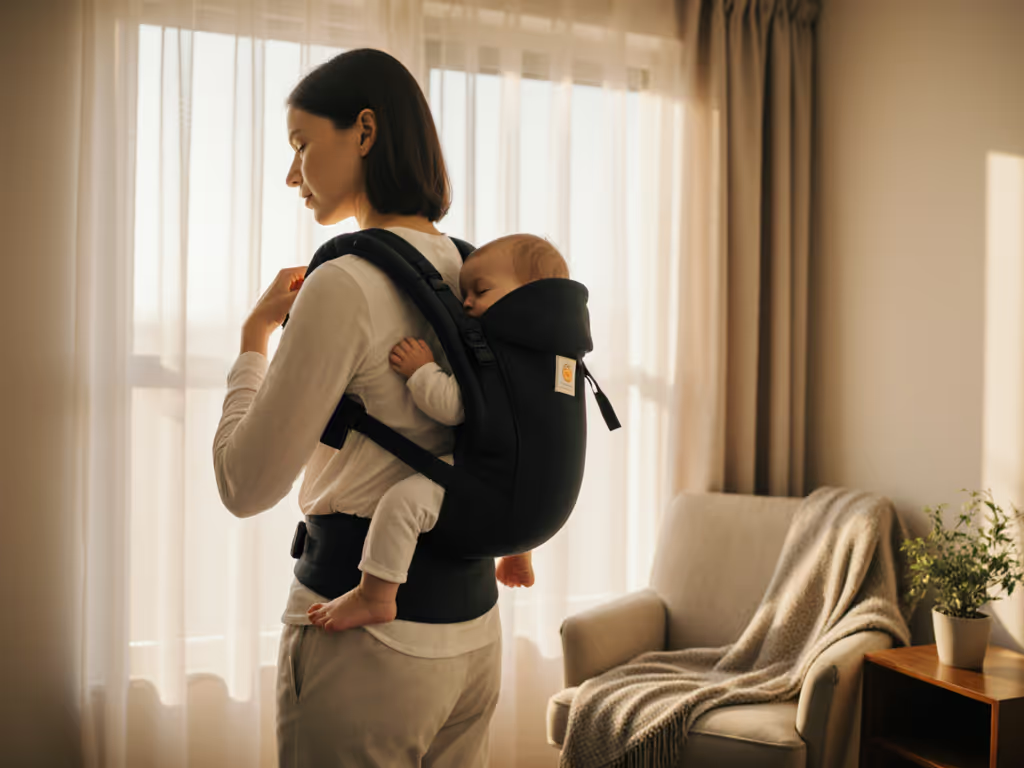
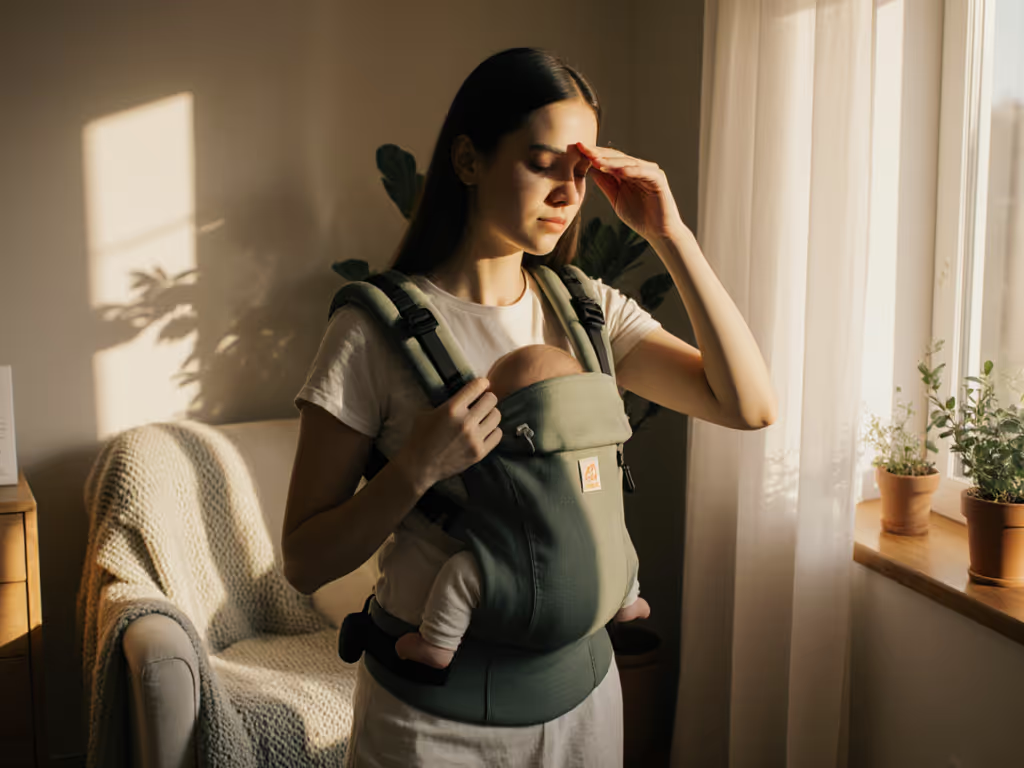
Living with an anxiety disorder changes how you move through the world, and that includes how you move with your baby. Babywearing for anxiety disorders can feel like a contradiction: you crave closeness and hands-free ease, yet the thought of being "strapped" to another human can spike your heart rate. Anxiety management babywearing is about turning the carrier into a grounding tool, not another source of panic.
Comfort is a posture achieved, not a promise on packaging.
This guide will not tell you to "just relax" or suggest that a carrier can cure anxiety. It will give you concrete, evidence-informed ways to:
- Reduce physical strain that feeds anxious symptoms
- Build a safety plan for panic attack concerns
- Use specific grounding techniques while babywearing
So you can decide if, and how, babywearing fits into your own anxiety toolkit.

The Problem: When Babywearing Triggers Anxiety Instead of Easing It
Many anxious caregivers describe a similar loop when they think about using a carrier:
- "What if I panic and can't get the baby out?"
- "What if I faint while they're strapped to me?"
- "What if they can't breathe and I don't notice?"
For parents already living with generalized anxiety, panic disorder, OCD, postpartum anxiety, or other PMADs, those thoughts are not abstract. They come with very real body sensations.
How anxiety can show up while babywearing
- Mind symptoms: racing thoughts, catastrophic "what ifs," checking the baby's breathing every few seconds.
- Body symptoms: tight chest, shortness of breath, dizziness, sweating (sometimes amplified by warm fabric or pressure on the abdomen or chest). If heat or humidity is a trigger, use these summer babywearing tips to stay cool and reduce sweat-induced anxiety.
- Behavior patterns: avoiding leaving the house, skipping errands, choosing the stroller even when it's less practical, or abandoning carriers after one overwhelming attempt.
None of this means you are doing anything wrong. It means your nervous system currently reads enclosed straps + responsibility for a baby as high-stakes.
Research on babywearing and mental health has mostly focused on depression and stress rather than formal anxiety disorders, but the findings are still relevant. One study found that mothers who were given baby carriers experienced fewer depressive episodes at six weeks postpartum than those who did not receive carriers.[1] For a deeper look at the evidence, see how babywearing lowers postpartum depression and supports emotional wellness. Another experiment showed that "carrying while caring" lowered repetitive negative thinking and improved overall mental health compared with non-carrying care routines.[1] Less baby crying and more closeness also appear to reduce caregiver stress.[2]
These are not cures, but they are signals: the combination of close physical contact, reduced crying, and increased parental confidence can shift mood and stress patterns in a measurable way.[1][2]
The question becomes: how do we harness those benefits without igniting panic?
The Agitation: Pain, Misfit, and Fear of "What If I Panic?"
When babywearing feels bad, it's usually a mix of physical misfit and mental fear loops.
Physical strain that feeds anxious signals
If a carrier pulls your shoulders forward, digs into your neck, or presses on a healing abdomen, your brain receives constant "something's wrong" messages. That strain can mimic anxiety symptoms: chest tightness, shallow breathing, or back pain that keeps your system on high alert.
Many caregivers have histories like:
- Straps too short for plus-size bodies
- Panels that ride up on short torsos
- Waist belts that hit directly over a C-section scar If that's you, see our recovery-focused C-section babywearing guide to position the waistband safely and comfortably.
If you've already had one miserable, sweaty, painful attempt, your nervous system remembers.
Panic-leaning thoughts about safety
Safety worries are rational: airway, hip position, falls. But an anxious brain may amplify them into loud, repetitive alarms:
- "If I panic, I won't be able to unclip fast enough."
- "If I get dizzy, I'll drop the baby."
- "If I stop looking at their face for one second, something bad will happen."
Without a clear, practiced plan for emergencies, your brain fills the gap with worst-case scenarios. That's where panic attack concerns while babywearing often take hold.
The Shift: Why Babywearing Can Be Grounding Instead of Panic-Inducing
Babywearing can also become a grounding system, a repeatable setup that gives your body predictable signals of support.
What the research suggests
- Close contact: Regular infant carrying increases skin-to-skin or fabric-to-skin contact, which promotes oxytocin release (the "bonding hormone" associated with reduced stress and anxiety).[1]
- Reduced crying: Babies often cry less when worn, lowering the background stress load on caregivers.[2]
- More confidence: Parents who carry are often more attuned to their baby's cues, which can reduce feelings of overwhelm and helplessness.[1]
Again, these studies focus on mood and stress, not specific anxiety diagnoses, but they point toward babywearing as a potentially regulating practice rather than an inherently stressful one.[1][2]
The key is intentional design: of your fit, your safety plan, and your grounding techniques.
Micro-adjust, then breathe.
That small sequence (adjusting the fit, then noticing your breath) can slowly retrain how your body interprets babywearing.
The Solution, Part 1: A Safety Plan That Calms an Anxious Brain
A clear safety routine is one of the strongest panic attack prevention while babywearing tools, not because it guarantees you will never panic, but because it gives your brain an orderly script.
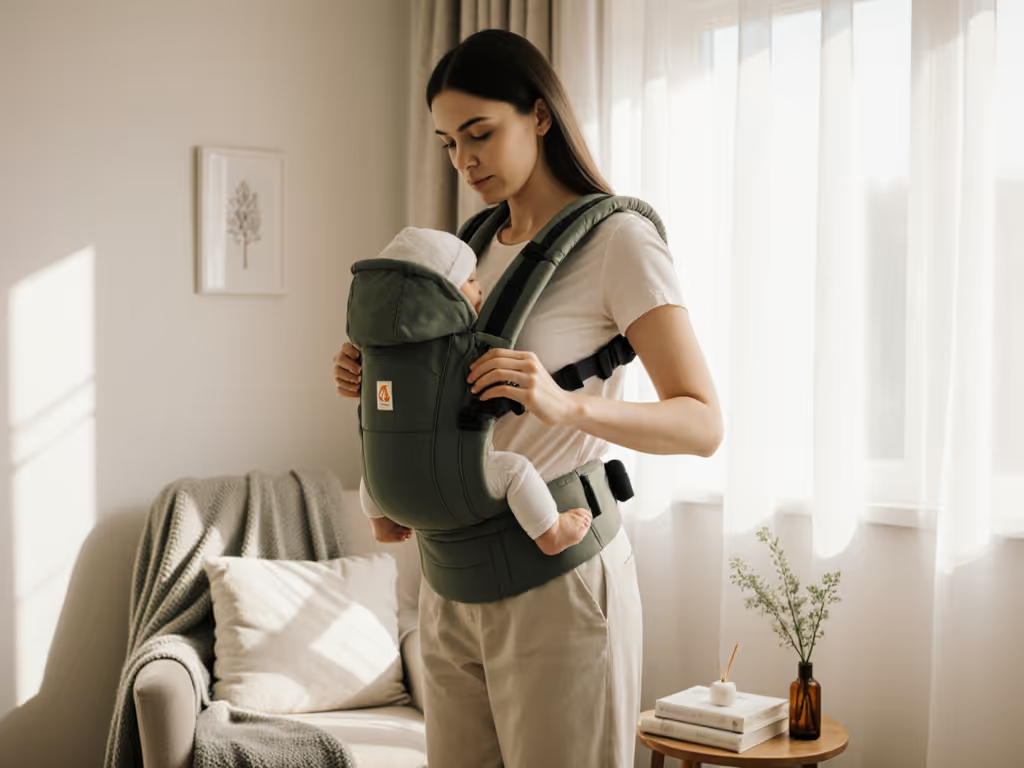
30-second safety checklist (before every wear)
- Airway: Baby is upright, facing in, with nose and mouth fully visible; chin off chest (a finger can fit under their chin).[2]
- Height: "Close enough to kiss" the top of their head without straining your neck.[2]
- Legs & hips: Thighs supported knee-to-knee in an "M" shape, knees slightly higher than bum, hips wide, but not over-split.[2]
- Support: Head and neck supported according to age; no fabric over the face.
- Secure but not crushing: Fabric/straps snug enough that baby doesn't slump when you lean forward, but you can slide a hand between their chest and yours.
These principles align with mainstream pediatric and orthopedic guidance on safe babywearing.[2] Review the full TICKS babywearing safety checklist for visual cues and common mistakes to avoid.
Practice a "panic exit" while calm
Do this at home with a spotter (another adult) or over a soft surface like a bed:
- Put baby in the carrier as usual.
- Talk through the steps out loud:
- "I support baby with one hand on their back."
- "I loosen this strap/untie this knot."
- "I lower baby slowly onto the bed/sofa."
- Repeat 3-5 times until your hands know the order without racing thoughts.
You are teaching your body: If I need to, I can get this baby out quickly and safely. That knowledge alone often lowers baseline anxiety.
The Solution, Part 2: Fit Adjustments That Reduce Physical Anxiety Triggers
There's a reason so many caregivers describe an "aha" moment when a carrier finally fits. Once, after a short but brutal grocery run early postpartum, I went home and measured strap lengths, panel height, and seat width, then tried again with a different setup. Within ten minutes, my back pain eased, my breathing deepened, and my shoulders dropped.
The baby hadn't changed. The fit had.
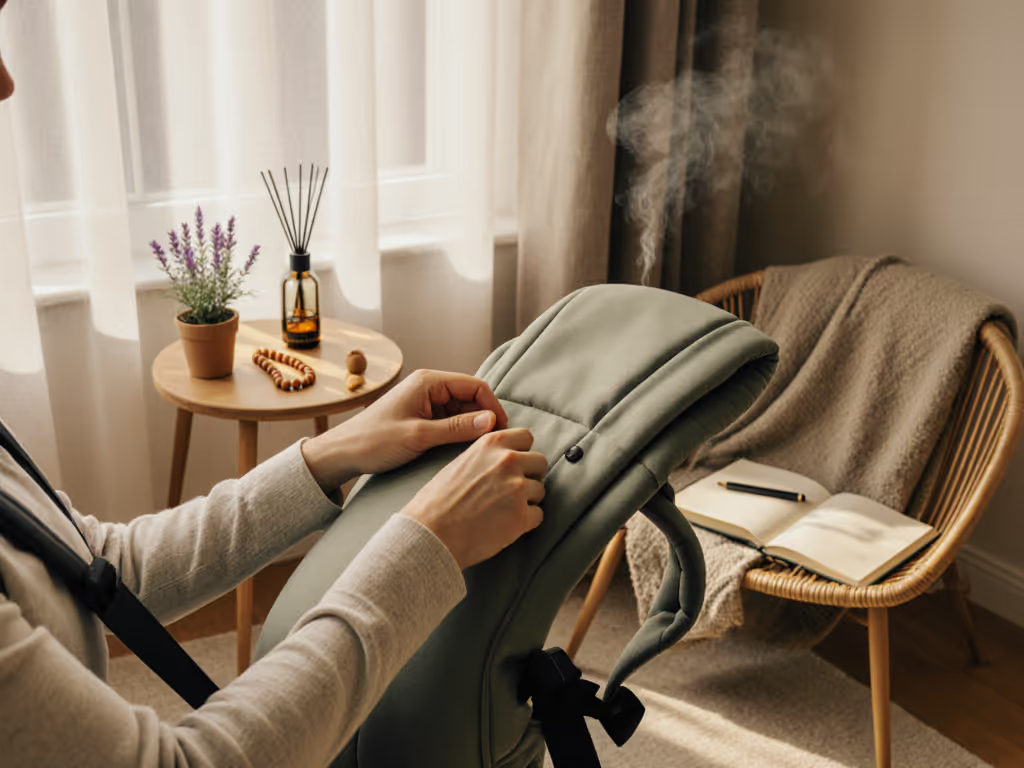
Quick fit-scan for anxious bodies
Use this standing in front of a mirror without your baby first:
- Stacked posture: Your ribs are roughly over your hips, not pitched forward. If the carrier pulls you into a hunch, tighten the waist slightly and loosen the shoulders a touch.
- Waist placement: If you have C-section tenderness or pelvic floor issues, try wearing the waistband a bit higher, so it rests on your upper hip bones or natural waist, not directly across scar tissue.
- Shoulder straps: They should lie on the fleshy part of your shoulders, not your neck. If they creep inward, widen them. If they dig, tighten the chest clip or cross the straps if your carrier allows.
- Weight distribution: Most of the load should sit on your pelvis, not your neck or upper back. If your shoulders burn, tighten the waist and slightly loosen the shoulder straps.
For plus-size bodies, larger chests, short or long torsos, and caregivers with limited shoulder mobility, small strap-path changes (like moving the chest clip forward or using front clips) can be the difference between "this is suffocating" and "this feels like a supportive hug."
Comfort is a posture achieved, not a promise on packaging.
Once you've made one adjustment, pause: Micro-adjust, then breathe. Take three slow breaths and notice if anything in your body softens.
The Solution, Part 3: Grounding Techniques for Anxious Parents While Babywearing
This is where anxiety-reducing babywearing becomes intentional. You are not just wearing a baby; you are building a portable grounding routine.
1. Breath + weight synchrony
Try this standing or walking slowly:
- Inhale for a count of 4 while noticing one specific sensation of your baby's weight (their chest rising against you, their legs on your hips).
- Exhale for a count of 6 while imagining that weight sinking down through your pelvis into the floor.
- Repeat for 5-10 breaths.
The weight of your baby becomes a real-time cue that you are anchored here, in this moment.
2. 5-4-3-2-1, carrier edition
Adapt the classic grounding exercise to your carrier:
- 5 things you feel: shoulder straps on your skin, baby's breath on your chest, waistband on your hips, your feet in your shoes, the air on your face.
- 4 things you see: name colors or shapes in front of you.
- 3 things you hear: baby sounds, city noise, birds, indoor hum.
- 2 things you can smell: your baby's head, your soap, outside air.
- 1 thing you can taste: a sip of water, gum, or just notice the taste in your mouth.
Say them quietly in your head or whisper if you like. This keeps your brain busy with facts, not fears.
3. Rhythmic movement as a reset
Those gentle sways and pacing steps you instinctively do? They matter. Repetitive, predictable movement paired with holding a baby has been linked with reductions in repetitive negative thinking and better mental health scores in early parenthood.[1]
To turn that into a tool:
- Choose a simple pattern: ten slow steps forward, pause, ten steps back.
- Match your breath to the rhythm (for example, inhale for two steps, exhale for three).
- If anxious thoughts intrude, label them gently ("worry," "what-if") and return your focus to the stepping pattern.
If Panic Starts While You're Wearing the Baby
You cannot fully control whether a panic wave arrives, but you can control your script.
- Pause your feet. Stand with feet hip-width apart, knees soft.
- One hand on the baby, one on your own chest or belly. This anchors both of you.
- Name the plan (in your head or softly): "If I need to, I can sit. If I need to, I can lower baby to the ground safely."
- Try three grounding breaths (4 in, 6 out). If symptoms ease, continue what you were doing more slowly.
- If you still feel unsafe standing:
- Sit on a bench, curb, or floor while keeping baby secured.
- If needed, use your practiced exit steps to take baby out onto your lap or beside you.
Talk through this sequence with your therapist or healthcare provider if you have one, especially if you have a history of fainting, severe dissociation, or intense panic episodes.
Babywearing should never feel mandatory. It is one tool among many, and strollers, arms, or car seats are equally valid choices.
When Babywearing May Not Be the Right Tool Today
Consider pausing or modifying babywearing and consulting a healthcare professional if you:
- Experience frequent fainting, severe vertigo, or instability
- Have recent surgical restrictions beyond routine postpartum recovery
- Notice dissociative episodes where you lose track of time or surroundings
Using babywearing for anxiety management should add safety and capacity, not subtract it.
Your Next Grounded Step: A 10-Minute Home Experiment
Instead of deciding in the abstract whether babywearing for anxiety disorders will work for you, try this controlled, low-stakes experiment at home.
-
Set up without baby (3 minutes).
- Put on your carrier empty.
- Adjust waistband height and shoulder straps until your body feels as neutral as possible.
-
Add baby for 3 minutes.
- Use the safety checklist.
- Stay in one room. Practice either breath + weight synchrony or the 5-4-3-2-1 exercise.
-
Walk a short "lap" (3 minutes).
- Around your living room, down the hallway, or to the mailbox.
- Notice: Where does your body tense? Where does it ease?
-
Name one helpful adjustment (1 minute).
- Maybe it's "waist higher," "straps looser," or "take 3 breaths before moving."
- Write that on a sticky note near your carrier with the reminder: "Micro-adjust, then breathe."
Repeat this mini-ritual a few times a week, gradually lengthening the walk or changing the setting (porch, driveway, then short errand). You are not just learning to use a carrier, you are teaching your nervous system that being close, upright, and supported can be a grounded place to be.
Babywearing does not have to be all or nothing, cure or trigger. With the right fit and a few simple grounding routines, it can become one more practiced posture of comfort, for both you and your baby.
Related Articles