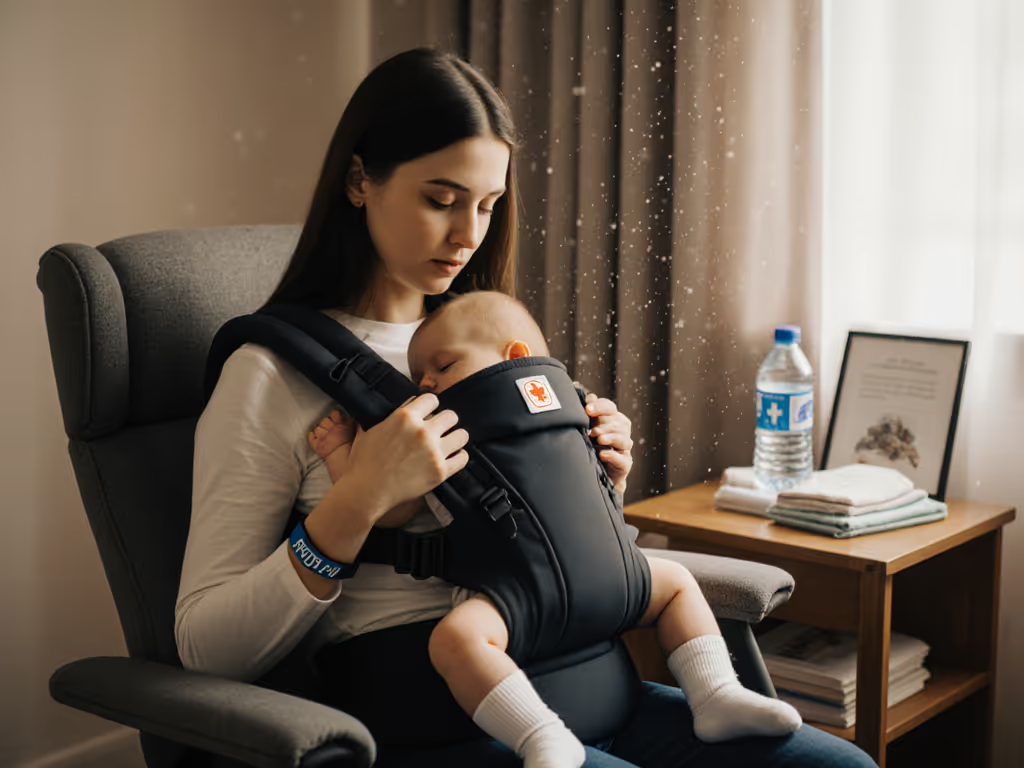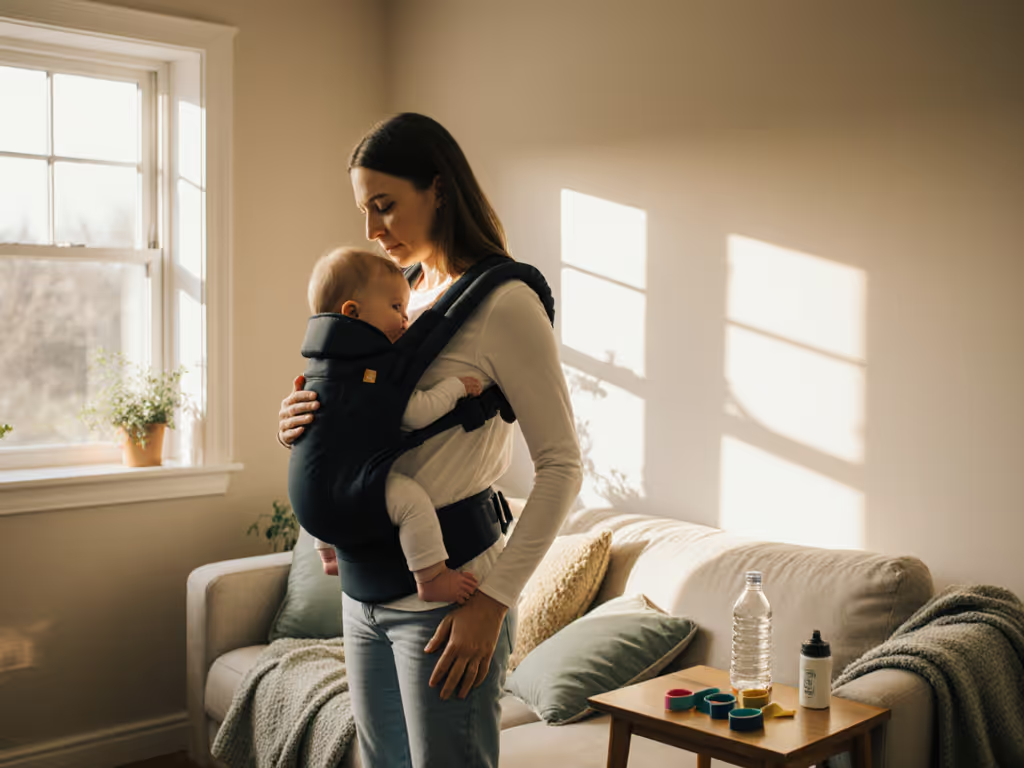
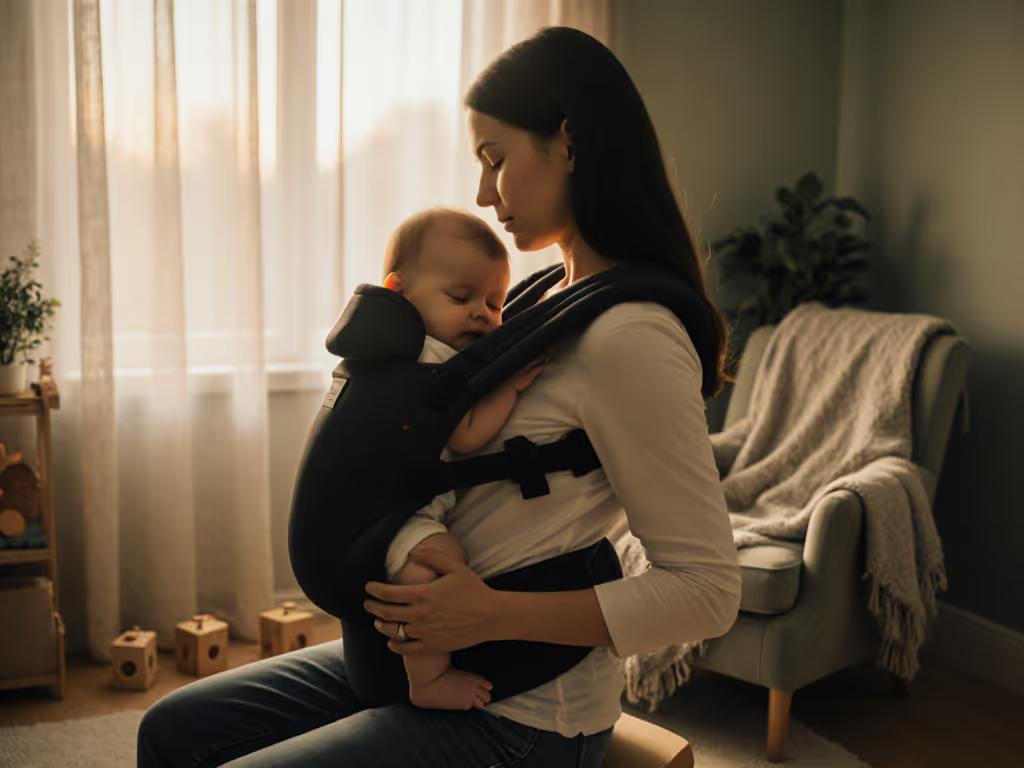
Babywearing for Anxiety Disorders: Science & Setup
By Maya Ortiz • 2nd May
Introduction
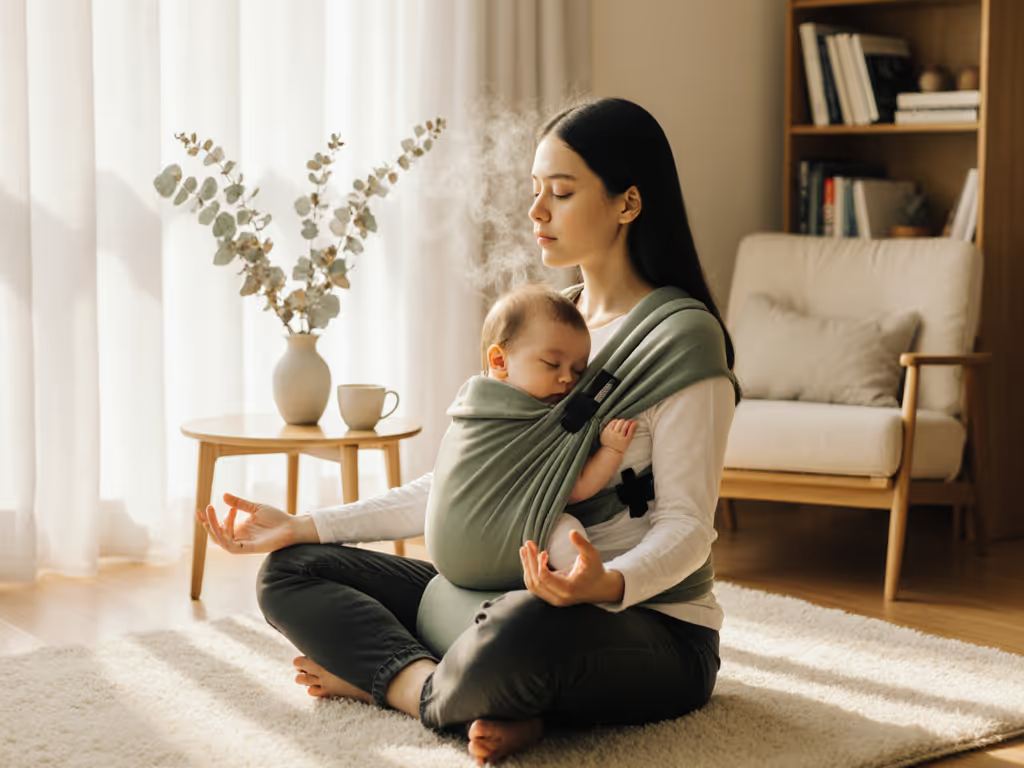
Babywearing for anxiety disorders is gaining attention as a complementary strategy for managing anxiety symptoms in caregivers. But claims about its efficacy range from modest to transformative, and the research, while promising, remains limited. This FAQ deep dive separates what we know from what we assume, examines the physiological mechanisms at play, and walks you through the practical setup steps for using a carrier as part of an anxiety-management routine. Measure, don't guess: we'll stick to metrics, realistic timelines, and evidence-based guidance.
FAQ: The Science & Skepticism
Q: Does babywearing actually reduce anxiety in caregivers?
The short answer: preliminary evidence suggests it can help, but it's not a cure.
Research by E.E. Little et al. found that mothers provided with infant carriers experienced fewer depressive episodes at six weeks postpartum compared to controls. Importantly, many of these mothers averaged only 1-2 hours per day of wear time, a finding that matters for accessibility. The study is randomized and controlled, which strengthens it, but the sample size was modest and the generalization to other anxiety disorders (generalized anxiety, panic disorder, social anxiety) remains unclear.
Other studies cite the oxytocin effect: close contact triggers the release of oxytocin, sometimes called the "love hormone," which has been associated with stress reduction in both parent and baby. However, a 2024 scoping review in the field noted that while babywearing shows "a range of beneficial biological and behavioral effects," the evidence remains insufficient to inform broad clinical recommendations. Translation: promising signals, not settled science. For a deeper look at mental health outcomes, see our postpartum depression babywearing guide.
The critical point: babywearing appears to work best as a complementary tool alongside professional mental health support, not as a standalone intervention. If you're managing anxiety with medication or therapy, babywearing might enhance those efforts. If you're in crisis, contact a mental health provider directly.
Q: What's the actual mechanism?
Physiologically, a few things happen when you carry your baby:
- Oxytocin release: proximity and skin contact both trigger oxytocin, linked to lower cortisol (stress hormone) and lower blood pressure.
- Regulated arousal: your baby's rhythmic breathing and heartbeat can synchronize with your own, creating a mutual calming effect. This isn't mystical (it's measurable through heart-rate variability studies).
- Hands-free functionality: for anxious caregivers, the ability to move freely while tethered to your baby can reduce decision paralysis ("Should I put the baby down? Will they cry?") and lower cognitive load.
- Proprioceptive grounding: the weight and tactile input of wearing a baby can serve as a mild form of grounding, similar to weighted blankets or deep-pressure therapy.
What's not automatic: the carrier itself won't fix a clinical anxiety disorder. A poorly fitted, uncomfortable carrier (one that digs into your shoulders or restricts your breathing) will increase anxiety. Breathability isn't a bonus, it's a measurable comfort variable. If you're hot, your cortisol rises, and the benefit evaporates.
Q: Who should consider babywearing for anxiety?
Good fit:
- Caregivers with mild to moderate anxiety or postpartum anxiety (alongside professional support)
- Parents seeking grounding techniques for anxious parents during daily routines (errands, transitions, overwhelm spikes)
- People who find close contact with their baby calming
- Caregivers in cool or variable climates where the weight and contact of a baby is soothing
Poor fit or needs caution:
- Caregivers with untreated clinical anxiety disorders (consult a clinician first)
- Parents with shoulder, back, or neck pain exacerbated by pressure or weight
- Caregivers in hot, humid climates who overheat easily and become more anxious when sweaty
- Parents of babies with reflux (upright holding can help, but carrier design matters; see below) Compare features in our reflux-friendly carrier guide.
Practical Setup: The Data-Driven Approach
Q: How do I set up a carrier to support anxiety management?
Step 1: Validate the fit. A poorly fitted carrier is a stressor, not a solution. Before any wear:
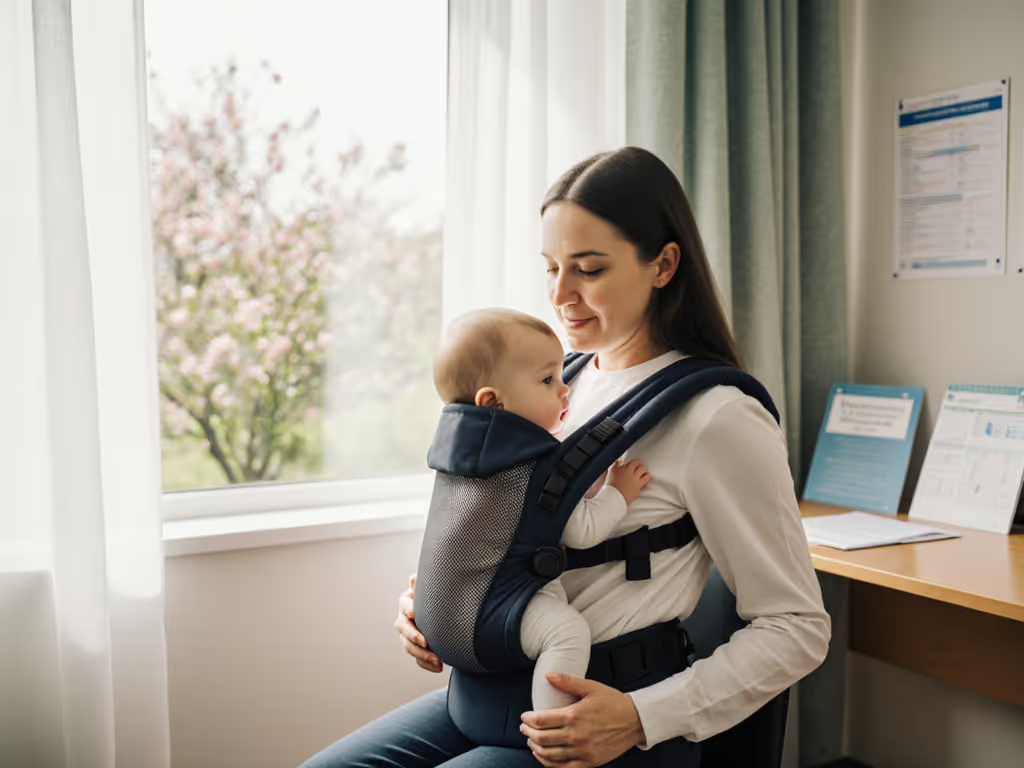
- Check airway: can you see your baby's chin over the top of the carrier? Can you fit one finger under the fabric at the back of their neck?
- M-position babywearing: is your baby's bottom low and their knees higher than their hips, forming an ergonomic "M"? (This matters for both hip safety and your spinal neutral.)
- Your shoulders: do the straps sit flat, or do they dig? Can you raise your arms overhead without strain?
- Waist belt: if present, sits at your natural waist, not your rib cage. This reduces lower-back compression.
Setup time: if it takes more than 60 seconds to don the carrier and adjust it, you'll avoid using it during anxiety spikes when speed matters. Choose a carrier where you can pre-adjust straps for your body and simply slip into it.
Step 2: Choose a climate-appropriate fabric. This is where many caregivers stumble. On a July bus commute, I wore a mesh carrier while tracking skin temperature and humidity with a clip-on sensor. My son settled in eight minutes and slept forty-five. I swapped to a knit wrap the next day (same commute, same baby). He woke sweaty after twenty minutes, fussy, which spiked my own anxiety. The contrast clarified what I'd suspected: if you're anxious and your baby is hot, you're not addressing anxiety; you're compounding it.
- Hot/humid climates (>28°C, >60% RH): mesh or linen-blend carriers allow air circulation. Your skin temperature and heart rate stay lower.
- Cool/cold climates (<15°C): dense knit or fleece blends provide insulation and that grounding weight.
- Variable/temperate: breathable cotton-linen or structured carriers with removable hoods. For hot-weather strategies beyond fabric choice, see our summer babywearing tips.
If you're unsure: measure, don't guess. A $12 clip-on hygrometer + thermometer (available online) can track your microclimate inside the carrier over a 20-minute wear test. Data informs your choice.
Q: How long can I safely wear for anxiety management?
Realistic windows depend on your body and carrier type:
- Unstructured wraps or slings: 1-2 hours before shoulder or core fatigue sets in (unless you have training).
- Structured carriers with waist belt: 2-3 hours, assuming proper fit and no underlying back/shoulder issues.
- Beyond 3 hours: fatigue increases risk of postural collapse, which can reduce airway safety and increase your anxiety. This defeats the purpose.
For anxiety management, the dose-response doesn't require marathon wearing. Even 30 minutes of calm, close contact, during a trigger moment or transition, can recalibrate your nervous system.
Consistency matters more than duration.
Q: I have postpartum back/shoulder pain or a mobility limitation. Can I still use babywearing for anxiety?
Yes, with modifications: If back pain is part of your picture, our spine-healthy carrier picks can help you choose supportive options.
- Short torso + shoulder pain: look for carriers with buckles or clips at chest or hip level, not back-of-neck or upper-back clips. Front clips reduce range-of-motion demand.
- Pelvic floor or diastasis sensitivity: wear the waist belt lower (just above hip bones), not tight. Some caregivers benefit from a supportive wrap around the low abdomen first, then the carrier on top.
- Hypermobility or carpal tunnel: avoid wraps requiring complex tucking or wrist wrapping. Structured carriers with minimal hand-tying reduce strain.
- Larger chest: some carriers' chest panels are too narrow. Seek designs with wider panels or adjustable depth, so straps don't slip or pinch.
In each case, the goal is the same: comfort and safety so that wearing reduces anxiety rather than creating new physical stress.
Further Exploration
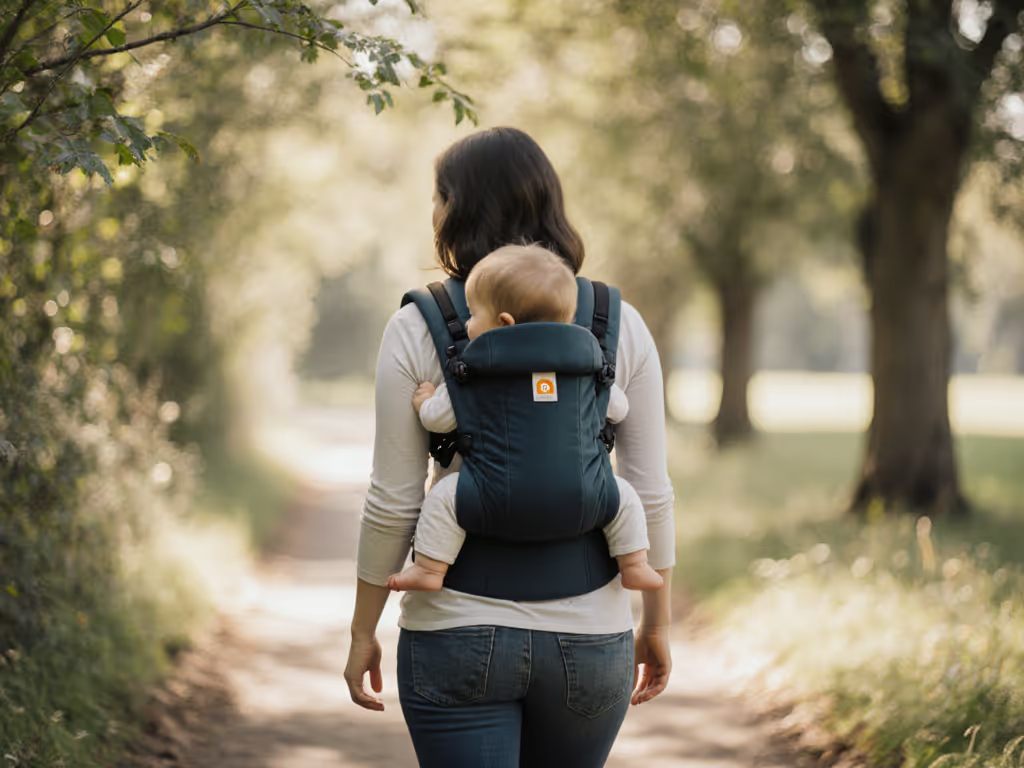
The evidence for babywearing and anxiety is encouraging but incomplete. If you're considering this as part of your anxiety-management toolkit:
- Consult your mental health provider about babywearing as a complementary strategy. It's not a replacement for therapy or medication, but they can help you integrate it.
- Test your carrier in your actual climate and routine. Borrow or rent first if possible. A two-week trial, tracking how you feel and how your baby responds, will tell you more than marketing claims.
- Build a fit checklist and validate your setup each time you wear, especially early on. This builds confidence and reduces anxiety about positioning.
- Track your anxiety markers over a few weeks: sleep quality, heart-rate variability during wear (many phone apps can approximate this), or a simple mood log. Measure, don't guess.
- Connect with babywearing educators or perinatal mental health specialists if you want personalized guidance. Community and expert validation matter.
Babywearing can be a grounding tool, but only if the fit, fabric, and duration work for your body and climate, and only alongside professional support for clinical anxiety. The research invites further exploration, not certainty.
Related Articles