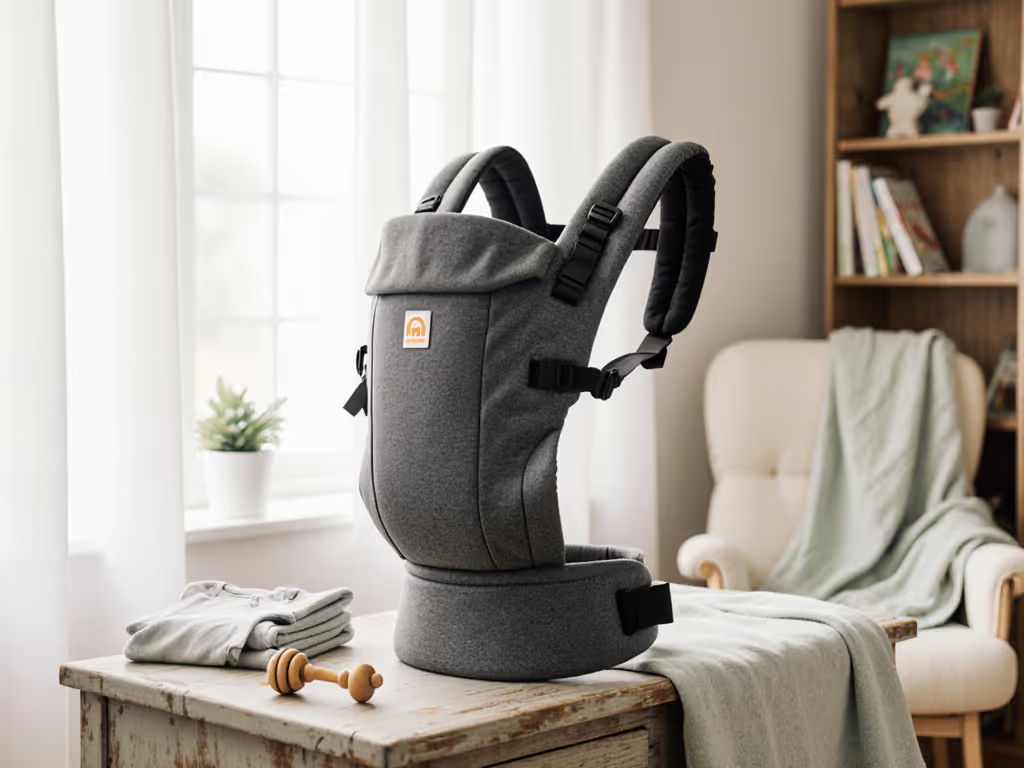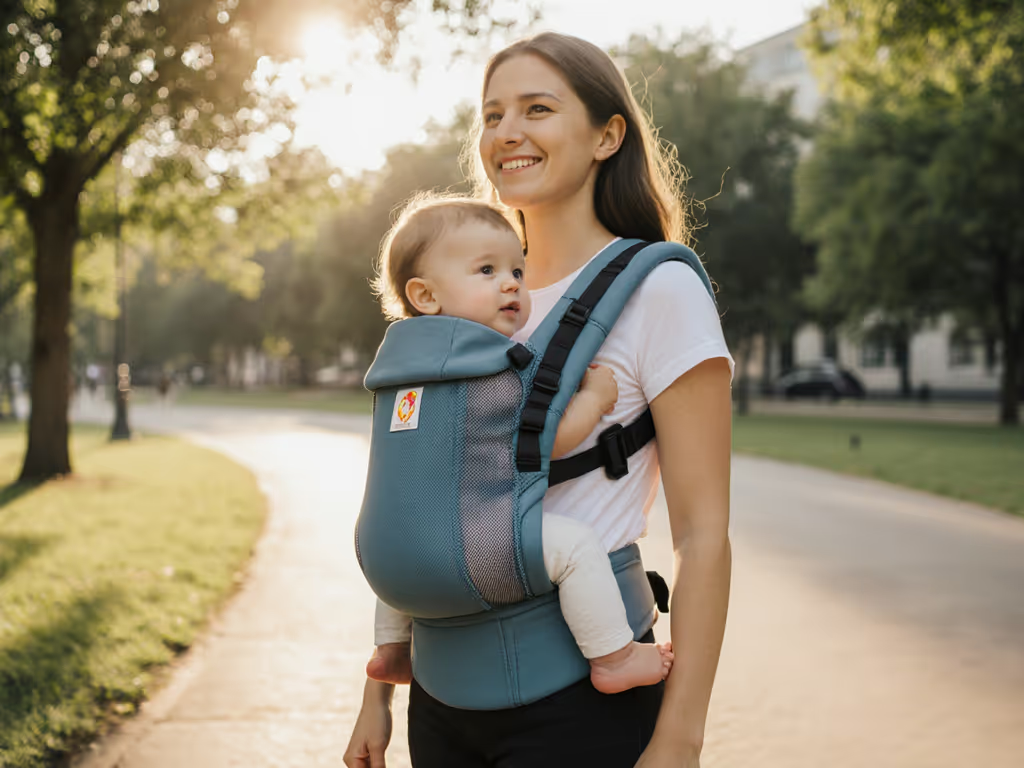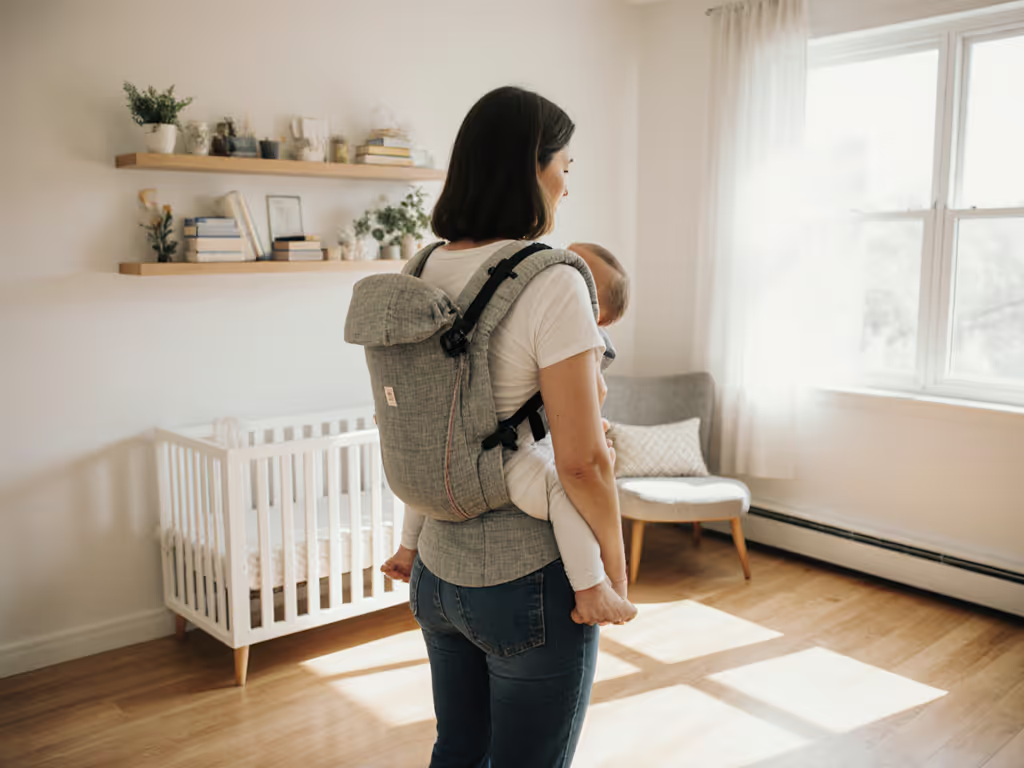
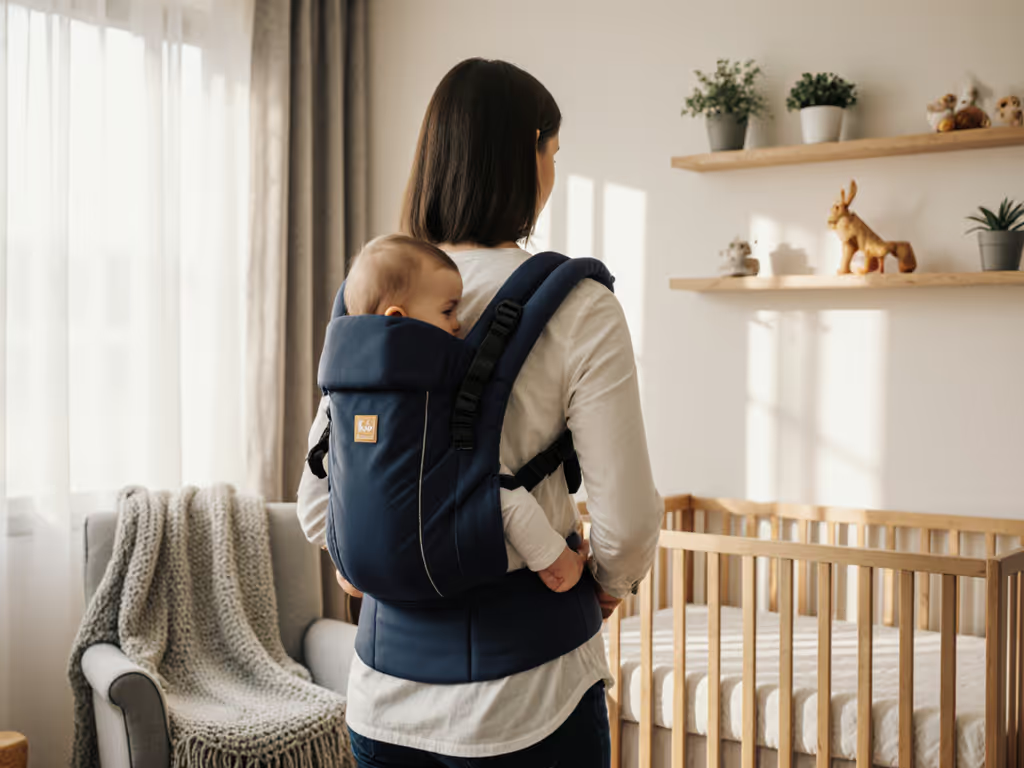
Manduca Baby Carrier Review: Real-World Fit, Pros & Cons
By Zoe Mwangi • 21st May
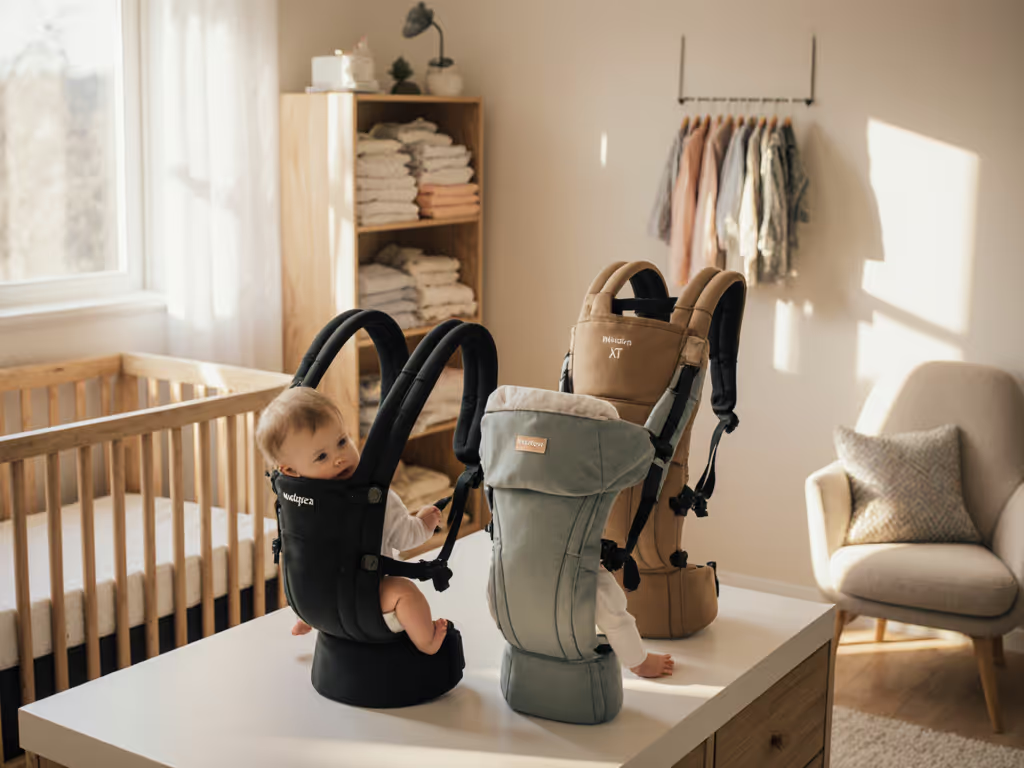
If you're trying to cut through the noise and want a numbers-first Manduca Baby Carrier review, this is the Manduca carrier detailed review you're looking for. I'll break down how the main Manduca models actually perform on real bodies, over long wearing windows, across climates, and whether they justify their price in comfort-hours, not just cute prints.
Value is comfort-hours per dollar, not the sale sticker.
I'll focus on three core Manduca options you're most likely choosing between:
- Manduca Original (sometimes just called Manduca)
- Manduca XT (the highly adjustable, birth-to-toddler upgrade)
- Manduca Twist (a simpler, newborn-friendly hybrid)
All three are structured, ergonomic carriers designed for M-position hip-healthy carrying and are typically rated from around 3.5 kg / 7 lb up to 15-20 kg / 33-44 lb depending on the model.
Below is a 10-point, numbered breakdown to help you decide if Manduca is worth it for your body, baby, and budget.
1. Manduca Models at a Glance (What You're Actually Comparing)
Before we get into fit and pros/cons, here's the quick landscape. Prices are approximate and vary by region and print.
1. Manduca Original
- Type: Full buckle carrier with built-in newborn insert
- Weight range: ~3.5-20 kg (7-44 lb)
- Positions: Front (inward), hip, back
- Typical price: ~US$150 / £120 / €130
- Best for: Parents who want a single, robust workhorse from early infancy to toddlerhood and don't mind an internal insert for newborns.
2. Manduca XT
- Type: Full buckle, fully adjustable panel (width + height)
- Weight range: Tested 3.5-20 kg (7-44 lb)
- Positions: Front (inward), hip, back
- Typical price: ~US$190-220 / £145-155 / €170-190
- Best for: Families wanting one carrier from ~4 weeks to ~4 years, with more precise adjustments for different babies and caregivers.
3. Manduca Twist
- Type: Hybrid (panel + wrap-style straps, tie-off waist)
- Weight range: ~3.5-15 kg (7-33 lb)
- Positions: Front (inward), back (for older babies, with practice)
- Typical price: ~US$110-140 / £90-110 / €110-130
- Best for: Newborn stage through light toddler; caregivers who like a soft, wrap-like feel but want more structure than a full wrap.
Takeaway:
- If you want maximum lifespan and adjustability: look at Manduca XT.
- If you want a simpler, slightly cheaper workhorse with proven durability: Original.
- If you're laser-focused on the newborn to ~18 months window, especially for home use and naps: Twist.
2. Sizing & Fit: Which Bodies Do Manduca Carriers Actually Work For?
This doubles as your Manduca carrier sizing guide.
Manduca's general design philosophy: firm, supportive waist + moderately structured shoulder straps. That's good for load distribution but can be hit-or-miss if your body falls at the extremes.
Waistband range (approximate)
-
Manduca Original / XT
-
Comfortable waist range for many: ~70-140 cm / 27-55 in
-
Petite waists (<70 cm) can still tighten fully, but there may be extra webbing.
-
Plus-size up to around US 22-24 typically fits; beyond that, it depends on torso proportions and where you prefer the belt to sit.
-
Manduca Twist
-
Fabric waist to tie off, so it's naturally more size-flexible.
-
Works well for very small waists and many plus-size bodies, but fabric digs more easily if tied too tight on softer post-partum tummies.
Shoulders & torso
-
Petite caregivers / short torsos
-
Manduca Original and XT both have adjustable back strap and decent strap-shortening options.
-
Many short-torso wearers find XT easier to dial in because you can make the panel shorter as well as narrower.
-
Broad shoulders / larger chests
-
The slightly contoured straps tend to sit nicely on broad shoulders.
-
For large busts, front carrying can feel chesty in any buckle carrier; Manduca's shaping is middle-of-the-road (not the most low-profile, but not overly bulky).
-
Limited shoulder mobility / back-clip struggles
-
Original and XT both have a rear chest clip that some users with shoulder issues find hard to reach. You can:
-
Clip it before putting the carrier on and pull over your head, or
-
Wear straps in backpack style (clip higher) and adjust.
-
The Twist avoids a back clip entirely; you tie the straps in front or behind, which can be easier for some and harder for others (hand strength, arthritis).
If reaching back-clips is already a known issue for you, the Manduca Twist is more forgiving; the XT is workable with a good donning strategy.
Multi-user households
- Original / XT: switching between caregivers of different sizes is quick, just slide buckle under tension markers or remember "my setting is 3 finger-widths shorter than yours."
- Twist: more forgiving, but you can't "bookmark" settings as precisely; there's more tying by feel.
Summary: Manduca is inclusive but not infinite in its fit range. If you're at either extreme of size or have specific mobility constraints, prioritize a try-on or easy returns. For size-specific picks, see our best carriers for plus-size parents.
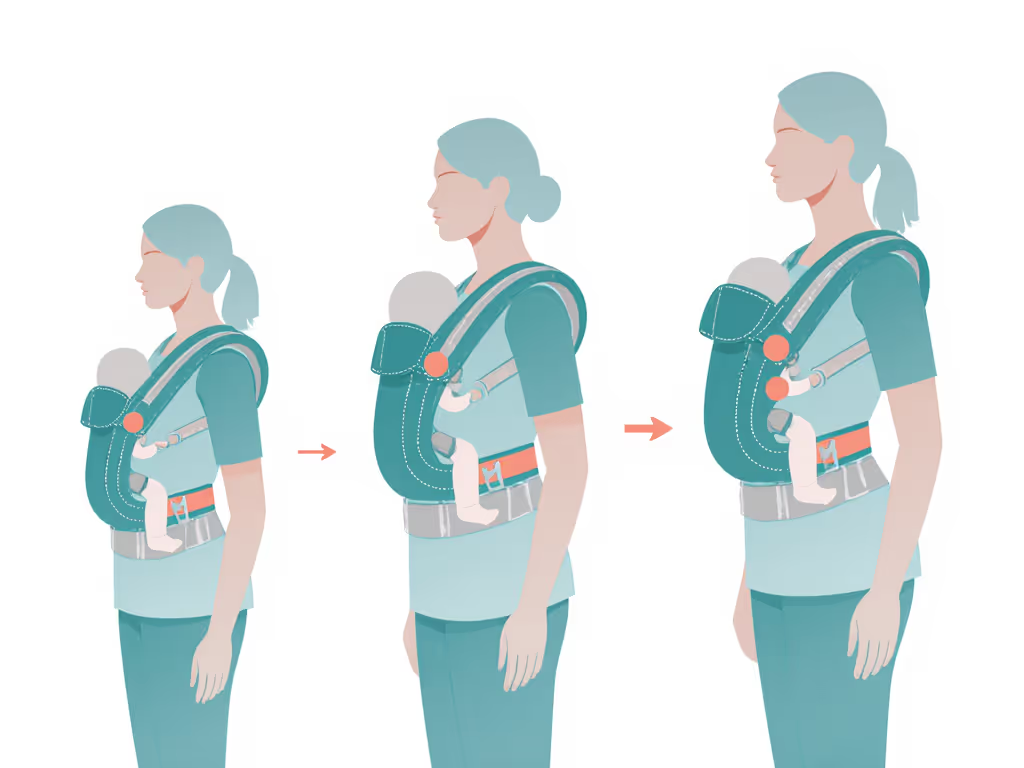
3. Manduca Features for Newborns: Safety, Support & Sanity
Newborn suitability is where Manduca models differ most. This section is your Manduca features for newborns deep dive.
Manduca Original (with newborn insert)
- Uses a built-in seat reducer / insert to bring baby higher and keep legs in a tucked, froggy position.
- Works for many newborns once they're around 3.5 kg / 7 lb and have reasonable tone.
Pros:
- No extra insert to lose; always attached.
- Good head and neck support with the integrated hood and panel height.
- Upright position helps with reflux and colic.
Cons:
- Inserts add bulk and heat, less ideal in hot/humid climates.
- Fit is not as customized as an adjustable-width panel; very small babies or preemies may feel "swallowed."
Manduca XT (adjustable panel)
- No separate insert. Instead, the seat narrows using sliders or snaps, and the panel height adjusts.
- You can realistically use it from around 4 weeks, earlier if baby is full-term, with guidance and very careful tightening.
Pros:
- Closer fit for small babies: better knee-to-knee support without forced overspread hips.
- Less bulk than an insert, so cooler and less fussy.
- Fine-tuning is excellent for babies with hip concerns (aligning with hip-healthy recommendations when adjusted correctly).
Cons:
- More setup decisions: width, height, strap routing. There's a learning curve.
- If you're extremely sleep deprived, a simpler newborn-only carrier may feel easier in the first couple of weeks.
Manduca Twist (newborn-focused hybrid)
- Soft panel with wrap-like straps that spread widely.
- Excellent for tiny babies, including many who feel lost in bulky structured carriers.
Pros:
- Very snug, swaddle-like feel that often calms fussy newborns.
- Straps spread over shoulders and back, distributing weight gently, nice for recovering core and pelvic floor.
- Minimal hardware = fewer pressure points for c-sections.
Cons:
- Not as fast to put on as a pure buckle carrier.
- Max weight is lower (~15 kg); by the time you're carrying a solid toddler, support may feel insufficient for long walks.
Safety note (all models): For newborns, you still need to follow the usual checks: visible and kissable airways, firm tummy-to-tummy contact, pelvic tuck, and M-position hips. Manduca's structure encourages this, but it's not magic, fit and tightening matter. Run through the TICKS babywearing safety checklist before each wear.
4. Comfort for Long Walks & Heavier Toddlers
Once your baby hits 9-10 kg (20-22 lb), some carriers that felt "fine" suddenly don't. Manduca's reputation is built on this phase.
Manduca Original
- Feels very solid for most caregivers up to 15-17 kg.
- Wide, firm waistband carries a lot of the load on your hips, sparing your shoulders.
- Back carry is available and usually comfortable by the time baby is sitting independently.
Manduca XT
- Similar structure to Original but with panel adjustments to keep knee-to-knee support even for tall toddlers.
- Many families report using it happily up to 3-4 years (within the 20 kg limit) for school runs, brief hikes, and travel days.
Manduca Twist
- Spectacular for 0-10 kg; still decent up to 12-13 kg for many bodies.
- Because there's no padded, buckled waistband, heavier toddlers sink more into your shoulders and upper back, especially on long walks.
If your main use-case is:
- Daily long walks, hiking, urban commuting: Original or XT win.
- Mostly indoor naps, errands, and short outings in the first 18 months: Twist is enough, and often more comfortable on sensitive cores.
5. Setup Time & Learning Curve (Can You Get It On in 60 Seconds?)
Time to honest setup scoring.
-
Manduca Original
-
Front carry: 30-60 seconds once you know what you're doing.
-
Back carry: 60-90 seconds with practice.
-
Learning curve: Low to medium - very similar to other mainstream buckle carriers.
-
Manduca XT
-
First weeks: you'll spend extra time dialing in panel width/height.
-
Once set, daily use is about as quick as the Original.
-
Learning curve: Medium - more adjustment points but logical.
-
Manduca Twist
-
Expect a wrap-like learning curve for the first 3-5 tries.
-
After that, many caregivers can pop baby in within 60-90 seconds.
-
Learning curve: Medium to high if you've never used any kind of wrap.
If you're juggling daycare runs, stairs, and car seats, there's real value in a carrier you can put on while half awake. On that metric, the Original and XT edge out the Twist for pure speed, but the Twist can be just as fast once it's in your muscle memory.
6. Climate, Fabrics & Washing
Manduca uses mostly cotton or organic cotton with foam padding; some limited editions may incorporate blend fabrics.
Heat management
- All Manduca models are more "sturdy fabric backpack" than ultra-light mesh.
- In hot/humid climates, expect:
- Slightly warmer feel than full mesh carriers.
- The Twist to be the coolest of the three, because you can spread or thin the straps and there's less padding.
Cold & layering
- In colder climates, Manduca's fabric and padding are assets.
- Because they're relatively low bulk, you can:
- Wear baby under an oversized coat zipped over both of you, or
- Use a babywearing cover without turning into the Michelin Parent.
Washing & care
- Machine washable on gentle cycles, line drying recommended.
- Dark colours handle stains and wear better; lighter prints may show denim transfer or spills faster.
- Foam and webbing hold up well; it's rare to see structural breakdown in under 2-3 years of regular use.
If you live somewhere very hot and intend to wear for hours outdoors, I'd at least compare Manduca to a true mesh carrier. Start with our summer babywearing cooling tips for breathable fabrics and heat-safe routines. For mixed or cooler climates, the fabric choices are a non-issue and often a plus.
7. Durability, Repairability & Resale (Where Manduca Quietly Shines)
This is where my bias kicks in: I model comfort-hours per dollar and care deeply about secondhand ecosystems.
Build quality
- Stitching and webbing on Manduca Original and XT are robust, with multiple lines of reinforcement in high-stress areas.
- Buckles are from reputable manufacturers and rarely fail under normal use.
Repairability
- Because the design is relatively straightforward (no complex internal frames), common repairs are:
- Re-stitching loosened seams.
- Replacing a buckle (easy for a gear repair shop).
- Fabrics don't tend to sag dramatically, so support stays fairly consistent over years.
Resale value
In many markets with active babywearing communities:
- Manduca Original and XT hold 40-70% of their retail price in good used condition.
- Twist holds slightly less, simply because its useful life tops out earlier in toddlerhood.
Let's do rough amortization math on an XT:
- New: say US$200.
- Use: 1 hour/day from 1 month to 3 years ~1,000 hours.
- Cost before resale: ~20 cents per hour.
- Sell later at half price: effective cost ~10 cents per comfort-hour.
Value is comfort-hours per dollar, not the sale sticker.
That math, and my own spreadsheet of hours worn vs. resale price across several carriers, consistently pushes me toward a "Buy once, cry never" approach. Manduca supports this strategy well because it's trusted on the secondhand market.
8. Manduca Carrier Pros and Cons by Model
Here's the explicit Manduca carrier pros and cons breakdown.
8.1 Manduca Original
Pros:
- Proven workhorse: widely used, lots of real-world data.
- Wide age range: newborn (with insert) to ~3 years for many kids.
- Fast on/off: great for errands and daycare drop-offs.
- Good resale value and strong secondhand availability.
- Back carries feel secure once baby is ready.
Cons:
- Newborn insert can be warm and bulky.
- Less precise panel width fit vs. XT, especially for very small babies and tall toddlers.
- No built-in forward-facing option (this is a pro for hips, a con for some older babies' curiosity). If forward-facing is on your checklist, read our forward-facing carriers safety comparison to weigh trade-offs.
- Back clip can be hard to reach for some caregivers.
8.2 Manduca XT
Pros:
- Truly adjustable panel: seat width and height grow with your child.
- Realistically works from about 4 weeks to 3-4 years.
- Keeps knee-to-knee support for taller toddlers better than the Original.
- Very strong resale value; remains in-demand.
- Great one-and-done candidate for minimalist households.
Cons:
- Higher upfront price vs. Original and Twist.
- More adjustment points = steeper learning curve in the first few uses.
- Still not a forward-facing carrier; some toddlers may protest if they've tried facing out in other carriers.
- Not as cool as mesh-heavy designs for tropical climates.
8.3 Manduca Twist
Pros:
- Excellent newborn fit without inserts.
- Soft, low-bulk structure that plays well with c-section recovery and sensitive tummies.
- Wrap-like snugness with less fabric drama than a full wrap.
- More forgiving sizing for both very petite and plus-size caregivers due to tie-off design.
- Lower price, especially if bought used.
Cons:
- Learning curve higher if you're new to tying carriers.
- Less supportive for heavier toddlers on long walks.
- Fewer carrying positions; back carries are more advanced and not everyone will feel confident with them.
- Resale value is good but lifespan is shorter than the XT, since many outgrow it by comfort around 18-24 months.
9. Who Is Manduca Not Ideal For?
Manduca is solid, but not universal. You might want to look elsewhere if:
- You live in a very hot, humid climate and will wear outdoors for hours daily.
- A full mesh carrier can simply be more realistic comfort-wise.
- Forward-facing is non-negotiable for you.
- Manduca is intentionally designed for inward-facing and back carries for ergonomic reasons. If you want regular forward-facing on walks, a different design is better.
- You have very limited shoulder mobility and cannot work with any back clips or tying.
- Some onbuhimo or buckle-on-the-front systems might be easier.
- You need tandem solutions (twins, toddler + newborn).
- While advanced wearers sometimes stack carriers, Manduca doesn't offer a dedicated tandem system.
- You want ultra-quick on/off with absolutely no adjustment between caregivers.
- Manduca can get close, but there is still webbing to tweak as you swap between bodies.
If you fall into any of these groups, Manduca can still be part of your toolkit, but maybe not your only carrier.
10. Final Verdict: Is Manduca Worth It, and Which Model Should You Buy?
Time to answer "is Manduca worth it?" in practical terms.
When Manduca is absolutely worth it
Manduca shines if you:
- Want ergonomic, inward-facing carries from newbornish through toddler years.
- Prefer durable, repairable gear with strong secondhand value.
- Are willing to invest a few practice runs to get a precise, safe fit.
- Want to keep your carrier count low, fewer, better tools instead of a closet of maybes.
In comfort-hours per dollar, Manduca, especially the XT, competes strongly with other premium carriers. Factor in resale, and the long-term cost is modest compared to strollers, gadgets, or gear you use far less.
Simple model-pick guide
-
Choose Manduca XT if:
-
You want one carrier from early infancy to ~4 years.
-
Multiple caregivers of different sizes will share one carrier.
-
You'll use it for walks, travel, naps, errands - everything.
-
Choose Manduca Original if:
-
You like a more set-and-forget structure and don't care as much about precision panel tweaks.
-
You find a good price new or used and your baby isn't at the extremes of size.
-
You're okay with an insert for the earliest months (or you'll start around 2-3 months).
-
Choose Manduca Twist if:
-
Your priority is newborn to ~18 months, especially for home use and naps.
-
You prefer a softer, wrap-like feel and have or can build a little tying confidence.
-
You want less waistband pressure on a healing abdomen.
My closing take
If I had to recommend one Manduca for most families who want a minimalist setup, it would be the Manduca XT. It's not the cheapest on the rack, but its adjustability, lifespan, and resale profile make it a strong "buy once, cry never" candidate.
For a strictly newborn-focused period or a lower budget that still values ergonomics, the Manduca Twist paired with a later-stage toddler carrier can also be a high-value, low-clutter strategy.
Whichever route you take, plan for:
- At least two practice sessions at home, adjusting and re-tying without time pressure.
- A quick safety checklist (airways visible, panel tight, pelvis tilted, M-position).
- A plan for resale or hand-me-down once your baby ages out.
Do that, and your Manduca won't just be another piece of baby gear, it'll be one of the few tools that quietly earns its spot, hour after hour, on the days when having both hands free matters most.
Related Articles