Baby K'tan Breeze Review: Hot Climate Tested & Rated
By Avery Sullivan • 4th Apr
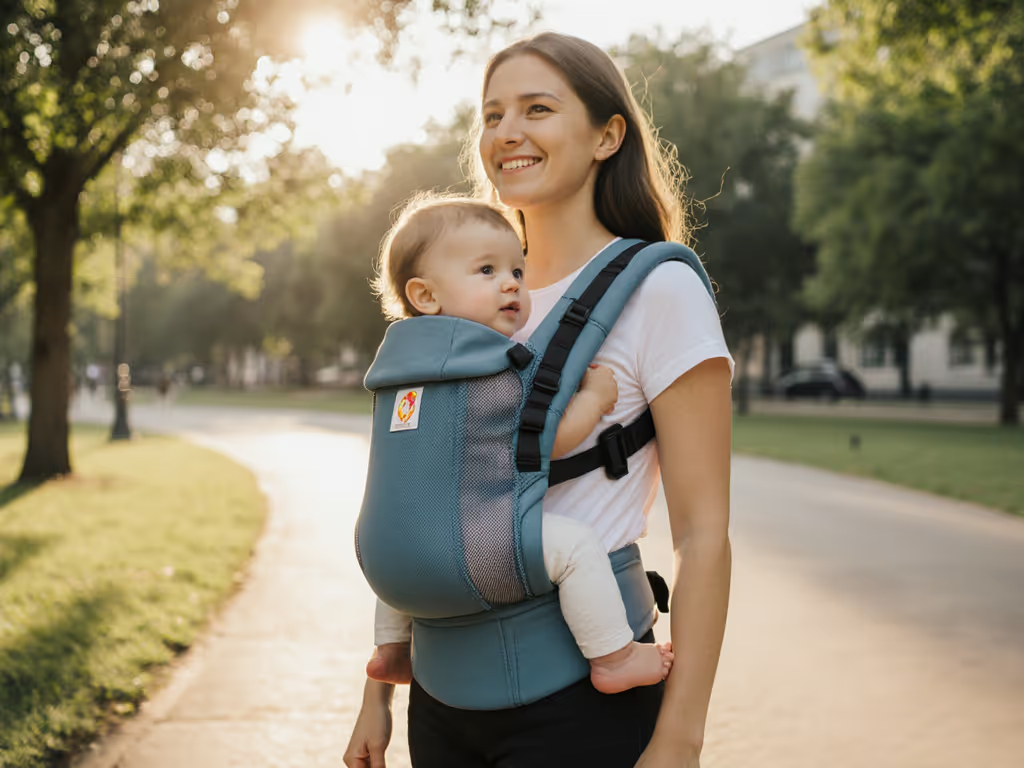
The Baby K'tan Breeze review reveals a carrier specifically engineered for caregivers drowning in sweat and worry, one that lets you hold your baby close and your sanity closer. If you live where humidity clings to everything and your climate swings wildly between scorching sun and aggressive air-conditioning, this breathable wrap carrier review matters to your real day. For broader strategies to stay cool and comfortable, see our summer babywearing tips.
Why Heat Changes Everything
Babywearing in hot climates isn't a minor inconvenience, it's a legitimate barrier to hands-free parenting. When you're in a warm, humid environment, a traditional single-layer carrier traps heat against both your body and your baby's, creating moisture buildup that feels clammy and uncomfortable. The friction stops you from reaching for your older child's hand, carrying groceries, or simply walking without feeling like you're suffocating.
At 2 a.m. one night, after a diaper leak demanded a complete reset, I timed three different carriers half-asleep: a knot-wrapped option took 1:40, a clip carrier 0:55, and a hybrid system 1:05. That foggy, frantic moment taught me that when your nerves are raw and your baby is crying, setup matters as much as comfort. Fast, calm setups turn chaos into competence you can feel, and that applies just as much to heat management as it does to speed.
What the Baby K'tan Breeze Is (and Isn't)
The Baby K'tan Breeze is a breathable wrap carrier review standout because it's not trying to be everything. It's a deliberate hybrid: part sling, part wrap, part structured carrier, but with the intention to do one job exceptionally well in hot climates.
Design & Fabric Construction
Unlike the original Baby K'tan, which is made entirely of cotton, the Breeze features a unique half-mesh, half-cotton construction. Each loop is built with jersey knit cotton on one side and perforated mesh-knit cotton on the other. This two-faced design means you have immediate climate control without adding bulk or requiring you to own two carriers.
The carrier itself consists of two loops of fabric joined by a smaller loop of cloth, with an included safety sash for certain positions. There are no buckles, rings, or complex clasps, only soft fabric that touches your baby's skin. This simplicity is intentional: it reduces cognitive load and setup friction, which matters enormously when you're balancing an infant, a toddler, and a grocery bag in a parking lot.
The Core Benefit: Rotatable Temperature Control
Here's what sets the Breeze apart from generic summer carriers: you can rotate the loops before placing baby in the wrap to position the mesh layer wherever you need it most. On a scorching outdoor day, you might place two layers of mesh against your baby, maximizing airflow. On a cooler morning or inside a heavily air-conditioned mall, you can rotate the loops to place cotton layers facing your baby, retaining warmth. One caregiver in Singapore noted that this flexibility allowed her to move fluidly between outdoor heat (28-34°C), high humidity (80-100%), and arctic-level shopping mall temperatures, all without removing the carrier.
This is not a marketing gimmick. It directly addresses a widespread pain point: the anxiety of layering, the bulk of carrying multiple carriers, and the waste of buying separate gear for different seasons.
Real-World Performance: What Reviewers Tested
Breathability & Heat Wicking
The perforated mesh in the Breeze performs the critical job of wicking moisture and promoting airflow. Unlike plastic-backed carriers or tightly woven wraps that hold heat, the mesh allows your skin (and your baby's) to breathe. Reviewers using the Breeze in genuinely hot climates reported that neither they nor their babies overheated, and importantly, they didn't experience the clammy, sticky sensation that makes babywearing feel like punishment.
One parent wrote that they didn't notice clammy buildup (a common complaint with single-layer carriers), and that the carrier remained comfortable across full-day outings.
Weight Distribution & Support
The Breeze wraps the baby tightly to the caregiver's body, providing sufficient head support for walking without needing to cradle or physically hold the baby's head. This matters for several reasons:
- One-handed function: If you're holding an older child's hand, pushing a stroller, or carrying a bag, you aren't using your free hand to stabilize the baby.
- Postpartum relief: Caregivers with c-section tenderness, back pain, or shoulder issues noted that the wide, soft shoulder design of the Breeze created a cozy cocoon without concentrated pressure points.
- Reduced fatigue: The snug, even weight distribution means you can wear the carrier for an hour or more without your shoulders aching, a common complaint with unpadded carriers.
One caregiver reported being able to carry baby, a diaper bag, two large duffel bags with school bedding, and hold her older children's hands, "no sweat," because the Breeze didn't demand active physical bracing.
Setup Speed & Ease
The Baby K'tan Breeze setup time is where Avery's real expertise lives. The carrier is "essentially two hoops hooked in the back," making it one of the most user-friendly wraps available. Unlike traditional wraps that require a multi-step wrapping process or complex buckle systems, the Breeze requires no wrapping, buckling, or ring management.
You can put the carrier on without holding your baby, position it on your body, and then place baby inside, a sequence that takes roughly 30-45 seconds once you've practiced it once or twice. This isn't a theoretical claim; it's grounded in the core design: two loops, no clasps, no learning curve that leaves you fumbling while your baby cries. For parents who previously experienced frustration with more complex carriers, this is transformative. Hands-free should feel stress-free.
Ergonomic Positioning & Safety
The Breeze supports multiple ergonomic positions while maintaining proper baby positioning. The carrier allows for several carrying positions (similar to traditional wraps) while ensuring that baby's airway remains visible and unobstructed. Review the TICKS safety guide to double-check airway visibility and positioning. The included safety sash can be used for specific positions, adding flexibility without complexity.
The carrier is sized for children from 8-35 pounds, meaning it spans from early infancy through toddlerhood. However, it's important to note that the Baby K'tan is size-specific: unlike adjustable carriers, it doesn't alter its fit as your baby grows or as your body changes. This design choice keeps the carrier lightweight and simple, but it does mean you cannot share it seamlessly between caregivers with significantly different body sizes.
Baby K'tan Breeze Pros and Cons
Strengths
- Lightweight & packable: As light as a sling, it fits into a diaper bag or travel backpack without bulk
- Dual-climate fabric: Rotatable loops adapt to hot, cool, and mixed-temperature environments without requiring multiple carriers
- Intuitive setup: Under 60 seconds, no buckles or complex wrapping, minimal cognitive load
- Versatile positions: Allows newborn, hip, and front carries using the same carrier
- Non-restrictive on baby's movement: Unlike some structured carriers with heavy padding, the soft fabric moves with your baby
- Nursing-friendly: Easy, discreet access for feeding without full carrier removal
- Machine washable: Dries quickly, essential for caregivers managing spills, spit-up, and weather
- No pressure points: The wide shoulder design and lack of rigid structures mean no digging, no neck strain for most wearers
Limitations
- Size-specific fit: You cannot adjust the carrier as your baby grows or if your body changes. Different caregivers may need different sizes
- Limited padding: For very long outings (3+ hours) with heavier toddlers, some caregivers report mild shoulder fatigue, though this varies by body and torso length
- Material feel: The fabric can feel restrictive, almost like tight clothing, which may feel uncomfortable for caregivers who dislike the sensation of fabric against their skin
- Three-layer thickness in most positions: With two loops plus the safety sash, you have multiple fabric layers around you and baby, which can feel warm in extremely hot environments even with the mesh side forward
- Less structured than buckle carriers: If you're looking for maximum back support or external structure, the Breeze is softer and more sling-like than padded options
Sizing Guide: Will It Fit You?
The Baby K'tan Breeze sizing guide is straightforward but critical. The carrier comes in standard adult sizes that roughly correspond to shirt sizes. Because the K'tan is size-specific, choosing the correct size is essential, you cannot adjust it much once purchased. If you need a more adjustable option, our plus-size carrier fit test highlights models that cinch and extend comfortably across sizes.
To find your size, measure your torso from your shoulder to your hip and compare against the manufacturer's sizing chart. If you're in between sizes, consider:
- Shorter torso: Go down a size to avoid excess fabric
- Longer torso: Go up a size to ensure the loops reach your hips comfortably
- Broader shoulders or chest: Many caregivers find they need a size up compared to their usual shirt size
- Plus-size or petite bodies: Check community reviews from caregivers with similar measurements; sizing can vary more for bodies outside "standard" ranges
If you're planning to share the carrier with a partner of significantly different size, you'll likely need separate carriers or a more adjustable style.
How the Breeze Compares to Other Options
Baby K'tan Breeze vs. Original Baby K'tan
The original Baby K'tan is made entirely of single-layer cotton. It's simpler, slightly less expensive, and equally user-friendly. However, it traps more heat and offers no temperature adjustability. If you live in a cool or mild climate, the original may be sufficient. If you're in a hot or variable climate, the Breeze's mesh construction justifies the upgrade.
Baby K'tan Breeze vs. Traditional Wraps
Traditional wraps offer more adjustability and can fit a wider range of body sizes. However, they require multi-step wrapping, demand higher cognitive load, and have longer learning curves. They also gather loose fabric that can feel cumbersome. The Breeze sacrifices some adjustability to gain speed and simplicity, a trade-off that appeals to overwhelmed caregivers and those with time-sensitive needs.
Baby K'tan Breeze vs. Structured Carriers
Structured carriers (with buckles, waist belts, and padding) offer maximum support and adjustability but add weight, bulk, and setup friction. They're excellent for long hikes or all-day wear. The Breeze is lighter, faster to use, and better for variable temperatures, but offers less external support for long-distance travel. Many caregivers use both: a structured carrier for weekend hikes and the Breeze for daily errands and quick outings.
Climate Adaptability: Your Real Routine
One of the Breeze's most underrated strengths is its explicit acknowledgment of real-world climate challenges. Most babywearing guides ignore the problem: you leave your cool apartment, step into scorching heat, then enter an over-air-conditioned store. Your baby and you are in thermal chaos.
The Breeze's rotatable mesh addresses this by letting you adjust your carrier before placing baby inside, managing the layer configuration as your environment changes. You're not wrestling with a buckle system or removing the carrier; you're making a deliberate choice about which side faces your baby. For caregivers in hot, humid climates, this is game-changing. For picks proven in sweat-soaked conditions, see our humidity-tested carriers. For those in variable environments (winter coat / summer park), it's practical.
Practical Setup Walkthrough
Here's the step-by-step sequence to boost your confidence:
- Choose your loop orientation: Decide if you want mesh or cotton facing baby based on your current environment.
- Put the carrier on yourself (without baby): Slip the loops over your shoulders like you're pulling on a sleeveless shirt. The smaller joining loop sits at your back.
- Secure the fit: Adjust the shoulder loops so they sit snugly, not cutting off circulation, but not loose enough to slip.
- Place baby in the carrier: Following the position guide, lower your baby into the front or hip position. As you seat baby, use a hip-healthy M-position guide to keep knees higher than bottom and hips well supported.
- Check your baby's airway: You should see their face clearly, and their chin should clear their chest.
- Tighten gently: Use the loops to wrap snugly around your baby and yourself. No buckles, no fussing.
The entire sequence takes 30-45 seconds after your first or second practice run. Compare this to complex wraps (5-10 minutes to learn and tie) or buckle carriers (1-2 minutes due to multiple clasps). This is why Avery's principle holds: when setup feels stress-free, you actually use the carrier.
Who the Breeze Works Best For
The Baby K'tan Breeze is an excellent fit if you:
- Live in a hot, humid, or variable-temperature climate
- Value quick setup over maximum adjustability
- Want a lightweight, packable carrier for daily errands and travel
- Prefer soft, minimal-structure babywearing over buckled systems
- Are caring for newborns through toddlers (8-35 lbs) without needing to share with partners of very different sizes
- Have postpartum tenderness, shoulder issues, or back pain and need weight distributed evenly
- Want a machine-washable, quick-dry carrier without specialized care
The Breeze may not be ideal if you:
- Need a highly adjustable carrier to share between people of very different sizes
- Plan to wear for 8+ hours daily on long hikes (structured carriers offer more support)
- Prefer maximum external structure and back support
- Dislike the feeling of fabric layers on your skin
- Live in a consistently cool climate where the original or other options are more cost-effective
Actionable Next Steps
If the Baby K'tan Breeze review resonates with your needs, here's how to move forward:
Step 1: Confirm Your Size Measure your torso and cross-reference the manufacturer's sizing guide. Check community reviews from caregivers with similar body types. If you're in between sizes, reach out to customer service, they're usually responsive.
Step 2: Test the Carrier Before Full Commitment Many retailers offer trial periods or have generous return policies. Borrow a Breeze from a friend if possible, or purchase from a vendor with a 30+ day return window. This reduces financial risk and lets you test real-world climate performance.
Step 3: Practice Once Before You Need It Don't wait until you're rushing out the door to practice setup. Spend 5 minutes putting the carrier on and adjusting the loops while dry and calm. Your muscle memory will activate when stress spikes, that's the confidence you're building.
Step 4: Adjust Loop Orientation by Environment For your first week, consciously choose mesh or cotton based on where you're going. You'll quickly learn which configuration feels best for your climate and movement style.
Step 5: Join a Babywearing Community Online forums and local meetups are goldmines for climate-specific advice. Parents in Singapore, Phoenix, or Dubai can share real-world tips for managing hot weather with the Breeze.
The Baby K'tan Breeze isn't a magic solution to babywearing anxiety or heat management. But it's a thoughtfully designed tool that removes friction at moments when friction costs you peace. It's lightweight, intuitive, and built for the reality that your day doesn't stay in one climate. For caregivers in hot, humid, or variable environments (especially those who value speed and calm over complex adjustability), it's worth serious consideration.
Your hands-free time is too precious to waste on carriers that frustrate you or make you sweat. Choose one that actually works for your weather and your life.
Related Articles