Best Baby Carriers for Short Torsos Under 14 Inches
By Zoe Mwangi • 22nd Jun
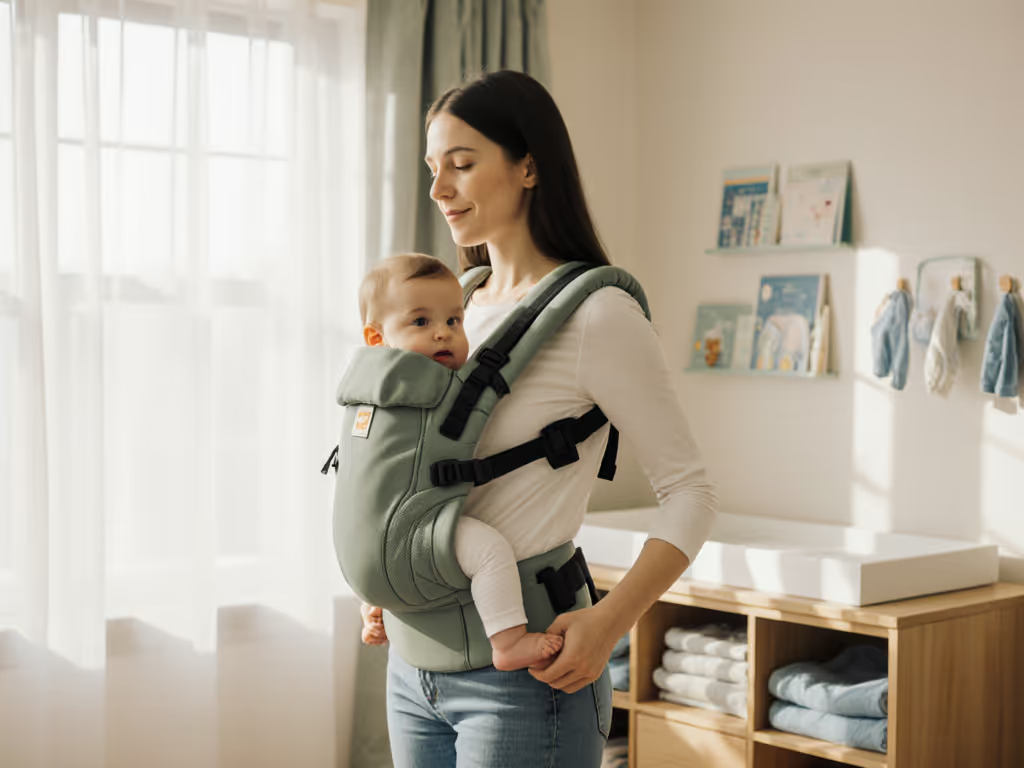
Short version: If your torso is under about 14 inches, the most forgiving baby carriers are adjustable-panel soft structured carriers, ring slings, and wraps that let you place the waistband low and keep baby's face clear of your chin. The best baby carriers for short torso caregivers are the ones that prioritize panel height, strap path, and fine-tuned adjustments over flashy features.
Value is comfort-hours per dollar, not the sale sticker.
1. How to Pick Baby Carriers for Short Torsos (Under 14")
Before comparing specific baby carriers for short torso caregivers, it helps to define the problem.
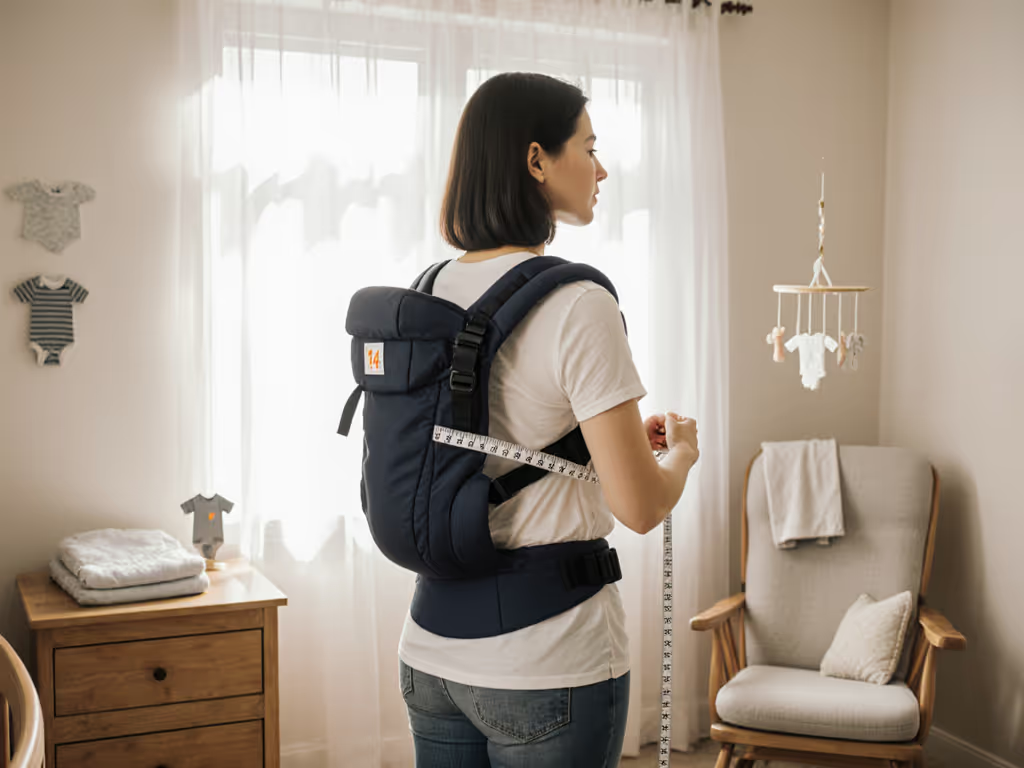
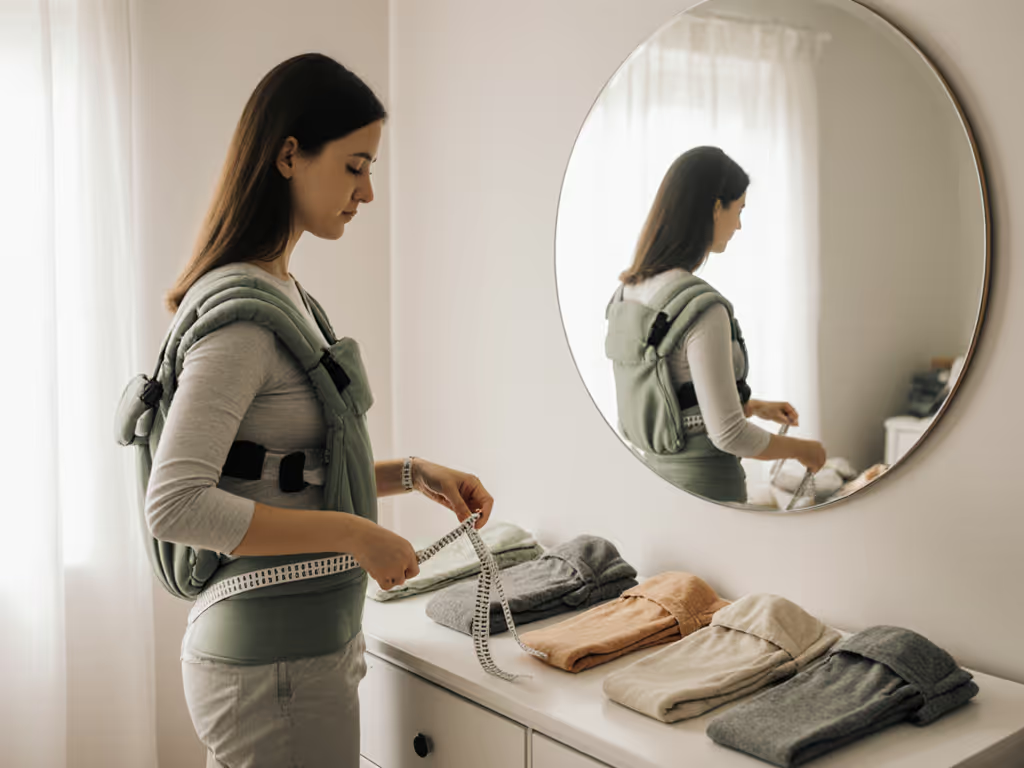
Measure your torso the backpack way
Grab a soft tape measure and:
- Find the bony bump at the base of your neck (C7).
- Find the top of your hip bones (iliac crest) at the sides.
- Measure from C7 straight down to the line between the top of your hip bones.
If that number is ≈14 inches or less, you have what most hiking-pack brands call a short torso. Carriers designed around an "average" 16-18 inch torso can ride up on you, jam under your bust, or push baby's face too high.
Why short torsos struggle with standard carriers
Shorter-torso caregivers often report:
- Waistband creeping up toward the ribs, even when cinched firmly.
- Panel too tall, so baby's head is under your chin or their face digs into your chest.
- Straps cutting into neck because the back clip sits too high and can't be lowered.
- Limited adjustability between petite and plus-size settings, making multi-user sharing harder.[1][2][11]
Most mainstream testing (including lab-style reviews) focuses on comfort, safety, and versatility, but only implicitly touches fit for petite bodies.[1][2][11] That's why you'll see me focus hard on panel height, strap adjustability, and where the waistband can sit. If you're under 5'4", our petite babywearing fit guide covers strap paths, buckle placement, and excess webbing hacks.
Buy once, cry never only works if the carrier actually fits your torso.
Short-torso fit priorities
When you test baby carriers for 14-inch torso caregivers, look for:
- Low-set waistband: Can you wear it on your hips, not just your natural waist?
- Short or adjustable panel: Can you shorten the panel for newborns and petite caregivers?
- Dual-adjust straps: Buckles that tighten from both directions so you don't have to be a contortionist to reach a back clip.[1][4][11]
- Crossable shoulder straps: More options to move weight off your neck and fine-tune fit.[1][2][11]
If a carrier nails those, it's usually a good carrier fit for short torso wearers, even if it wasn't explicitly marketed as "petite."
2. Ergobaby Omni (360 / Breeze): Most Adjustable All-Rounder for Short Torsos
Multiple independent tests consistently rate the Ergobaby Omni line as one of the most versatile soft structured carriers, with support from newborn through toddler and multiple carry positions.[1][2][6][8][11] While not marketed specifically as a low torso height carrier, its adjustability makes it one of the more forgiving options if your torso is under 14 inches.
Why it works on a short torso
- Wide range of waistband placement: The padded waist is structured but flexible enough to sit low on the hips instead of creeping high on a short waist.[1][11]
- Adjustable seat and panel: The Omni's seat width and height can be scaled via Velcro or sliders, so baby doesn't ride uncomfortably high on your chest as they grow.[1][2][11]
- Dual-adjustable straps: You can tighten from the front, which is crucial if limited shoulder mobility or a short back makes the rear clip hard to reach.[1][11]
- Crossable straps (on some Omni versions): Crossing the straps often helps petite and narrow-shouldered caregivers avoid neck rub.[1][2]
Trade-offs
- Bulky for minimalists: You're paying in bulk and cost for multi-position features and structured padding.[1][11]
- Learning curve: Facing-in, facing-out, back carry, and newborn settings all have different adjustments; expect a few dry runs with a doll.
Comfort-hours per dollar: High if you start in the newborn stage and use it into the toddler years for walks, errands, and travel. If you only need it for a few months, the price amortizes less favorably.
3. Tula Free-to-Grow: Compact Panel, Strong Petite Fit
The Tula Free-to-Grow shows up repeatedly in carrier roundups as a comfortable, highly adjustable buckle carrier from newborn to toddler.[1][2][11] Its claim to fame is a cinchable panel that adjusts in width and height, which is especially helpful for very short torso baby carrier needs.
Why it works on a very short torso
- Shorter starting panel height: The panel can be cinched down for smaller babies, preventing the "head under chin" problem for petite caregivers.[1][2]
- Hip-high waistband compatibility: The more compact design can sit lower without digging into ribs, which matters on a 13-14 inch torso.
- Simple strap path: Straightforward straps and a single back clip reduce fiddling and make it easier to dial in a consistent fit once you find your settings.[1][11]
Trade-offs
- No forward-facing position: This is a deal-breaker for some; if you want forward-facing, look at the Omni or similar.[1][2][11]
- Less plush than some premium carriers: Padding is adequate but not ultra-luxury; good for heat management, less "pillow-like" than some.[1]
Comfort-hours per dollar: Excellent if you mainly want ergonomic front and back carries and value a light, compact carrier. Especially strong for minimalists and registry-builders looking for a single, long-span option.
4. LÍLLÉbaby Complete: High Support, But Watch Panel Height
The LÍLLÉbaby Complete series is known for its structured lumbar support, six carry positions, and broad adjustability range.[1][4][8][11] Many parents like it for long walks and heavier babies because it spreads weight well.[1][11]
For short torsos, it's a bit more nuanced.
Why it can work on a short torso
- Excellent lumbar support: If you have back or pelvic floor concerns, the strong lumbar pad and structured waist can help distribute load.[4][11]
- Dual-adjustable, crossable straps: Lots of petite parent carrier adjustments are possible: you can cross the straps and tighten from both directions.[1][4]
- Multiple carry positions: Newborn, facing-in, facing-out, hip, and back options cover many use-cases from errands to hikes.[4][8]
Where short torsos need caution
- Tall panel: The panel is relatively tall compared with some competitors.[1][4] On a 14-inch or shorter torso, that can push baby's head up toward your chin, especially in the early months.
- Rib pressure potential: If your torso is very short and your bust is fuller, the wide, structured waistband may ride up into sensitive areas.
If you love the idea of LÍLLÉbaby but worry about height, plan to:
- Wear the waistband as low as safely possible.
- Use newborn and infant adjustments to keep baby from riding too high.
- Reassess once baby is bigger; often, tall panels become more comfortable once baby's head clears the top.
Comfort-hours per dollar: High for longer walks and heavier babies. For ultra-short torsos, it's more of a "try-before-you-buy if possible" because the panel height is either a non-issue or a deal-breaker.
5. BabyBjörn Harmony / One: Easy Clips, Shorter Learning Curve
BabyBjörn buckle carriers frequently appear in best-of lists for simplicity and quick learning, especially for new caregivers nervous about wraps and complex adjustments.[2][8][9] The Harmony and One are structured, ergonomic models that offer solid newborn support and, in some versions, forward-facing options.[2][8][9]
Why they often suit short torsos
- Slightly shorter body feel: These carriers tend to feel less tall and "backpack-like" than some hiking-style SSCs, which can favor petite caregivers.
- Front-access clips: Many adjustments are done at the front, reducing the need to reach for a high back clip if your shoulder range of motion is limited.[2][8]
- Good newborn support: Built-in head/neck support for newborns and smaller infants helps reduce slumping risk (key for safety confidence).[2][8][9]
Trade-offs
- Less customization than some SSCs: Fewer strap configurations and less panel customization than carriers like the Omni or Free-to-Grow.[1][2][11]
- Price vs lifespan: Some models are fantastic in the 0-18 month window but less comfortable with heavier toddlers compared with more hiking-oriented carriers.[1][11]
Comfort-hours per dollar: Very good if you want a low-friction, easy-on option for the first 18-24 months and value brainspace saved over fine-grained tweaking.
6. Beco Gemini (and Similar Compact SSCs): Narrow, Petite-Friendly Frames
The Beco Gemini is a compact soft structured carrier that shows up in several expert and parent-tested roundups as a versatile newborn-to-toddler option.[1][2][10] Its narrower body and multiple strap options make it a strong contender for short torsos.
Why compact SSCs help very short torsos
- Narrower, shorter body panel: The Gemini and similar carriers are deliberately less bulky than multi-sport hiking carriers, so they occupy less vertical space on your torso.
- Crossable straps: Again, crucial for a good carrier fit for short torso wearers, crossing the straps often improves comfort and stability.[1][2]
- Multi-position without over-building: Front-in, front-out, hip, and back carry options without the huge frame.
Trade-offs
- Less cushy for heavy toddlers: These carriers prioritize compactness over maximum padding; perfectly fine in the under-25 lb range, more mixed for 30+ lb long-haul carries.[1][10]
- Not always best for very hot climates: Some fabrics run warmer than mesh-heavy hiking carriers, depending on the model.
Comfort-hours per dollar: Strong if your main use-case is under-2s, errands, and walks up to 1-2 hours rather than all-day hikes.
7. Ring Slings: Most Adjustable for Very Short Torsos and Newborns
Ring slings routinely appear as top picks for newborn closeness and quick on/off carrying in expert reviews.[2][3][8] A single length of woven fabric threaded through rings may not look high tech, but it solves many very short torso baby carrier issues by bypassing fixed panel heights altogether.
Why ring slings are almost torso-agnostic
- No predefined panel: You decide how high or low baby sits and how much fabric covers your torso; there is no fixed body panel to fight with.
- One-shoulder, diagonal support: Fabric can be spread wide over your back and shoulder, letting you fine-tune pressure distribution even if your torso is very short.
- Newborn-friendly positioning: Upright, tummy-to-tummy positions with snug support help maintain airways and hip-safe posture when used correctly.[2][8]
Trade-offs
- One-shoulder load: Great for contact naps, housework, or errands, but not ideal as your sole carrier for multi-hour hikes with a 25+ lb toddler.
- Learning curve for safe tightening: You need to learn to tighten "from the tail" and remove slack from the top and bottom rails; a bit of practice but faster to master than a full woven wrap.
Comfort-hours per dollar: Outstanding when bought pre-owned or mid-range and used heavily in the 0-18 month window for naps and quick carries. Resale is typically strong in many markets.
8. Stretchy and Woven Wraps: Fully Custom Fit on Any Torso
Soft wraps (like stretchy jersey or woven wraps) are consistently recommended as top newborn carriers for comfort, adaptability, and closeness.[1][2][8][11] For a short torso, they're the only category that truly becomes a custom garment every time you tie it.
Why wraps are the ultimate low torso height carriers
- Zero fixed hardware: No panels, buckles, or clips; you place baby exactly where your body geometry needs them.
- Fine-tuned support: You can add passes where you need more support (e.g., over the shoulders, under baby's bum) and adjust tension everywhere.[1][2]
- Front-only options for early postpartum: Front wrap cross carry and other upright positions keep pressure off a healing incision or tender abdomen.
Stretchy vs woven for short torsos
- Stretchy wraps (e.g., Boba-style): Shine in the first months; pre-tieable, soft, but less supportive as babies exceed ~15-18 lb.[2][3][8]
- Woven wraps: Work from newborn to preschool if you learn multiple carries; more supportive and versatile, steeper learning curve.[1][2]
Trade-offs
- Setup time: Even once you're fast, a wrap can be slower than a buckle carrier for quick in-and-out errands.[1][11]
- Heat: Extra fabric layers can be warm in humid climates; breathable weaves or lighter fabric help.[2][8]
Comfort-hours per dollar: Extremely high if you commit to learning and use it daily. In my own spreadsheets, wraps end up with some of the lowest cost-per-hour-used numbers, especially bought secondhand.
Value is comfort-hours per dollar, not the sale sticker.
9. How to Dial In Petite Parent Carrier Adjustments (Regardless of Brand)
Whatever you pick from this list of baby carriers for short torso caregivers, you can dramatically improve comfort and safety with a few systematic tweaks.
Step 1: Start with waistband and baby height
- Aim for baby's head close enough to kiss without you hunching down.
- On a short torso, this usually means the waistband sits low on your hips, not high at your natural waist.
- Tighten the waist so it doesn't slide upward as you walk; if it does, try a slightly lower position or different angle.
Step 2: Adjust shoulder straps in this order
- Put baby in and clip any chest/back clip loosely.
- Tighten shoulder straps until baby is snug to your body (no leaning away or sagging).
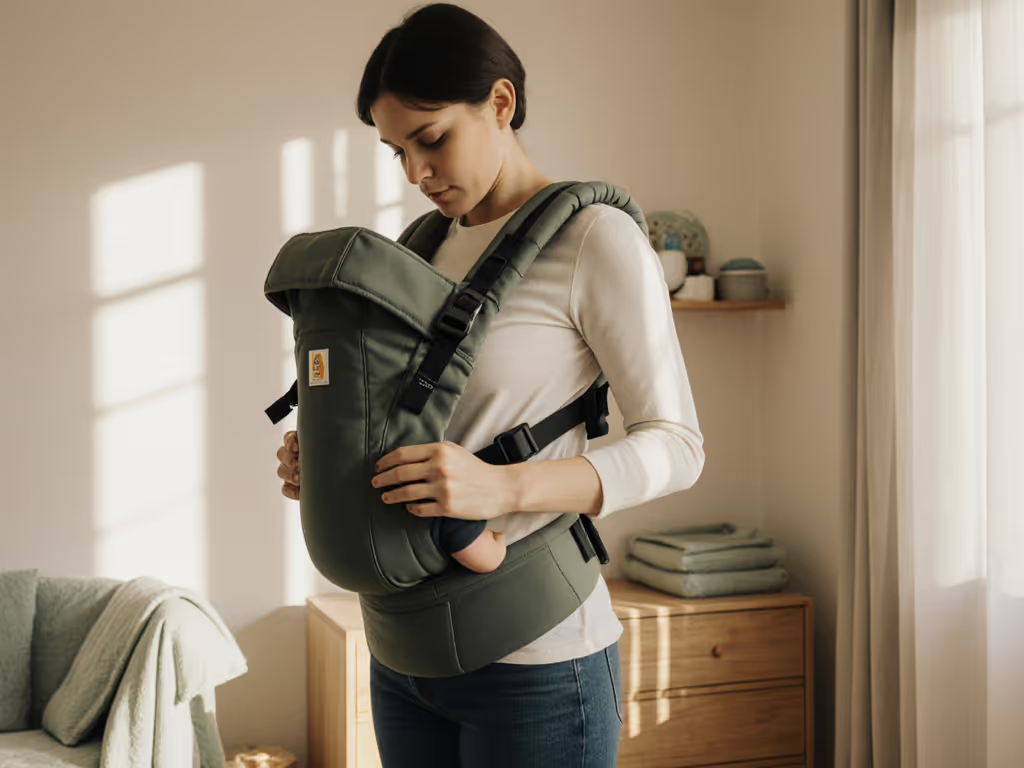
- Adjust the back clip height: on a short torso, it often needs to sit closer to the middle of your shoulder blades, not right at the base of your neck.
- If possible, test both straight and crossed strap configurations to see which keeps the straps away from your neck.
Dual-adjust straps (tightening from both sides) and front-adjustable clips make all of this much easier for short-torso or limited-mobility caregivers.[1][4][11]
Step 3: Safety checks every time
- Airway visible and clear; no fabric covering the face.
- Chin off chest: at least a finger-width of space.
- M-position hips: knees higher than bum, supported from knee to knee.
These safety cues are stressed across expert tests and guidelines.[1][2][8][11] For a step-by-step visual checklist, see our TICKS babywearing safety guide. A well-adjusted fit is both safer and more comfortable.
Final Verdict: Matching Your Torso, Routines, and Budget
If your torso is under 14 inches, the best baby carriers for short torso caregivers are those that respect your vertical real estate and give you micro-adjustments, not just marketing language.
- If you want one carrier to do almost everything from newborn through toddler, start with a highly adjustable SSC like the Ergobaby Omni or Tula Free-to-Grow.
- If you prioritize newborn softness and custom fit, add a ring sling or stretchy wrap for the early months; they are the most forgiving low torso height carriers and excel at contact naps and around-the-house use.
- If you have back pain or need strong structure, a LÍLLÉbaby Complete or compact SSC like the Beco Gemini can be excellent, just check panel height on your body.
- If you crave simplicity and fast learning, a BabyBjörn Harmony/One-style carrier offers easy clips, clear instructions, and strong safety signaling.
From a spreadsheet point of view, the winning setup for most short-torso caregivers is a two-carrier strategy:
- A soft wrap or ring sling for the newborn and short-errand phase.
- A well-fitted SSC for longer walks, travel, and toddler carries.
Buy once, cry never doesn't mean buying the most expensive carrier; it means choosing the smallest set of tools that actually fit your torso, your baby, and your real life, and then using them so much that the cost per comfortable hour drops to pennies.
Related Articles