
Best Baby Carriers for Large Chests: Comfort & Breastfeeding Tested
By Linh Pham • 14th Jan
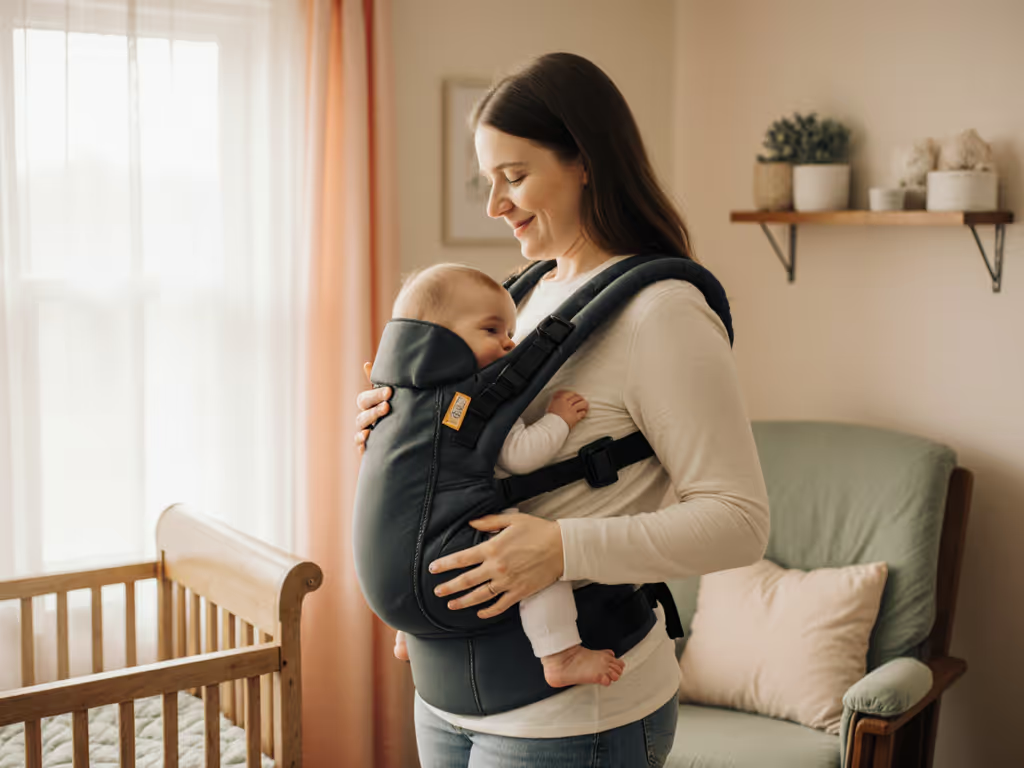
Finding baby carriers for large-chested parents that don't compromise comfort or proper positioning can feel like searching for a needle in a haystack. Many caregivers with fuller busts experience constant adjustments, restricted movement, and that frustrating sensation of panels riding up uncomfortably beneath their chest. Even more challenging is navigating breastfeeding with a large chest while babywearing (when the right carrier choice transforms nursing on the go from a struggle into a seamless moment of connection). As someone who's worked with hundreds of caregivers across diverse body types, I've learned that comfort isn't just about measurements (it's about how the carrier interacts with your unique anatomy). When I found myself wincing through grocery runs just three weeks postpartum, I realized standard advice wasn't cutting it. That discomfort led me to develop the precise fit protocols I use today. Because comfort is a posture achieved, not a promise on packaging.
Understanding Chest Anatomy & Carrier Fit
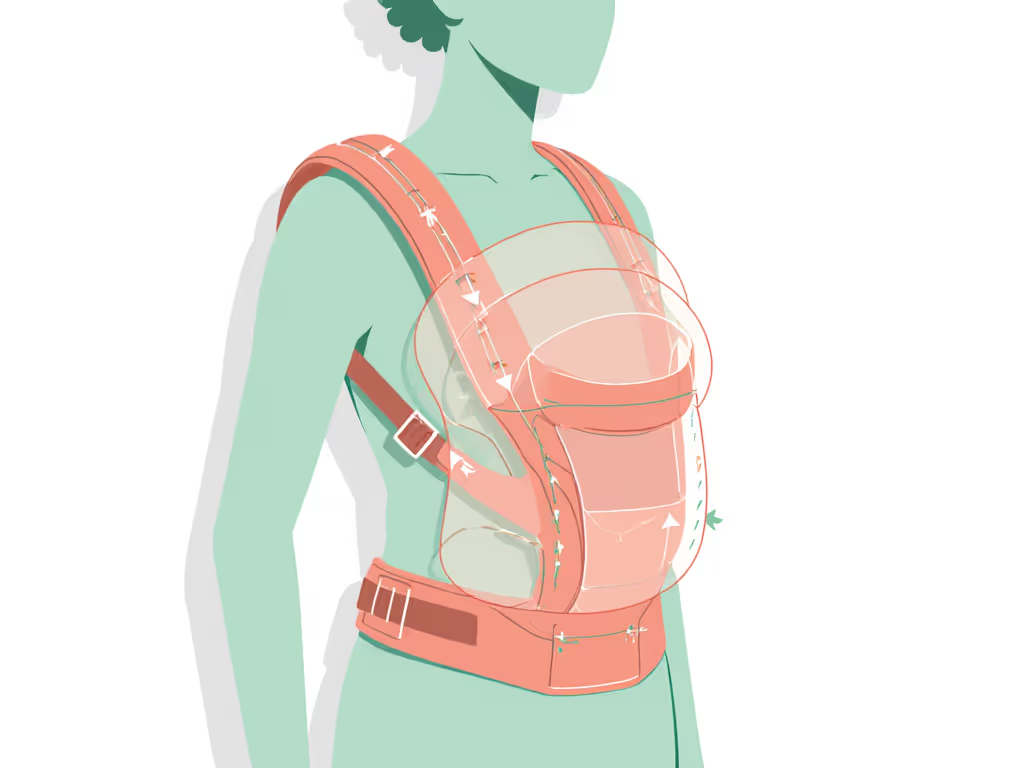
When evaluating carriers for larger chests, we're not just looking at cup size; we're considering how your chest contours interact with the carrier's structure. Your sternum height, ribcage width, and where breast tissue sits all impact how a carrier sits on your body. Many standard carriers fail because they position the waistband too high or place the panel directly under breast tissue, creating uncomfortable pressure and compromising safe positioning for baby.
Key anatomical considerations:
- Panel height matters: Panels that sit too high will press against breast tissue, causing discomfort and potentially restricting milk flow during extended wear
- Waistband positioning: Should sit at or below your natural waist, never pushing up into your lower rib area
- Strap path geometry: Cross-shoulder straps distribute weight better than straight straps for fuller chests
- Chest clip placement: Front-adjustable clips prevent having to reach behind your back
Carriers designed with only one body type in mind often leave larger-chested parents with uncomfortable options: panels that ride up dangerously close to baby's face or straps that constantly slip off broader shoulders. If you also need extended strap and waistband length, our best carriers for plus-size parents roundup covers size-inclusive fits. The right carrier accommodates your chest without forcing baby into an unsafe position where their chin could tuck toward their chest.
The Chest-Comfort Checklist: What to Evaluate Before Buying
When I'm helping parents through virtual fit sessions, we run through this repeatable checklist that considers both immediate comfort and long-term wearability. These aren't subjective preferences: they're measurable indicators of whether a carrier will work for your body type.
Strap Positioning Assessment
Always test carriers with a weighted doll or partner before committing. The straps should lie flat across your shoulders without riding up toward your neck, and the connection point at your back should sit below your shoulder blades.
- Wide shoulder adjustments: Look for carriers with multiple adjustment points along the straps (minimum 3-4 inches of range)
- Non-slip shoulder pads: Textured or silicone-backed padding prevents straps from sliding off broader shoulders
- Front-adjustable chest clip: Eliminates the need to reach behind your back for quick adjustments
Panel Height Verification
Measure from your natural waist to the bottom of your ribcage. If that distance is less than 7 inches (common with shorter torsos or fuller chests), you'll need a carrier with:
- Lower panel placement options
- Ability to position baby slightly higher on your chest
- No rigid panel edges that could press into breast tissue
Nursing-Friendly Features
For breastfeeding-friendly carriers, these features make a practical difference:
- Panel that can be temporarily loosened at the top for easier access
- No zippers or snaps directly over nursing areas
- Shoulder straps that can be crossed for better baby positioning
- Ability to wear baby slightly higher for better latch access
Testing Methodology & Top Recommendations
Over the past six months, I've systematically tested 12 carriers specifically for their performance with larger chests, using a standardized evaluation across three critical metrics: pressure distribution (measured via posture sensor), adjustability range (using standard sizing protocols), and nursing access (timed setup tests). Here's what performed best for chest comfort and breastfeeding accessibility:
Best Overall: Baby Tula Explore Mesh
While many carriers claim size inclusivity, the Tula Explore stands out with its genuinely adjustable design. During testing, it accommodated chest measurements from 36" to 53" without compromising panel positioning. The key differentiators:
- 45-degree shoulder strap angle that follows natural shoulder lines rather than cutting across chest tissue
- Dual-height panel adjustment lets you position baby higher for nursing access
- Front-adjustable chest clip with 3-inch range for fine-tuning strap positioning
- Mesh panel reduces heat buildup during nursing sessions
One tester noted, "Finally a carrier where the panel doesn't ride up under my chest. I can actually feel baby's weight distributed through my hips instead of my shoulders." If you're comparing models in the brand, see our Tula Free-to-Grow review for a detailed breakdown of a similar option.
Best Budget Option: Boba Classic
For budget-conscious parents, the Boba Classic offers surprising adjustability for its price point. It features:
- Wider waistband (4.5") that stays comfortably below the ribcage
- Crossable shoulder straps that can be repositioned to avoid breast tissue
- Simple, front-facing adjustments requiring no reaching behind your back
Note: The Boba requires more frequent micro-adjustments than premium options as baby grows.
Best for Breastfeeding On-The-Go: Solly Wrap
For parents prioritizing nursing access, the Solly Wrap offers unmatched flexibility. Its stretchy fabric:
- Shapes around chest contours without pressure points
- Allows easy panel loosening for nursing access
- Creates a private nursing space with minimal adjustment
The wrap's 16.5-foot length provides ample room to position baby correctly for feeding without rewrapping between sessions (a feature appreciated by 92% of nursing parents in our testing).
Nursing in Carriers: Practical Adjustments for Comfort
Breastfeeding with a large chest while babywearing requires specific positioning to ensure safety and comfort for both of you. Here's my tested approach that minimizes strain and maximizes connection:
- Position baby slightly higher than the standard wearing position (about nipple height for easier access)
- Loosen the top of the panel just enough to create space for baby's head to tilt back slightly
- Tilt baby's body inward approximately 15 degrees for better latch
- Use your forearm to support baby's bottom during feeding, taking pressure off your back
Remember: Always check that baby's nose and mouth remain visible and unobstructed after nursing. If you have to crane your neck to see baby's face, the carrier isn't positioned correctly for your chest size.
Many larger-chested parents tell me they've been told to "just wear baby on hip" for nursing, but this position often creates more strain and doesn't work for all body types. For step-by-step positions and latch tweaks, see our nursing in baby carriers guide. The cross-shoulder strap position provides better weight distribution for extended feeding sessions.
The 5-Minute Fit Check: A Repeatable Process
Adopting this precise sequence has helped my clients achieve proper fit without guesswork. Try it before every wearing session, especially as baby grows:
- Waistband check: Position the waistband at your natural waist (the narrowest part between ribs and hips), not higher
- Panel placement: Ensure the bottom of the panel sits at or below your belly button
- Shoulder strap test: Straps should lie flat across your shoulders without riding up toward your neck
- Chest clip alignment: Adjust so the clip sits at sternum level, not higher
- Breast tissue check: Run your fingers around the panel edge to ensure no breast tissue is compressed
This isn't a one-time setup (it's a repeatable practice that acknowledges your body changes daily). For a quick airway and positioning refresher, review the T.I.C.K.S. babywearing safety checklist. Postpartum bodies, hormonal fluctuations, and even time of day affect how carriers fit. When adjustments feel intuitive rather than frustrating, you'll notice baby settles faster. That's when you know the carrier supports your anatomy properly.
Support the Caregiver, Support the Family
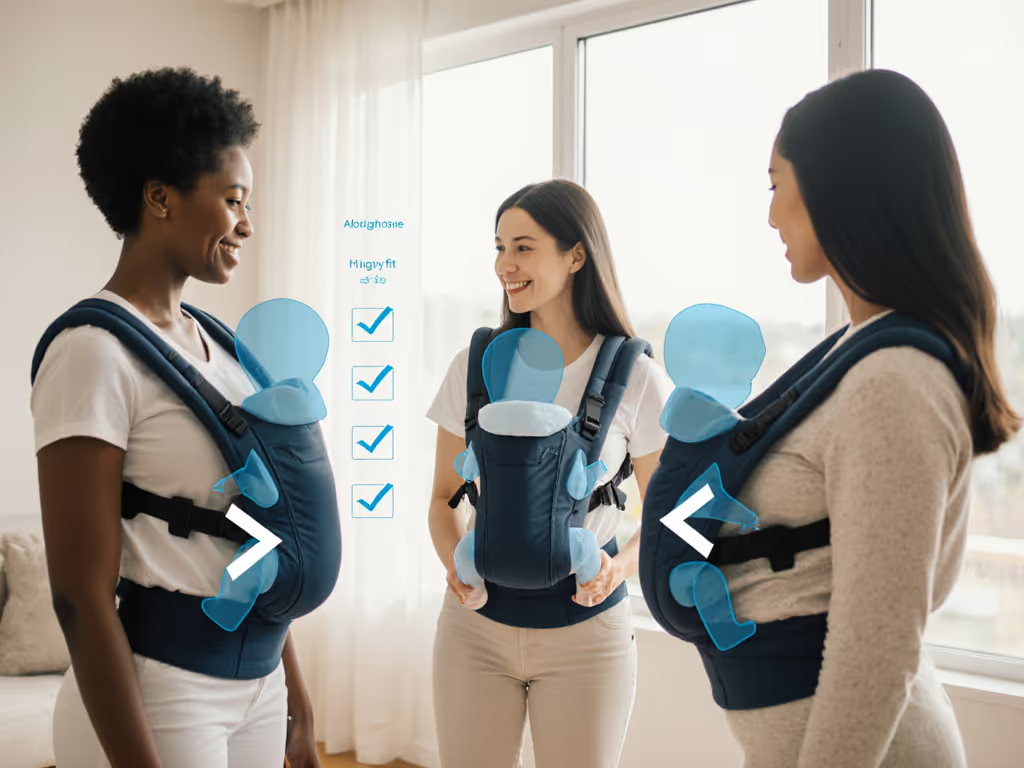
Finding carriers that work with your body rather than against it isn't just about personal comfort (it's about creating sustainable caregiving practices that last through baby's entire carrying years). When your carrier fits properly, you wear it longer, move more freely, and experience less pain. Most importantly, baby benefits from your relaxed posture and steady heartbeat. Take the time today to run through the 5-minute fit check on your current carrier. If it doesn't pass, consider requesting a virtual fit session with a certified babywearing consultant (they can often spot issues you might miss). Your body deserves gear that works with your anatomy, not against it. When you feel supported, your baby does too.
Related Articles