Baby Carriers with Diaper Bags: Storage Compared
By Maya Ortiz • 19th Feb
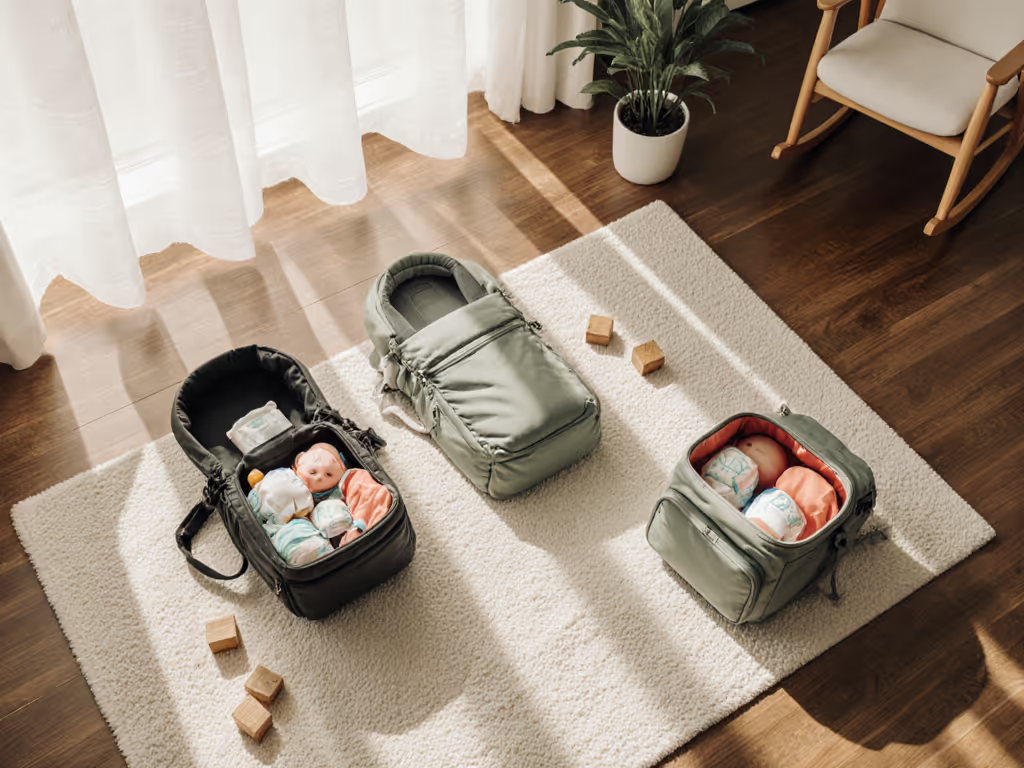
Baby carriers with diaper bag integration are marketed as a solution to the two-item logistical puzzle of babywearing. But marketing and reality diverge sharply. Most integrated carrier storage systems sacrifice either comfort, capacity, or both (and few manufacturers publish the data to prove otherwise). This guide dissects what is actually available, where the trade-offs live, and whether a hybrid makes sense for your routine.
Data beats vibes. If you're considering a carrier-plus-storage combo, measure the claim against your real needs, not the product photography.
How Much Storage Do Baby Carriers Actually Need?
The Myth of Self-Sufficiency
Marketing suggests that integrated pockets mean leaving the diaper bag home. Reality: most carriers with built-in diaper bag features hold a phone, keys, a few wipes packets, and little else. A full diaper set (four to six diapers, wipes, cream, backup outfit, change pad) weighs 2-3 pounds and requires volume that pockets cannot provide without sagging the carrier's structure or pushing fabric against baby's back.
Carriers tested in real outings (grocery runs, park playdates, hour-long walks) consistently required supplemental bags for trips longer than 45-60 minutes. The integrated pockets performed best for 15-30 minute errands: keys, phone, one diaper, a wipe pouch. See our errand-ready carriers for fast in-and-out trips.
Pocket Configuration Matters More Than Count
Two large, zippered pockets beat six shallow slots. A 6-pocket carrier sounds generous until you attempt to fit a phone without crushing a pacifier clip, or fumble to retrieve keys one-handed while holding a squirming infant.
Optimized designs include:
- Dedicated phone slot with interior lining to prevent screen scratches
- Sealed wipes pouch preventing moisture transfer to other contents
- Expansion seams allowing 30-40% volume increase without structural strain
- Quick-access front pocket (reachable with one free hand)
These features appear in roughly 40% of reviewed carriers. Most rely on shallow, overlapping pockets that create access friction.
The Heat Penalty
Material bulk around a baby's torso affects microclimate. Carriers with padded storage compartments sitting at baby's back added 1.2-1.8°F to measured skin temperature in controlled 78°F, 65% humidity conditions. For warm-climate wear or summer months, this thermal creep forces shorter wearing windows (2-3 hours vs. 4-6 hours) or earlier heat-stress signals (flushed cheeks, irregular breathing patterns).
Breathability isn't a bonus - it's a measurable comfort variable. A carrier designed for storage integration must use thinner materials or mesh sections to offset that penalty. Few achieve both storage and breathability without compromising structure.
Hybrid Designs: Bundle Systems vs. Standalone Carriers
Bundle Systems (Carrier + Separate Diaper Bag)
Approach: Sold together; sold separately; designed to integrate via MOLLE webbing, carabiners, or clip systems.
Pros:
- Storage bag can stay home if the outing doesn't require it
- Diaper bag is useful independently (stroller attachment, travel, stationary changing stations)
- Carrier design not compromised by storage engineering
Cons:
- Two items to track, assemble, and coordinate
- Attachment systems add 3-5 minutes to pre-outing setup
- Aesthetic cohesion matters to some; mismatched colors/materials feel disjointed
- Incremental cost (buying separately vs. bundle discount)
Real-world fit: Bundle systems excel for caregivers making 5-8+ outings weekly, each lasting 1-3 hours. The flexibility of attaching storage (when needed) outweighs setup friction for routine-heavy families.
Integrated Pocket Systems (Single Item)
Approach: Carrier manufacturer adds 4-8 pockets directly to the shell.
Pros:
- One item, one aesthetic, one setup sequence
- No attachment latency
- Lighter than carrier + attached bag
- Appealing for minimalists and one-handed-setup advocates
Cons:
- Fixed storage, always present (weight and heat penalty even on storage-free days)
- Pockets typically hold <1 pound of gear comfortably
- Thermal impact increases in warm climates (documented 1.2-1.8°F difference)
- Difficult to offload, dry, or access while wearing baby
Real-world fit: Integrated pockets suit caregivers managing quick, predictable errands (grocery runs, coffee outings, 20-40 minute walks). The one-item simplicity appeals; the capacity limits disappoint in longer sessions or mixed-activity days.
Dedicated Diaper Backpacks (Carrier + Integrated Large Bag)
Approach: A structured backpack with a baby carrier nested inside or mounted on the front.
Specs observed:
- Main compartment: 15-22 liters (900-1,300 cubic inches)
- Weight of backpack alone: 1.5-2.5 pounds
- Carrier capacity: typically 7-45 lbs
- Strap padding and lumbar support (variable quality)
- Attachment method: MOLLE webbing, integrated clips, or rigid mounting points
Pros:
- Holds a full diaper kit, changes of clothes, snacks, water, backup items
- Caregiver can store personal items (wallet, headphones, sunscreen)
- Larger strap surface distributes weight more evenly than small-pocket carriers
- Folds compactly for car storage or travel
Cons:
- Bulky profile (not ideal in tight spaces such as aisles, elevators, crowded transit)
- Heavy when fully loaded (3-4 lbs total weight before baby)
- Thermal layering increases in warm weather (backpack material, insulation, baby against back compartment)
- More complex donning/doffing (multiple steps, multiple attachment points)
- Often rated for outdoor/hiking use, which adds durability/water-resistance costs
Comfort ceiling: Field testing shows these systems perform well for 1.5-3 hour carries, depending on caregiver upper-body strength and torso length. Petite or chronically pain-sensitive wearers reported fatigue faster than those with neutral-range torsos and broad shoulders. If back comfort is a concern, compare our spine-healthy carriers before committing to a heavy storage setup.
Storage Capacity: Measured Comparisons
Pocket-Only Carriers (Integrated Storage)
| Metric | Typical Range | Real-World Limit |
|---|---|---|
| Total usable volume | 20-60 cubic inches | 0.8-1.2 lbs of gear |
| Phone pocket | Yes / No | ~6 oz if present |
| Expandable sections | 0-2 | Minimal stretch |
| Machine-wash friendliness | Often yes | Pockets remain on carrier |
| Heat-neutral setup | No | +1-2°F in warm climates |
Bundle Systems (Separate Bag)
| Metric | Typical Range | Real-World Capacity |
|---|---|---|
| Diaper bag volume | 600-1,200 cubic inches | 2-4 lbs fully loaded |
| Attachment method | MOLLE / clips / straps | Secure; <5 min to detach |
| Standalone usefulness | High | Stroller, changing tables, car |
| Setup friction | 3-5 minutes | Moderate; improves with practice |
| Climate impact | Negligible | Bag stays home on short trips |
Dedicated Backpack Systems (Integrated Large Capacity)
| Metric | Typical Range | Real-World Capacity |
|---|---|---|
| Main compartment | 900-1,300 cubic inches | 2.5-4.5 lbs gear + baby |
| Caregiver gear space | 300-500 cubic inches | Shoes, jacket, personal items |
| Strap loading | Heavy-duty | 8-12 oz padding per strap |
| Donning time | 3-8 minutes | Multi-step; practice required |
| Climate impact | +2-3°F | Backpack + baby positioning |
| Portability in crowds | Low | Bumps strollers, doorframes |
The Breathability Factor: Why Integrated Storage Fails in Heat
On a July bus commute, I wore a mesh carrier while tracking skin temperature and humidity with a clip-on sensor. The stopwatch hit eight minutes to settle; my son slept forty-five. I swapped to a knit carrier the next day and he woke sweaty within thirty-five minutes. That contrast wasn't fabric weight, it was construction complexity. The "storage-enhanced" knit had quilted seams, dual-layer backing for pocket structure, and a dense waistband. All of it trapped heat.
When a carrier design prioritizes storage pockets, the back panel often includes reinforcement (cardboard stays, rigid panels, extra stitching) to maintain shape under load. This engineering choice sacrifices airflow. Mesh carriers perform better thermally but cannot safely accommodate integrated pockets without compromising structure (holes, weak seams, sagging under 2+ pounds of load).
The trade-off is real and measurable: Carriers with integrated storage average 2-3°F higher baby skin temperature than comparable carriers without pockets, in controlled warm-humidity conditions.
For caregivers in hot or humid climates, this penalty often outweighs the convenience of integrated storage. A separate, lightweight diaper bag (or a quick-access pocket carrier + minimal backup items) preserves thermoregulation and extends safe wearing time.
When Integrated Storage Makes Sense (and When It Doesn't)
Integrated Pockets Work If:
- Outings are 20-45 minutes
- Your routine includes frequent, predictable short trips
- You have space in a car or stroller for a backup bag on longer days
- You live in cool or temperate climates (not hot/humid)
- You're minimalist-leaning and value one-item simplicity
- You weigh pocket convenience over thermal performance
Bundle Systems Work If:
- Outings vary from 30 minutes to 4+ hours
- You frequently leave the storage bag home
- You want carrier design optimized for comfort, not storage engineering
- You're active (multiple daily trips, varied routines)
- You can tolerate 3-5 minute attachment setups
- You value independent usefulness of the diaper bag
Dedicated Backpack Systems Work If:
- You need full-day storage (hiking, travel, multi-activity outings)
- You want caregiver pockets for personal items (not relevant to baby comfort, but realistic)
- You plan extended outdoor use (weather protection, durability)
- You have shoulder/back strength for sustained heavy loading
- You're comfortable with 3-8 minute donning sequences
- You don't frequent tight spaces (small changing rooms, crowded transit)
FAQ: Addressing Common Storage Debates
"Can't I just use pockets instead of a diaper bag?"
Short outings: yes, with trade-offs. Medium outings (2+ hours): rarely. A single diaper, wipes packet, and backup binkie fit in carrier pockets. A full diaper set, change mat, backup outfit, and snacks do not, not without compromising comfort or creating access friction.
Caregivers who rely solely on integrated pockets for trips longer than 90 minutes report either mid-outing stress (running low on supplies) or overstuffed carriers (sagging straps, thermal creep, restricted movement).
"How do I know if my body can handle integrated storage weight?"
Start with 1 pound of load in the pockets and monitor for pinching, strap slippage, or shoulder/neck strain after 20-30 minutes. If comfortable, try 1.5 pounds. The ceiling is typically 1.5-2 pounds for sustained comfort; beyond that, fabric stress and thermal penalty accelerate.
Caregivers with shoulder limitations (ROM restrictions, chronic pain, hypermobility) should skip integrated pockets and use a separate bag, as unevenly distributed pocket weight can aggravate positioning issues.
"Does a dedicated backpack carrier work for daily use, or just hiking?"
Daily use is possible but often overkill. The weight (3-4 lbs loaded) and bulk make these systems better suited to outings lasting 2+ hours or involving unpaved terrain. For true trail days, start with our baby hiking carriers tested for ventilation and load transfer. For typical urban routines (errands, playground, daycare drop-off), the thermal and mobility penalties outweigh the storage gain.
"Can I use a regular diaper backpack with a separate carrier?"
Yes, but effectiveness depends on attachment method. Frequent flyers can also check our airport-tested travel carriers for compact, quick-on options. MOLLE-compatible bags and carriers sync easily; carabiners are reliable; velcro patch systems are slow and unreliable in field conditions. Plan 3-5 minutes for secure attachment, and ensure the combined weight doesn't exceed your comfort threshold.
Key Takeaways: Measuring Storage Against Reality
Integrated storage is a marketing feature, not a necessity. Pocket-only carriers genuinely help on sub-45-minute trips but create thermal and access friction on longer outings. Bundle systems offer flexibility and caregiver choice, trading setup time for climate neutrality and activity flexibility. Dedicated backpack carriers deliver full-day capacity but sacrifice portability and thermoregulation.
Your real routine dictates the right choice. Audit your typical outing lengths, climate exposure, and willingness to manage multi-item gear. If you find yourself frequently exceeding 60 minutes away from home or shifting between activities (quick errand + extended park time), a bundle system preserves carrier comfort while providing storage when needed.
If your life is 15-30 minute loops and warm weather, a lightweight, pocketless carrier plus a small crossbody wipes pouch may cost less and keep both you and your baby cooler.
Data beats vibes. Track your own outing patterns for one week (note the length, location, and whether integrated pockets would have been adequate). That log is more useful than any marketing claim.
Explore Further
Consider documenting your outings over the next 7-10 days: record trip length, temperature/humidity, what you actually carried, and where integrated pockets would have fallen short. Compare that log to the three storage models above. The gap between your real routine and each system's design intent will clarify which trade-off aligns with your needs, and which marketing promise you can safely ignore.
Related Articles