
Safe Babywearing While Pregnant: Essential Adjustments
By Linh Pham • 29th Nov
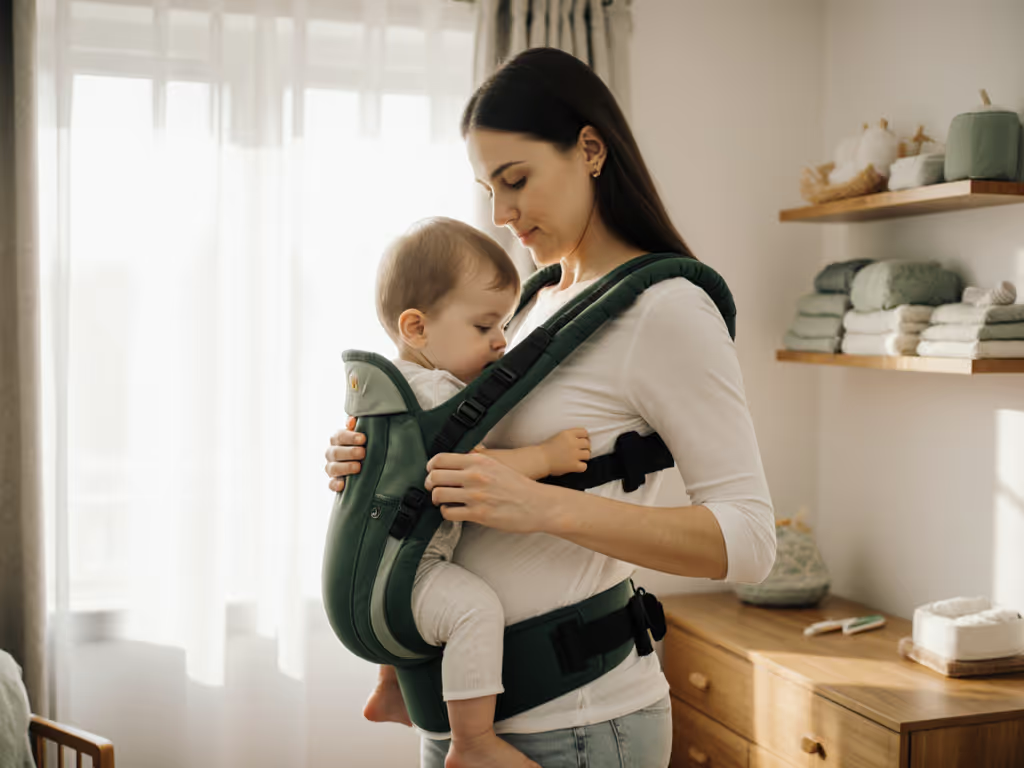
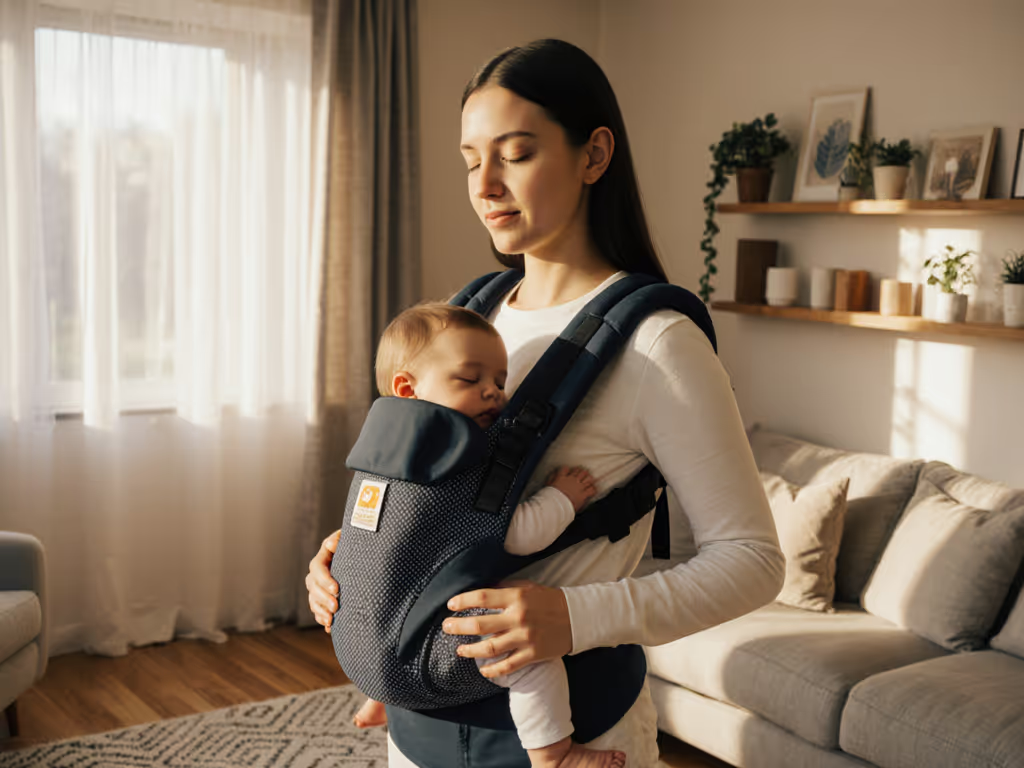
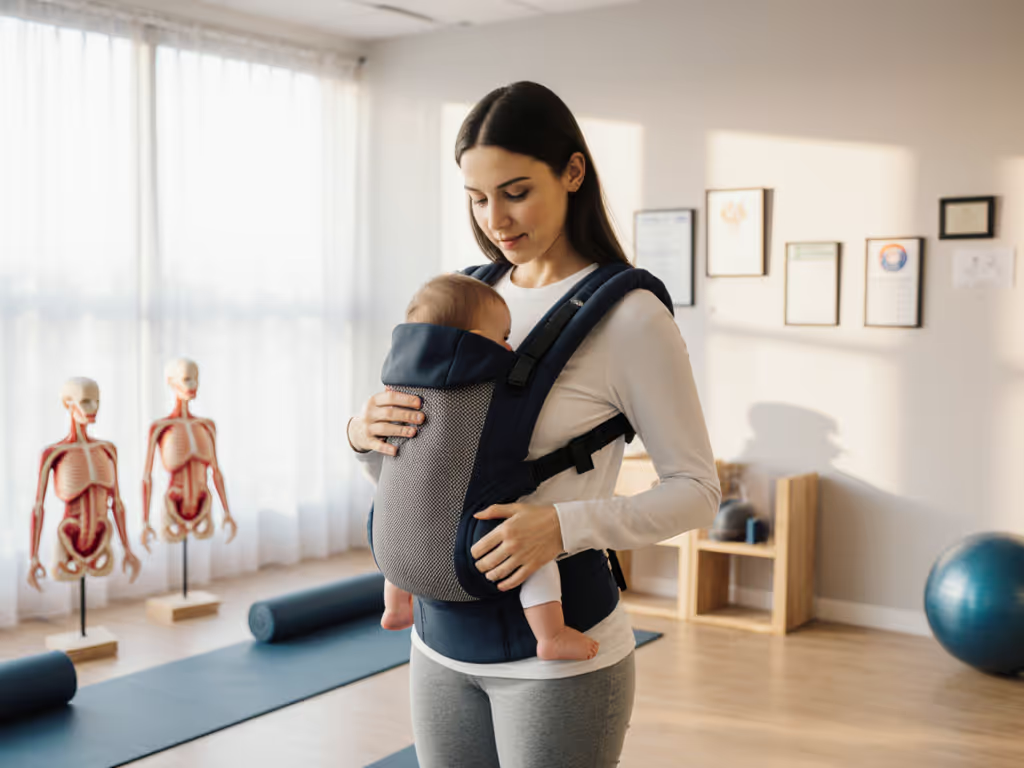
For expecting parents juggling an older child while navigating their own changing body, babywearing while pregnant offers a practical solution to maintain closeness and hands-free mobility. When approached with thoughtful adjustments, prenatal babywearing can be both safe and comfortable throughout most pregnancies. Yet many caregivers hesitate, caught between the desire to keep their little one close and concerns about safety, comfort, and managing their own changing physiology.
When Your Body Tells a New Story
Pregnancy reshapes your center of gravity, redistributes weight, and alters your posture, often intensifying existing physical challenges. If you've experienced back strain from previous carriers or felt shoulder pressure from ill-fitting straps, these sensations may amplify during pregnancy. The question isn't whether you can continue babywearing with a baby bump, but how to adjust your approach to support both your body and your child's needs.
Early in my practice, I noticed patterns: caregivers who stopped babywearing while pregnant often cited discomfort from lap-sitting positions that compressed their growing abdomen or waistbands that dug into sensitive postpartum tissue. These weren't failures of will but mismatches between body and carrier. If you're reevaluating tools, our carrier types comparison clarifies when wraps, slings, and structured carriers fit best as bodies change. When a carrier fits the caregiver, babies settle faster, and comfort is mutual and teachable.
Comfort is a posture achieved, not a promise on packaging.
Your Safety First: What Really Matters
Let's address the most common concern head-on: pregnancy babywearing safety primarily hinges on your body's signals, not arbitrary rules. For a deeper overview of risks, positioning, and red flags, see our comprehensive carrier safety guide. Research confirms that for uncomplicated pregnancies, wearing a toddler (typically under 25 lbs) creates less abdominal pressure than bending to pick up grocery bags. Yet cognitive load matters, and when overwhelmed by conflicting advice, even safe practices can feel risky.
Your body provides constant feedback through:
- Breathing rhythm (shallow breaths signal compromised positioning)
- Pelvic floor engagement (discomfort indicates uneven weight distribution)
- Shoulder tension (raised shoulders suggest poor strap alignment)
These aren't signs of weakness but communication channels. I worked with a physical therapist who stopped babywearing at 20 weeks because her hypermobile joints couldn't handle traditional waistbands, yet she resumed safely at 28 weeks using a structured carrier with micro-adjustable chest straps that stabilized her upper body.
Precision Adjustments for Body Changes
The secret to successful prenatal babywearing isn't avoiding carriers but adapting them to your shifting anatomy. Here's how to modify your approach trimester-by-trimester:
First Trimester: Building Awareness
Early pregnancy often brings fatigue and nausea. Your priority is body scanning:
- Check your posture hourly: Can you maintain neutral spine alignment without leaning forward?
- Time your wear sessions: Start with 5-10 minute intervals, noting any dizziness or cramping.
- Adjust strap height: Raise shoulder straps 1-2 inches above typical placement to accommodate subtle center-of-gravity shifts.
This phase isn't about perfecting technique but developing body awareness, which is critical for later stages when physical changes accelerate.
Second Trimester: Strategic Positioning
As your bump becomes prominent, focus shifts to pressure management. Carrying a toddler while pregnant now requires rethinking where weight rests: For age-appropriate holds and when to transition, review our toddler babywearing guide.
- Elevate the seat: Position the carrier 2-3 inches higher than usual to keep the child's bottom above your pubic bone.
- Widen the base: Spread leg straps to create a broader support surface, distributing weight across your back rather than concentrating pressure forward.
- Optimize waistband placement: For structured carriers, position the waistband below your bump on your pelvic crest (not across the abdomen).
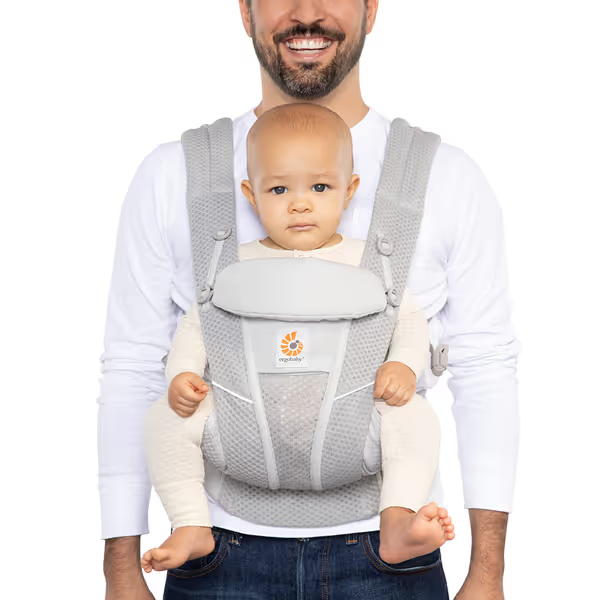
Ergobaby Omni Breeze Carrier
Breathable, adjustable carrier for cool comfort from newborn to toddler.
$132.33
Weight Range7-45 lbs (~0-48 Months)
Weight Range7-45 lbs (~0-48 Months)
Pros
Maximized airflow keeps parent and baby cool and dry.
Supports all 4 carry positions, grows with child.
Enhanced lumbar support & padded straps for comfort.
Cons
Premium features come at a higher price point.
Customers find this baby carrier comfortable, easy to use and put on, and appreciate its efficient lumbar support with a cushion for baby's neck. They praise its breathability, convenient pockets, and adjustability, noting it's worth the price.
Customers find this baby carrier comfortable, easy to use and put on, and appreciate its efficient lumbar support with a cushion for baby's neck. They praise its breathability, convenient pockets, and adjustability, noting it's worth the price.
The Ergobaby Omni Breeze's adjustable waistband exemplifies this principle. Its design allows precise positioning on the pelvis rather than abdomen while maintaining lumbar support. When I fitted a client at 24 weeks using this approach, she reported immediate relief from the "crowding" sensation she'd experienced with fixed-position carriers.
Third Trimester: High Carries & Micro-Adjustments
Later pregnancy demands strategic weight distribution. Second child babywearing becomes most challenging when your center of gravity has shifted significantly:
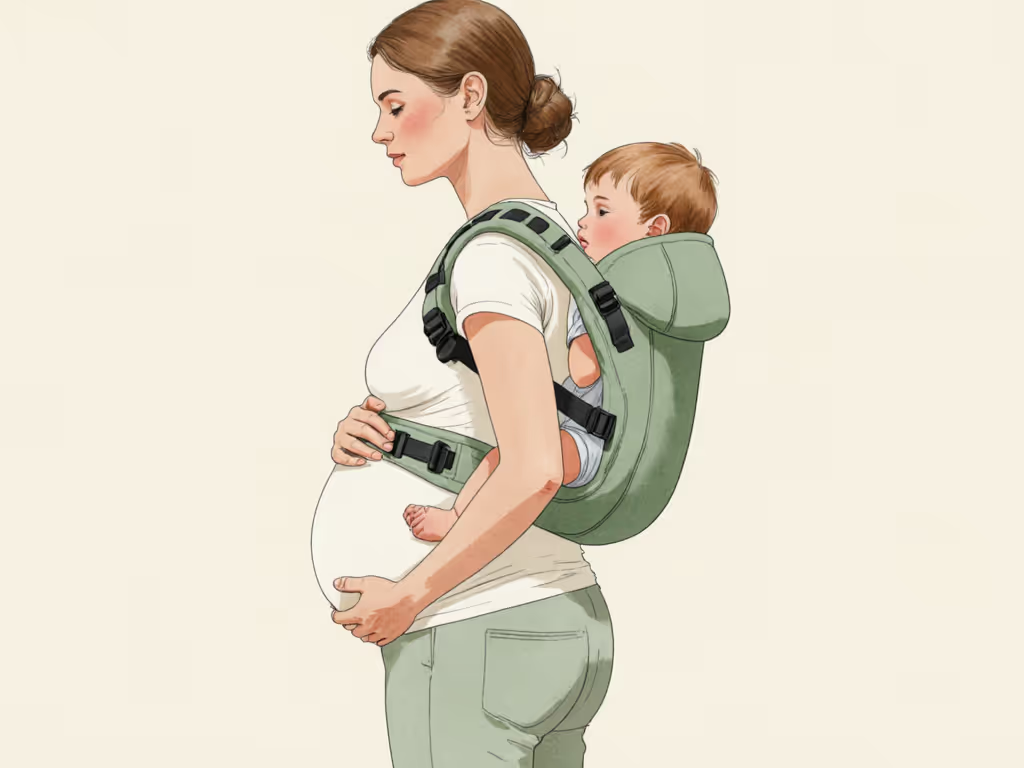
- Prioritize back carries: High, supportive back positions (with the carrier sitting centered between shoulder blades) balance the weight of your bump.
- Use hip carry modifications: Position your child toward your hip bone rather than centering over your bump.
- Implement cross-shoulder tension: For ring slings or wraps, create diagonal tension lines that stabilize your upper back.
Key checklist for third-trimester safety:
- ✅ Can you breathe deeply without baby's weight restricting your diaphragm?
- ✅ Does your toddler's chin maintain a two-finger space from their chest?
- ✅ Can you maintain upright posture without straining your neck forward? For a quick safety cross-check, follow the T.I.C.K.S. babywearing checklist to maintain clear airways and secure positioning.
When to Pause: Reading Your Body's Signals
No guide can override your physiology. Stop immediately if you experience:
- Sharp pelvic or abdominal pain
- Dizziness or vision changes
- Contractions occurring more frequently than normal
Many families find they can babywear through most of pregnancy but need to adjust duration. A 32-week caregiver might comfortably wear for 20 minutes during grocery shopping but need to limit to 10 minutes during park visits. This isn't failure, it is intelligent adaptation.
Your Action Plan: Start Today
Begin your prenatal babywearing journey with these three steps:
-
Conduct a posture check: Stand naturally, then add your carrier empty. Notice if your shoulders round forward or pelvis tilts. Adjust straps until your posture mirrors your natural stance.
-
Test for diaphragm freedom: Place one hand on your ribs, one on your belly. Breathe deeply. If your lower hand doesn't rise slightly with each inhale, readjust carrier tension.
-
Create a 10-minute trial: Wear your child while doing stationary activities (folding laundry, standing at a counter). Note where you feel pressure. This reveals adjustment needs.
Remember that adjustments aren't one-time fixes but ongoing conversations with your body. Whether you're carrying a toddler while pregnant for quick errands or extended outings, these micro-corrections preserve your energy for what matters most.
Support the caregiver, support the family. When we honor our changing bodies, we create space for all our children to thrive.
Related Articles