
Safe Babywearing for Asthma & COPD: A Carrier Guide
By Maya Ortiz • 19th Mar
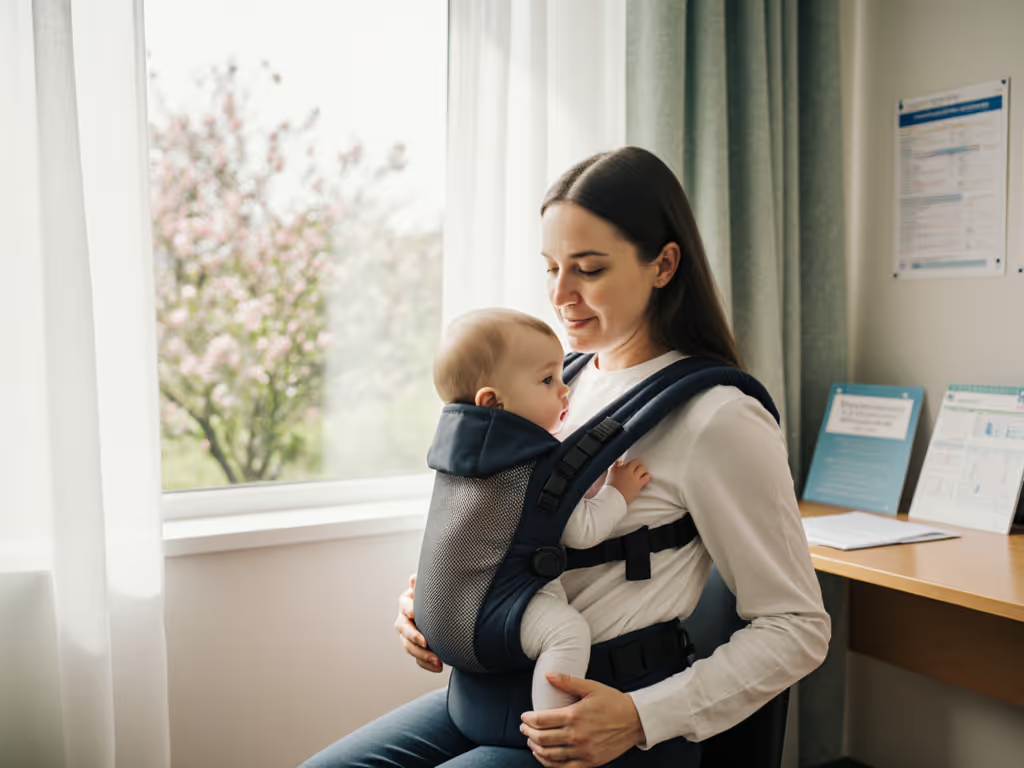
Babywearing for respiratory conditions requires one non-negotiable principle: your baby's airway must remain unobstructed at all times. Whether you manage asthma yourself, live with COPD, or are concerned about your baby's breathing, the right carrier (combined with verifiable positioning) removes guesswork and builds confidence. This guide addresses the most pressing questions caregivers ask when layering respiratory health into babywearing safety.
Why Airway Safety Matters First
Suffocation and positional asphyxia are the primary risks in babywearing, particularly for infants under four months[1]. Babies lack the neck strength to reposition themselves if their chin curls into their chest or their face presses against fabric. For caregivers managing respiratory conditions, this concern often escalates: you're hyperaware of breathing, and you need certainty that your setup supports both your health and your baby's safety[2].
The solution isn't to avoid babywearing. It's to measure what actually works.
Your Core Safety Checklist: The TICKS Guidelines
A standardized framework exists. It's called TICKS, and it translates to five verifiable points[3][4]:
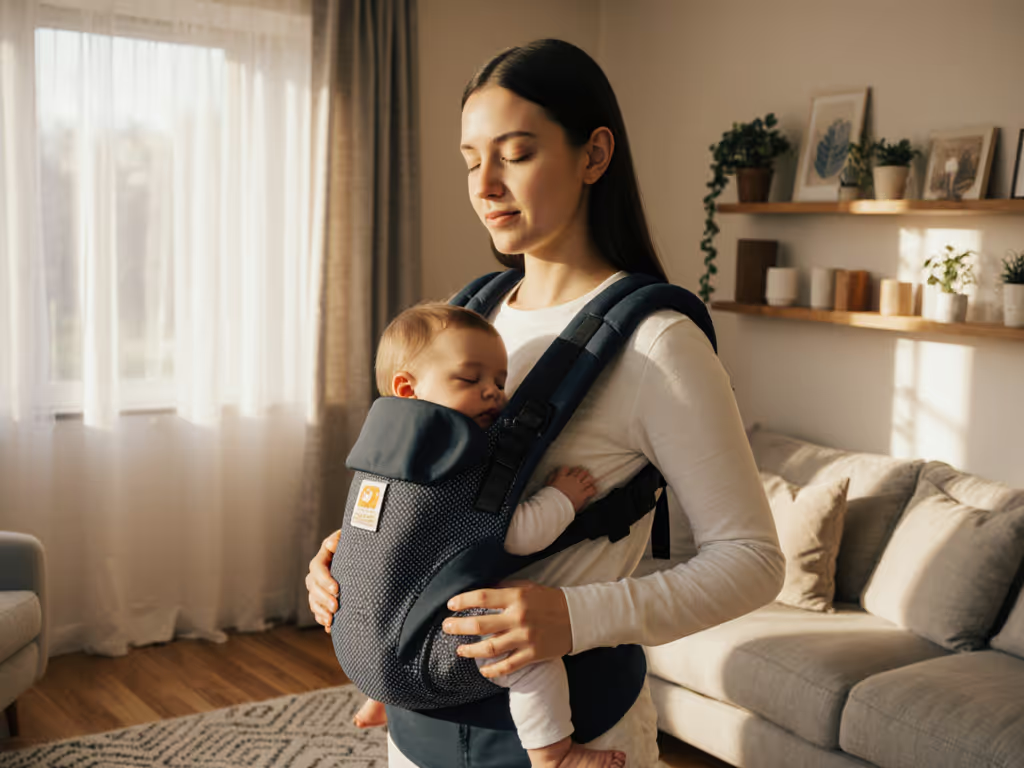
Tight - The carrier should hug your baby snugly against you, with no slack fabric that allows slumping. Loose fabric impairs breathing and strains your back[4].
In view at all times - You must see your baby's face without moving fabric or adjusting your body. If you can't see their face, you can't confirm breathing[3].
Close enough to kiss - Your baby's forehead should be within a kiss's distance. This typically means they rest just below your collarbone[3].
Keep chin off the chest - This is non-negotiable. Your baby's chin must never be curled against their sternum. Test this: slip one finger (or at least a finger-width of space) between your baby's chin and their chest[3][4]. If it doesn't fit, reposition immediately.
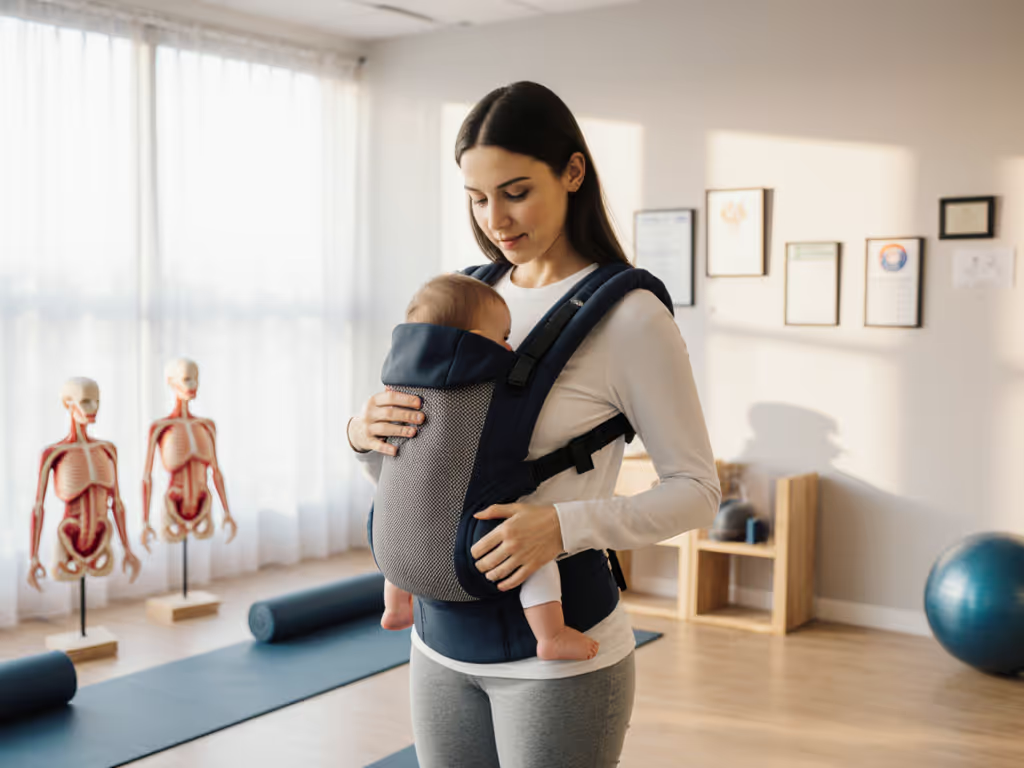
Supported back - In an upright carry, your baby's back should rest in its natural curve against your body, with their chest and belly against you. If you place a hand on their back and press gently, they should not uncurl or move closer to you[4].
These five points are not optional; they are the floor for safe babywearing, regardless of fabric or carrier style.
FAQ: Babywearing Safely With Respiratory Concerns
Question 1: Does my respiratory condition affect babywearing safety?
Your health and your baby's safety are separate variables. That said, your condition shapes how long you can wear comfortably and which carrier features matter most.
If you have asthma or COPD, heavy pressure on your chest or shoulders may trigger symptoms or limit your lung capacity. A carrier that distributes weight across your hips and shoulders, rather than concentrating it on your chest, is measurably better for you. Your comfort window - how long you can wear without strain - is a metric worth knowing. Some caregivers manage 1-2 hours comfortably; others tolerate 45 minutes before breathing becomes effortful[2].
Consult your physician about your specific tolerance, especially if your condition is moderate to severe. They can advise on carrier positioning and setup time that won't compromise your health.
Question 2: Does my baby's respiratory health require a different carrier?
Yes. Babies with respiratory infections, asthma, colds, or other breathing concerns need extra vigilance[1]. If your baby was born prematurely or with low birth weight, the risk of suffocation is higher, and your pediatrician should guide your babywearing choices[2]. For step-by-step positioning, see our newborn carrier safety guide.
The carrier itself doesn't cure respiratory issues; positioning and airway visibility do. An asthma-friendly babywearing guide emphasizes upright, vertical positioning (never cradle or reclined carries) so you can monitor their breathing at all times[6]. Check on your baby often, especially if they're under four months, and observe their breathing pattern, skin color, and warmth[3].
If your baby has been diagnosed with asthma or respiratory problems, always consult your pediatrician or a babywearing consultant before selecting a carrier. They can confirm that your setup meets both safety and medical need.
Question 3: How does fabric breathability tie into respiratory safety?
Breathability isn't a bonus, it's a measurable comfort variable. When a carrier traps heat and humidity against your baby's skin, they can overheat. Overheating triggers faster, shallower breathing and raises the risk of positional asphyxia[3]. The fabric you choose directly affects your baby's ability to regulate temperature and breathe comfortably.
Mesh and open-weave fabrics allow air circulation while supporting upright positioning. On a July commute, I wore a mesh carrier while tracking skin temperature and humidity with a clip-on sensor. The setup took eight minutes to settle; my son slept forty-five. The next day, I swapped to a knit carrier in the same conditions. He woke sweaty and restless within twenty minutes. That contrast between breathable and insulating fabrics showed me that material choice isn't cosmetic, it's functional. For climate-specific strategies, explore our summer babywearing tips.
For babies with respiratory concerns, ventilation matters. Check your carrier's fabric weave: can you see through it when held to light? Does it feel open, or does it trap warmth? Breathable carriers reduce the likelihood of overheating, which supports steady, relaxed breathing.
Question 4: What if I need to breastfeed while wearing a carrier?
Breastfeeding in a carrier is possible, but airway safety must come first. After breastfeeding, your baby must be returned to the proper carrying position with their head above your breasts and their face free of fabric, turned away from your body[3].
The risk of suffocation increases during nursing because your baby's head is near your chest, and it's easy to inadvertently cover their face or allow their chin to curl[1]. Never cover your baby's face with a nursing cover or blanket while they're in a carrier[3].
If you plan frequent nursing in the carrier, choose one with quick-release features or a panel that allows safe feeding without repositioning. Test this before you leave home. Get position-by-position guidance in our nursing in baby carriers guide.
Question 5: When do I absolutely need to consult a medical professional?
Consult your pediatrician or a lactation consultant before babywearing if[1][2][3]:
- Your baby was born prematurely or has low birth weight
- Your baby has a respiratory infection, asthma, or other breathing condition
- Your baby has sleep apnea or low muscle tone
- You are breastfeeding frequently in the carrier
- You have questions about your baby's positioning or breathing pattern
- Your baby is under four months old and you're unsure about fit
A babywearing consultant can also validate your setup in person or via video. They can confirm that your carrier and positioning meet the TICKS guidelines and are appropriate for your baby's age and health status.
Fit Before Flair
The carrier you choose must prioritize airway safety, comfort for your body, and breathable fabric (in that order). Features like design, aesthetics, and brand reputation come after you've confirmed that positioning is secure, breathing is clear, and you can sustain the carry without pain.
Measure what matters: Can you see your baby's face? Is there finger-width space under their chin? Does the fabric ventilate? Can you breathe comfortably? If all four answers are yes, you have a baseline-safe setup.
Further Exploration
Your questions about babywearing safety deserve answers grounded in evidence, not popularity. If you're managing your own respiratory condition or concerned about your baby's breathing, take these steps:
-
Schedule a consultation with your pediatrician to confirm babywearing is appropriate for your baby's health status and age.
-
Review your carrier's manufacturer instructions in detail. Each carrier has specific guidelines; understand yours before your first carry.
-
Practice the TICKS check with a trusted caregiver or consultant present. A one-time, in-person or video fit check builds lasting confidence.
-
Track your comfort window. Note how long you can wear before breathing or strain becomes noticeable. Adjust frequency or duration accordingly.
-
Test breathable fabrics if your baby is prone to overheating or has respiratory concerns. A mesh carrier in warm weather or an open-weave wrap may measurably improve air circulation.
-
Check on your baby frequently, especially in the first months. Breathing patterns, skin color, and warmth are observable signs that positioning is safe.
Babywearing is a tool for closeness and hands-free functionality, but only when safety is non-negotiable. Your vigilance and informed choices make it possible.
Related Articles