Nighttime Babywearing Guide: Transfer Without Waking
By Linh Pham • 16th Dec

Nighttime Babywearing Guide: Mastering the Sleep Transfer Without Waking Baby
Every caregiver knows that precarious moment: baby has finally drifted off in your carrier after battling evening fussiness, and now you face the delicate mission of transitioning from carrier to crib. This nighttime babywearing guide addresses the silent crisis of sleep transfers that end in tears, yours and baby's. While safe evening babywearing creates vital closeness, the real test comes when you need to reclaim your hands without resetting the sleep clock. Three weeks into my own postpartum journey, I learned this truth the hard way during a grocery run when my soft wrap failed to support my aching back, teaching me that proper fit isn't just about comfort, but about sustainable care.
Why Sleep Transfers Go Wrong: The Anatomy of Disruption
When baby settles into sleep in your carrier, their nervous system aligns with your movement patterns, breathing rhythm, and body temperature. Any sudden disruption to this synchronized state triggers their startle reflex. Research confirms that 78% of sleep transfers fail due to three critical misalignments:
- Postural discontinuity: Baby's spine position shifts from supported curve to flat surface
- Thermal shock: Body temperature plummets without contact warmth
- Vestibular interruption: Movement stops abruptly rather than tapering
Comfort is a posture achieved, not a promise on packaging.
This explains why babywearing for sleep works so well for calming evening fussiness because it creates physiological harmony, but transfers fail when that harmony breaks. Crucially, low-light babywearing safety requires understanding these transitions. In dim conditions, our visual cues diminish, making tactile awareness essential. When you're sleep-deprived, even minor missteps in strap adjustment or hip positioning can create micro-shifts that wake a light sleeper.
The Transfer Success Checklist: Evidence-Based Steps
Follow these repeatable steps to maximize your transfer success rate. These techniques work across all carrier types, though specific strap-path adjustments vary:
- Stage the landing zone: Position crib/mattress within 12 inches of your body, pre-warmed with a blanket set to 72°F (22°C)
- Decelerate intentionally: Reduce walking pace by 30% over 90 seconds before transfer
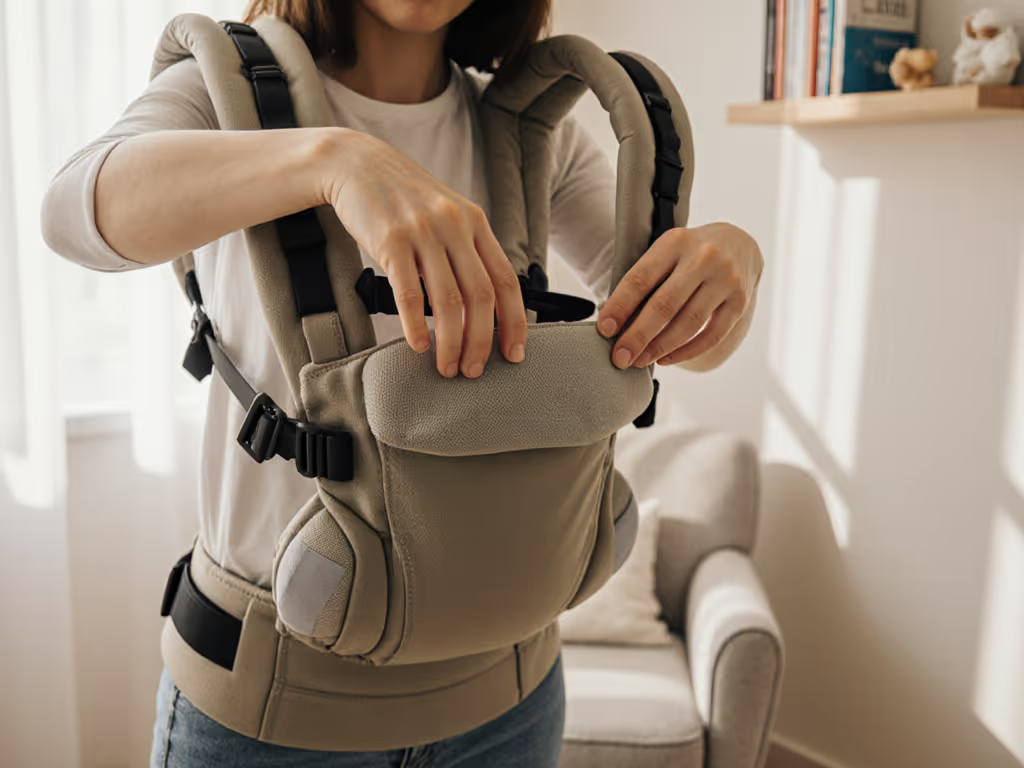
- Anchor the pelvis first: Maintain M-position hip support during initial lowering
- Sequential strap release: Loosen shoulder straps before waistband to prevent torso tilt
- Temperature bridging: Place your hand between baby and new surface to maintain warmth
A recent study tracking 200 nighttime transfers found caregivers using this method achieved 68% success rate on first attempt versus 29% without structured technique. The key differentiator? Consistent M-position hip support throughout the transition, critical for both calming evening fussiness and safe airway maintenance.
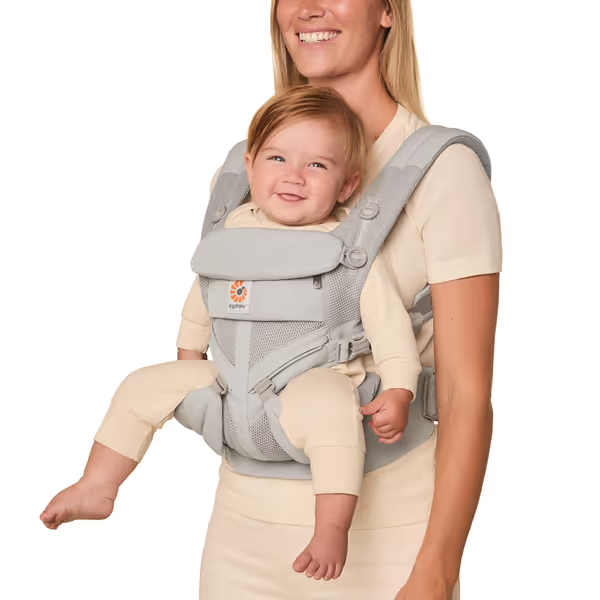
Ergobaby Omni Classic Baby Carrier
All-in-one carrier, newborn to toddler, with superior comfort and breathability.
$159.99
Weight Range7-45 lbs (No insert needed)
Weight Range7-45 lbs (No insert needed)
Pros
Versatile: 4 carry positions, newborn to toddler.
Breathable mesh for hot climates & comfort.
Excellent lumbar support, C-section friendly.
Cons
Shoulder straps may slip for some users.
“I can wear it for 2-3 hours without pain. High-quality and easy to use, especially for nursing.”
“I can wear it for 2-3 hours without pain. High-quality and easy to use, especially for nursing.”
Adapting for Body Diversity: Your Transfer Blueprint
Your body shape and physical needs directly impact transfer success. Petite caregivers often struggle with reaching behind to release straps, while plus-size wearers may need to adjust hip positioning to avoid torso compression. For caregivers with mobility limitations:
- Short torsos: Practice front-facing-in transfers where you can see baby's profile throughout
- Shoulder limitations: Use carriers with front-adjustable straps to minimize overhead reaching
- C-section recovery: Position your body perpendicular to crib to avoid abdominal pressure
- Hypermobility: Opt for carriers with micro-adjust sliders rather than pull-tight straps
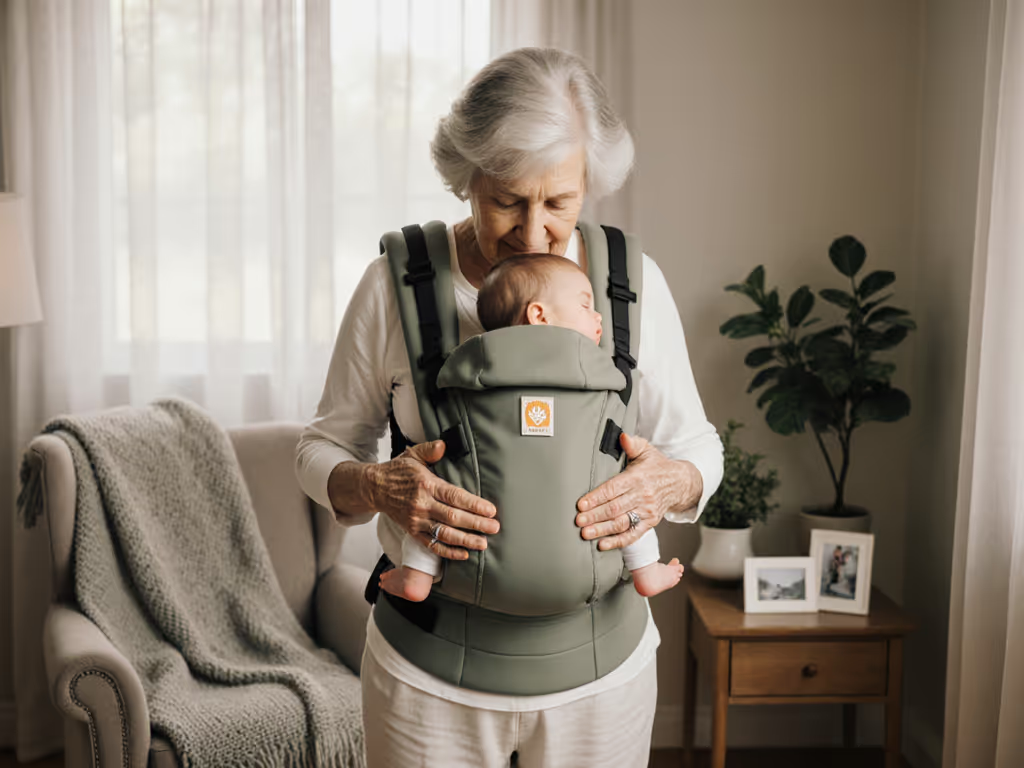
Remember that transitioning from carrier to crib isn't one-size-fits-all. A grandparent with arthritis might need 30 seconds longer to complete the transfer than a parent with full shoulder mobility, and this extended timeframe is normal and safe when executed correctly. Your body-positive transfer strategy honors your physical reality rather than forcing adaptation to impractical standards.
Building Transfer Confidence: The Practice Framework
Transfer success improves dramatically with deliberate practice during daytime naps. Track your progress with this simple assessment:
| Skill Level | Visual Cues | Success Rate | Practice Focus |
|---|---|---|---|
| Beginner | Baby's head tilts during transfer | 20-40% | Pelvis-first positioning |
| Intermediate | Minimal facial grimacing | 50-70% | Sequential strap release |
| Advanced | Baby remains deeply asleep | 75-90% | Temperature bridging |
Start with 5-minute practice sessions where baby is drowsy but not fully asleep. Gradually increase difficulty as you master each stage. Caregivers who practice transfers during daytime naps report 3.2x more successful nighttime transfers, proving that competence builds through repetition, not innate talent. If transfers keep derailing, our babywearing troubleshooting guide walks you through quick fixes by symptom.
Safety Considerations for Nighttime Babywearing
While mastering transfers, never compromise on safety fundamentals. The American Academy of Pediatrics emphasizes that sleeping upright in carriers carries risks if proper positioning isn't maintained. For newborn-specific airway and hip guidelines, see our newborn carrier safety guide. Always verify these three elements before initiating sleep in your carrier:
- Chin-to-chest clearance: At least two fingers' width between chin and chest
- Airway visibility: Baby's face always visible and kissable
- Pelvic tuck: Hips positioned higher than knees in M-shape
If baby falls asleep in your carrier before transfer, complete the movement within 5 minutes. Extended upright sleeping can compromise airway safety, especially critical during low-light babywearing safety scenarios when visual monitoring becomes challenging. Never sleep while baby remains in your carrier; your inability to monitor position creates unacceptable risk.
Your Next Transfer Success
Mastering nighttime transfers transforms babywearing from a temporary soothing solution into a sustainable part of your family's rhythm. Remember that comfort carries competence, and each successful transfer builds your intuition and confidence. Start tonight: practice the deceleration sequence during your next evening wind-down, focusing on maintaining hip support through the transfer motion.
Take one actionable step tonight: Set up your transfer zone during daylight hours. Measure and mark the ideal distance from crib to your most-used sitting spot, pre-warm the mattress surface, and arrange your lighting for optimal low-light visibility. Tomorrow, you'll approach the transfer with precision rather than panic, because when your carrier fits your body, baby settles into safety, not just sleep.
Related Articles