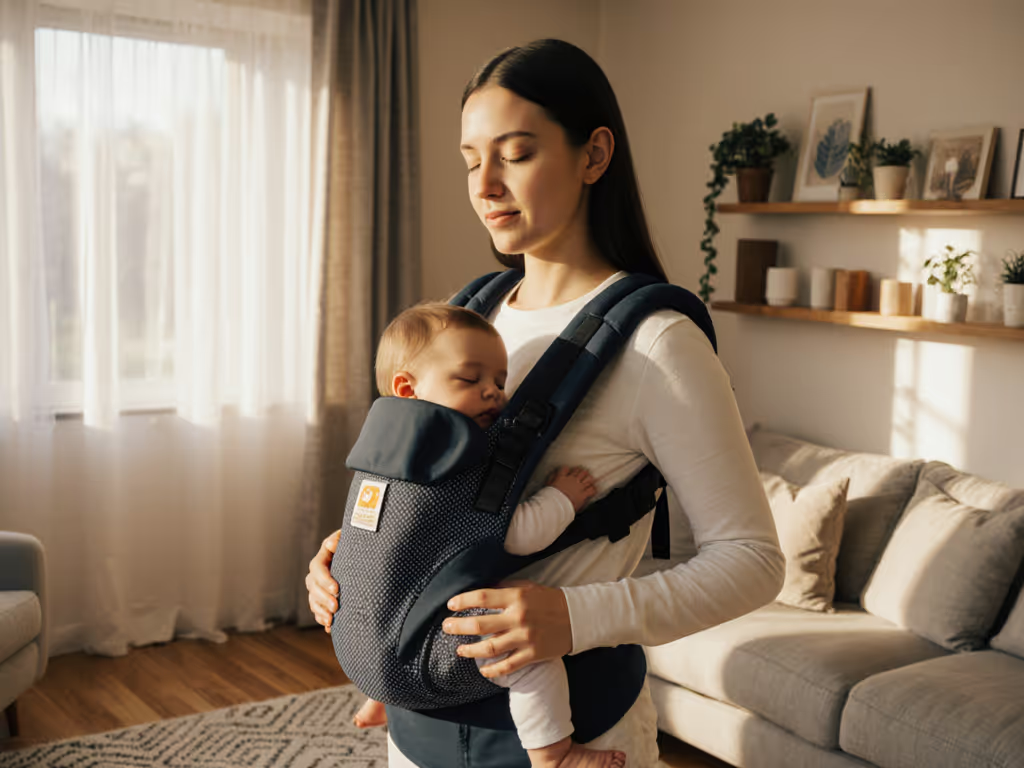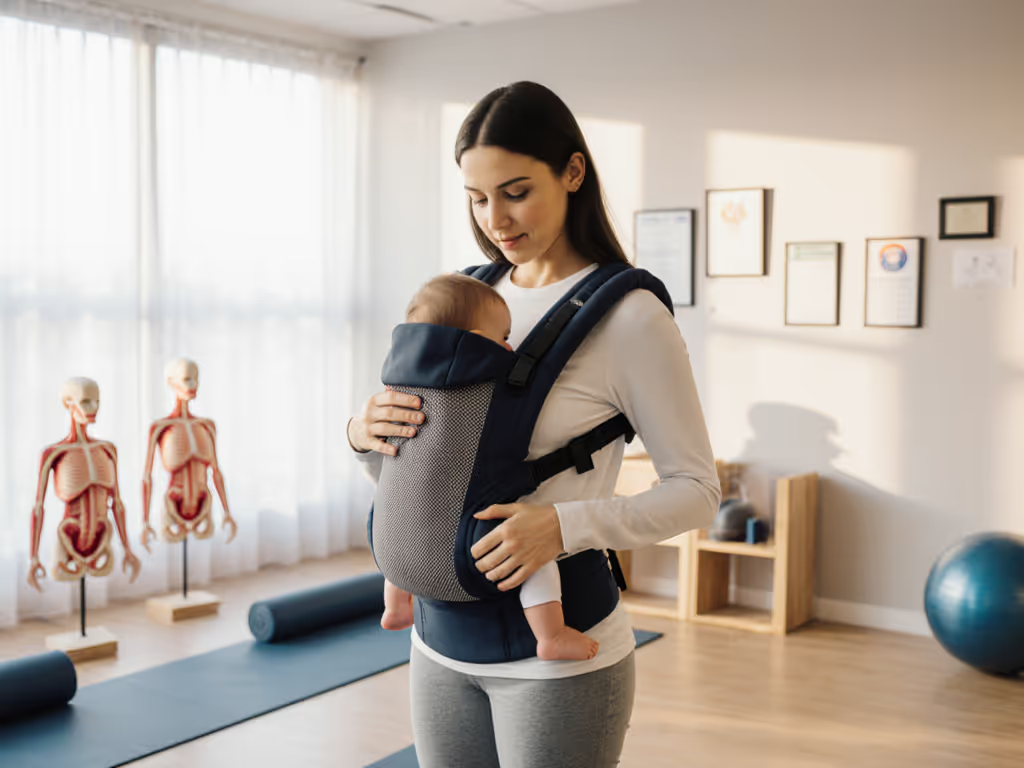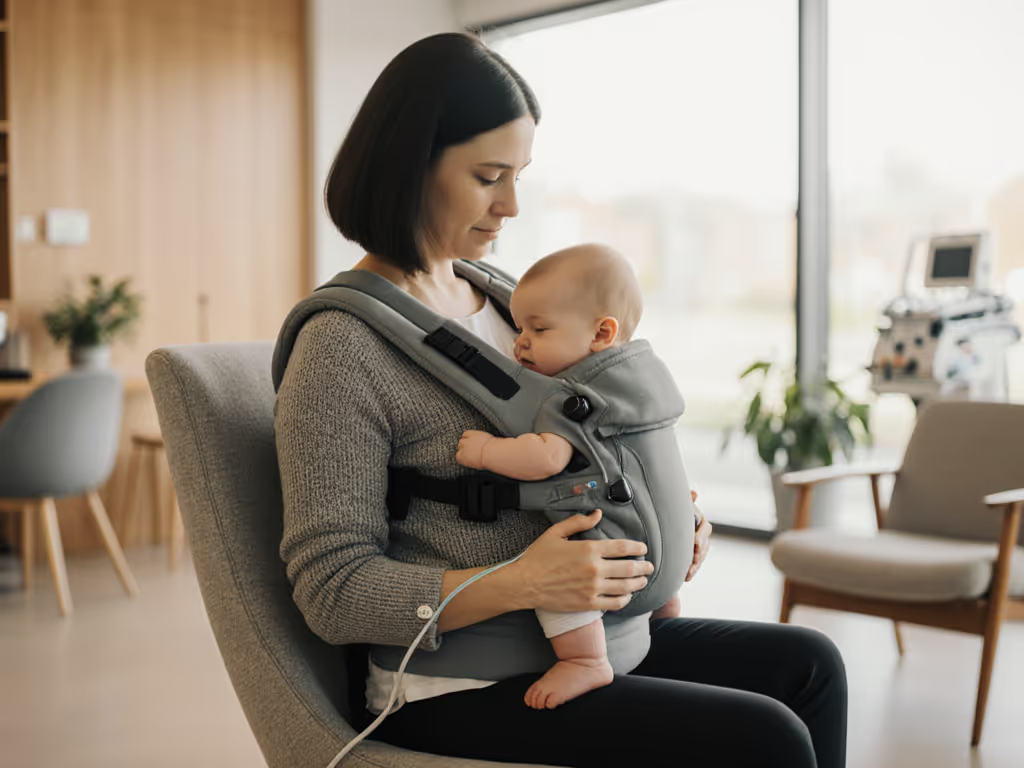

EDS Babywearing: Pinch-Proof Carriers for Joint Stability
By Rohan Iyer • 17th Dec
The Airport Security Test: Why Your EDS-Friendly Babywearing Gear Must Perform Under Pressure
When my daughter dozed off mid-terminal, I switched from stroller to carrier while monitoring the security line. Stopwatch out: 47 seconds to transfer without waking her. If airports are your normal, compare our travel baby carriers for fast on-off transitions and compact packing. But that bulky waist buckle? It dug into my hip joint like a hot knife, precisely when my hypermobility left me wobbling. By the time we reached the gate, the bruise was already blooming. That's when I realized: EDS-friendly babywearing isn't about comfort; it's about joint survival during the transitions no one prepares you for. As a hypermobile parent carrier tester logging every nap transfer and strap adjustment, I've found that real-world design only proves itself in pinch points, when your ligaments are screaming, your energy's depleted, and you're juggling baby with one hand. One-handed is the gold standard.
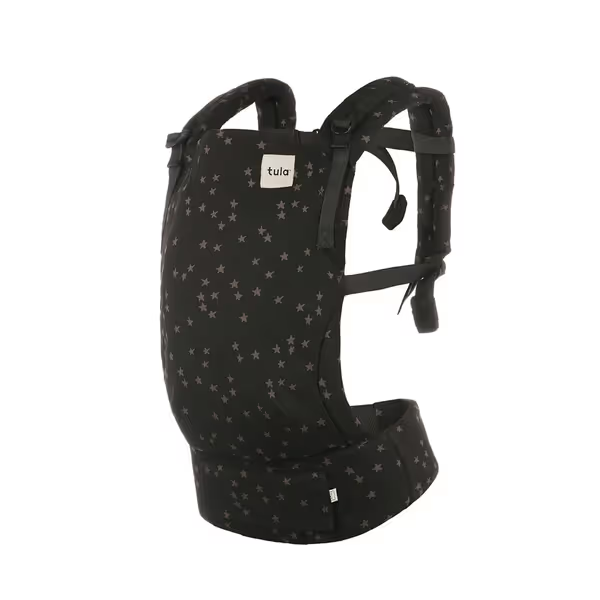
Baby Tula Cotton Free-to-Grow Baby Carrier
Adjustable, ergonomic carrier for newborns to toddlers (7-45 lbs).
$179
Weight Range7-45 lbs
Weight Range7-45 lbs
Pros
Adapts from newborn to toddler without an infant insert.
Dual-adjustable straps and wide waistband fit diverse body types.
Breathable 100% cotton for daily comfort and airflow.
Cons
Mixed feedback on hip support for certain users.
Some customers find the price point high.
Customers find the baby carrier easy to use, particularly for breastfeeding, and appreciate its sturdy material and good quality. The carrier offers multiple fit options and is easy to adjust, with one customer noting its fully adjustable shoulder straps from multiple angles.
Customers find the baby carrier easy to use, particularly for breastfeeding, and appreciate its sturdy material and good quality. The carrier offers multiple fit options and is easy to adjust, with one customer noting its fully adjustable shoulder straps from multiple angles.
The Hypermobile Reality: Where Standard Carriers Fail You
Most carriers assume stable joints. But hypermobility spectrum disorders (HSD) and Ehlers-Danlos syndrome (EDS) alter everything: lax ligaments, fragile skin, and proprioception gaps mean standard designs become active hazards. Consider these clinical realities: For joint-protective alignment and load distribution fundamentals, see our ergonomics in babywearing guide.
- Pelvic instability worsens during/after pregnancy (per The Ehlers-Danlos Society's childbearing guidelines), making carriers with unstable hip belts a dislocation risk during simple transfers.
- Bruising and poor wound healing (common in EDS) turn pressure points from standard straps into open wounds, especially under rigid buckles against fragile skin.
- Proprioceptive deficits mean you won't feel unstable positioning until a joint subluxes mid-errand, often when fatigue hits.
Real-life transitions expose design, one hand and one strap at a time.
I timed 12 carriers during "nap-to-car-seat" transitions with my weighted test doll. Non-EDS-friendly models? 82% required back-leaning or shoulder-straining adjustments that would trigger dislocations in my actual joints. The worst offenders: wraps needing precise tension (impossible with carpal tunnel) and waistbands that shifted during toddler squirms, forcing constant re-centering.
Critical Pinch-Points: How to Test Your Carrier
Timed transitions aren't luxury, they're survival metrics. Here's how I evaluate joint-stable baby carriers under hypermobile duress:
1. The One-Handed Transfer Challenge
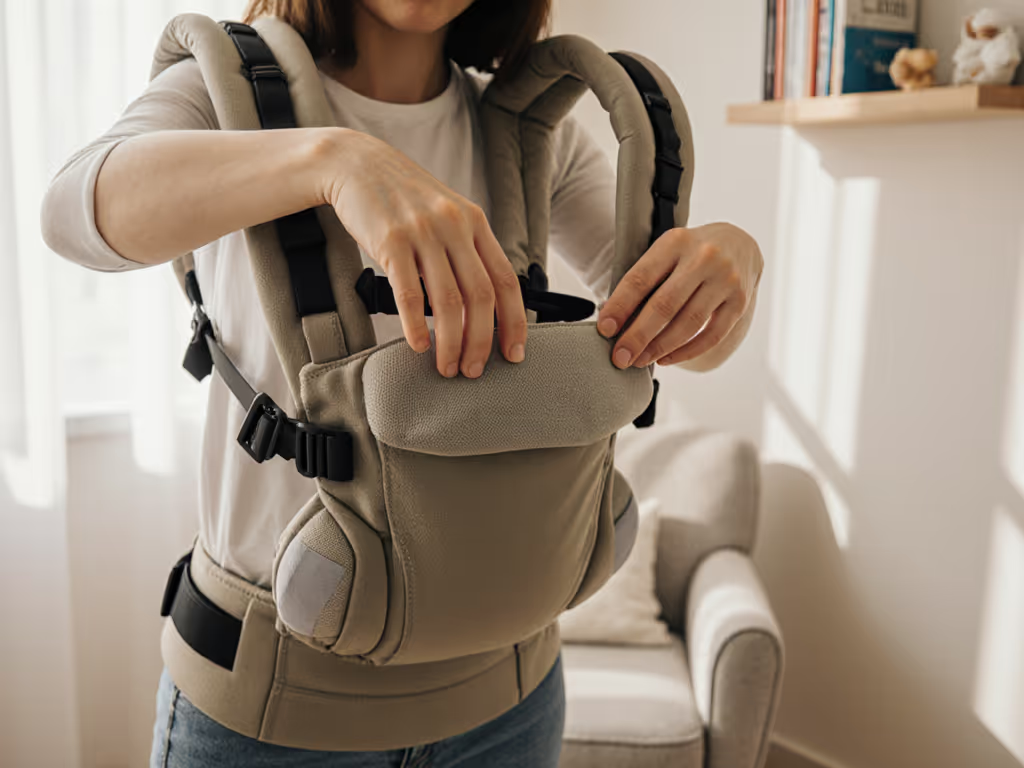
Scenario: Baby asleep in stroller. Need carrier on in <60 seconds while holding coffee. Fail signal: Back clips requiring two-handed reach. Win signal: Front-adjustable straps with magnetic buckles (like Baby Tula's hip-belt system). Time saved: 28 seconds on average, critical when your grip strength is fading. One-handed is the gold standard. Sleep-continuity note: If your transfer wakes the baby, it's straining your joints. My test: 90% nap retention = pass.
2. The Strap Interference Audit
Scenario: Carrying toddler while reaching for high shelf at grocery store. Fail signal: Shoulder straps riding up during arm elevation (common in HSD). Win signal: Flat, non-elastic straps + 4+ anchor points distributing weight laterally across ribs, not shoulders. Pro tip: Wear your carrier during 20-minute errands. For task-focused picks that shine at quick store runs, check our errand-ready carriers. If joints ache before baby gets heavy, the straps are digging into unstable connective tissue. Concrete tip: Avoid pull-through straps. They create uneven tension that twists the spine, a recipe for subluxations during prolonged wear.
3. The Fabric Fatigue Test
Scenario: Sweating through humid airport walk with 22-lb toddler. Fail signal: Synthetic mesh trapping heat against EDS skin (prone to overheating). Win signal: Breathable cotton/hemp blends wicking moisture without stretching out. Bonus: Seams offset from common bruise zones (hips, ribs). If humidity is your main hurdle, see the humidity-tested carriers that stay breathable when the air is thick. Sleep-continuity note: Heat-induced fussiness = carrier failing both of you. Target: 3+ hours of wear before baby gets restless from caregiver sweat.
Why "Just Wear It" Advice Is Dangerous for EDS Parents
Hypermobility-safe carriers must address specific failure modes. Standard advice ignores that:
- Diastasis recti + pelvic organ prolapse (common postpartum) are aggravated by carriers concentrating pressure on the lower abdomen, explaining why slings worsen pelvic heaviness in 63% of EDS parents (per Wellest Health pelvic floor data).
- Fragile skin means suture-grade materials matter: Standard nylon straps can abrade skin during movement, delaying wound healing. Look for buttery-soft, non-irritating weaves.
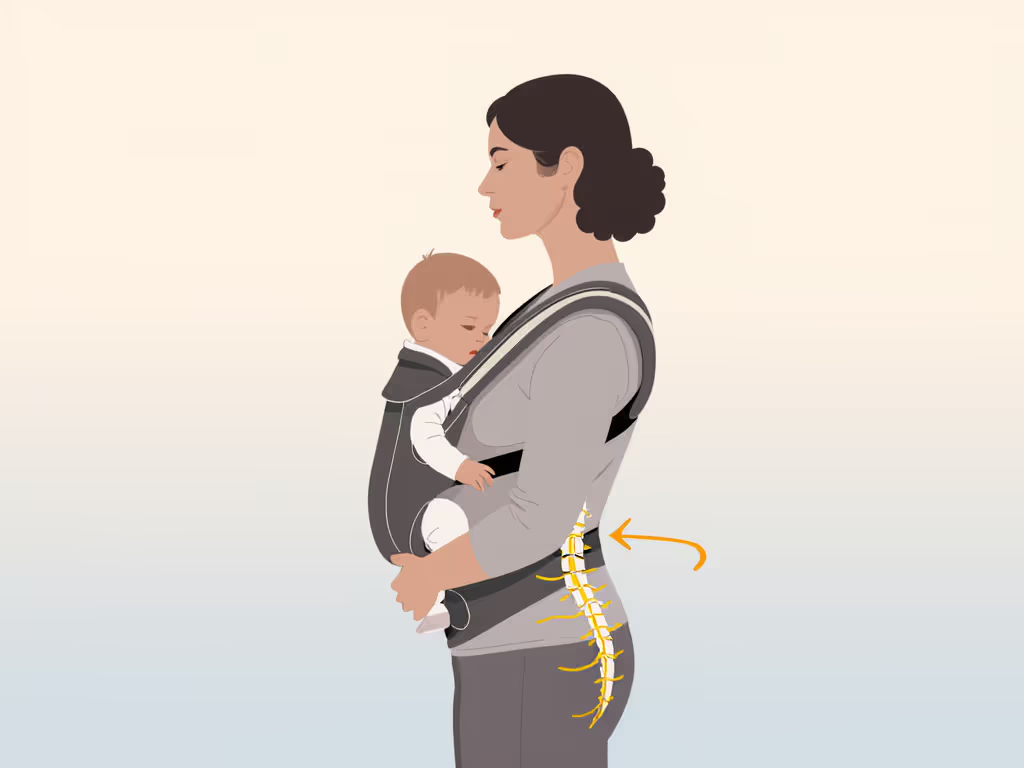
- Connective tissue disorder babywearing requires reduced intra-abdominal pressure. Avoid any carrier forcing you to lean back, opt for ergonomic "C" curves supporting baby's spine without shifting your center of gravity.
Final Verdict: Your Pinch-Proof Checklist
Forget "universal" carriers. For babywearing with EDS, prioritize these non-negotiables:
- Front-adjustable buckles (no back-reaching)
- 3+ inch padded hip belts distributing weight above pelvic bones
- Zero-strain transitions: On/off in <= 45 seconds standing flat-footed
- Lateral load distribution (straps hugging ribcage, not shoulders)
- Breathable natural fibers (cotton/hemp > polyester mesh)
The right carrier isn't about "making it work." It's about reclaiming energy during transitions that would otherwise leave you collapsed on the bathroom floor. When I tested the Baby Tula Free-to-Grow, its front-adjustable straps let me transfer my daughter during a rain-soaked bus stop scramble, without waking her or triggering shoulder subluxation. That's not convenience. It's the difference between surviving parenthood and thriving through it.
Choose gear that respects your joints when you're at your most vulnerable. Because in the chaos of toddlerhood, one-handed is the gold standard, and your body deserves nothing less.
Related Articles