
Babywearing with POTS: Safe Carriers for Orthostatic Intolerance
By Linh Pham • 8th Apr
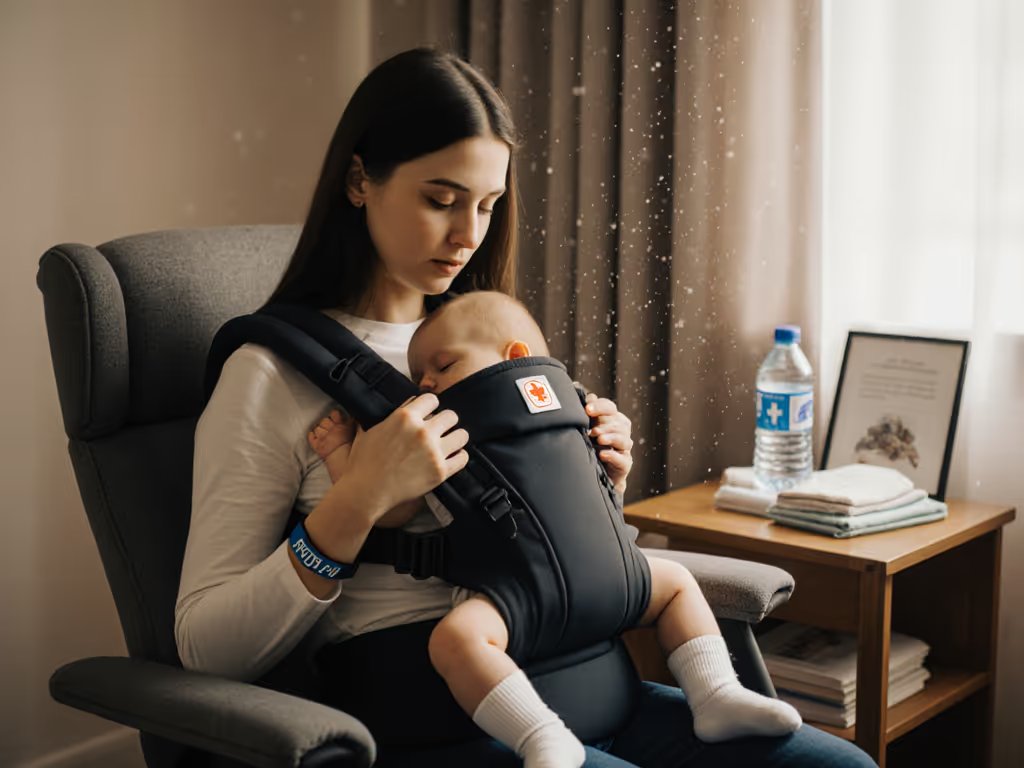
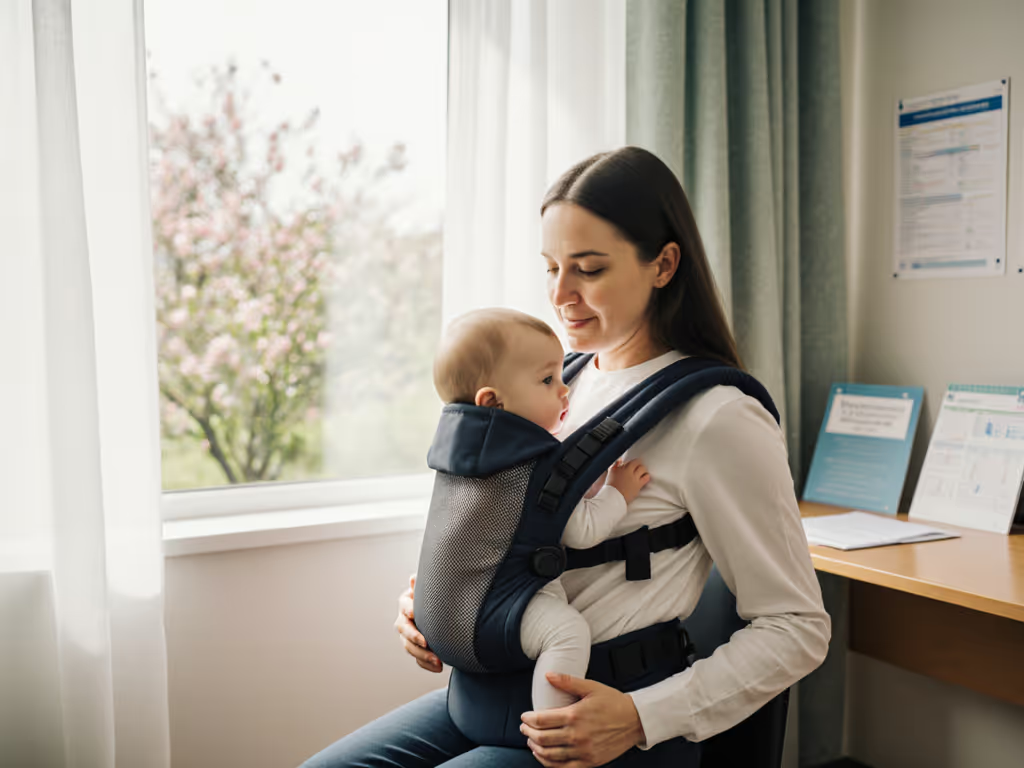
Babywearing for POTS requires a different lens than typical carrier guidance. If you live with postural orthostatic tachycardia syndrome (POTS) or another form of orthostatic intolerance, wearing your baby isn't off-limits, but it does demand intentional carrier choice, postural awareness, and honest pacing. The added weight and positioning shift of babywearing affects your blood pressure regulation and autonomic response, so comfort is a posture achieved, not a promise on packaging.
This guide translates ergonomic and autonomic principles into practical, repeatable steps so you can wear your baby safely without triggering symptom flares.
Understanding POTS and Babywearing Demands
POTS is an autonomic nervous system disorder characterized by rapid heart rate increases and blood pressure changes, especially during position transitions or prolonged standing. When you babywear (adding 8-15+ pounds of baby, carrier, and weight distribution shift to your frame), your body must work harder to maintain blood pressure and heart rate stability.
The combined stress of added weight, postural load, and thermoregulation (two bodies generating heat) can trigger tachycardia, dizziness, brain fog, or presyncope (near-fainting). This doesn't mean you can't babywear; it means carrier fit and body awareness become non-negotiable.
Research on POTS highlights that symptom severity varies widely and is highly individual. Some caregivers with POTS wear comfortably for 1-2 hours; others need breaks every 15-30 minutes. Your tolerance depends on disease severity, medications, hydration, salt intake, compression garment use, and current activity level. The goal is to know your baseline and build in buffer time.
The Role of Carrier Fit in Autonomic Comfort
When I returned to errands three weeks postpartum with a soft wrap that wasn't properly seated, my back ached within minutes and my posture slumped (a familiar precursor to presyncope). Switching to a structured carrier with micro-adjustable straps and measured panel height changed everything. Ten minutes in, my spine aligned, my core engaged naturally, and dizziness eased. That day I learned that fit precedes function. For a deeper dive into strap angles and weight distribution, see our ergonomics in babywearing guide. For people managing POTS, poor fit compounds autonomic stress: uneven weight distribution triggers compensatory tension, which restricts breathing and worsens blood pooling.
A properly fitted carrier should:
- Distribute weight evenly across your shoulders and hips, reducing focal pressure points that aggravate nerve irritation.
- Support upright posture so your ribcage can expand fully for deep breathing (essential for vagal tone regulation).
- Sit high and snug so your baby doesn't slump, which would force your spine into kyphosis (rounded forward position) and compress your lungs.
- Allow micro-adjustment so you can fine-tune fit as swelling, compression garments, or clothing layers change throughout the day.
Applying TICKS Safety + Autonomic Awareness
The foundational TICKS rule - Tight, In view, Close enough to kiss, Keep chin off chest, Supported back - applies to all babywearing[1][5]. For POTS, these principles also support your autonomic stability:
Tight carrier with no loose fabric. A snug fit prevents compensatory muscle tension. Loose fabric forces your stabilizer muscles (back, shoulders, core) to work overtime, increasing metabolic demand and heart rate elevation[1][2].
In view at all times. Keeping your baby visible encourages upright head posture, which optimizes blood flow to the brain and reduces dizziness risk[1][5].
Close enough to kiss. This proximity cue ensures your baby's head remains high, and it naturally prevents the forward-hunching that restricts your own breathing and blood return[1][5].
Keep chin off chest. A gap of at least one finger between your baby's chin and chest protects their airway[1][2]. Equally important: this guideline reinforces your upright cervical spine, which is critical for autonomic regulation in the brainstem and vagus nerve pathway.
Supported back. Your baby's back should be in its natural, neutral position without slump[1]. This means the carrier's panel must support your spine too (no sag, no lateral twist) to prevent pain flares and maintain diaphragmatic breathing capacity.
Choosing a POTS-Friendly Baby Carrier
Carrier Type Considerations
Soft-structured carriers (SSCs) with padded shoulder straps, a firm waist belt, and micro-adjustable buckles are often the easiest entry point. Not sure which style fits your needs? See our baby carrier types comparison. The defined structure means less active muscle bracing from you. Look for:
- Adjustable torso length (not all bodies fit standard sizing).
- Padded waist belt that sits at or slightly above your hip bones, not at your rib cage.
- Shoulder straps wide enough (2-3 inches) to distribute pressure across your shoulder complex rather than digging into the trapezius.
- Front clips or buckles so you don't need full shoulder mobility or reach to fasten.
Ring slings and wraps are not recommended for infants under 6 months due to suffocation risk and the narrow positioning of their thighs[4]. For hip-healthy placement as your baby grows, review our M-position babywearing guide. Beyond that age, wraps offer excellent weight distribution, but they require overhead reaching and back-tying, which can aggravate shoulder instability or provoke dizziness during setup. If you love wraps, practice seated setup before attempting to tie while standing.
Meh Dai or half-buckle carriers (with buckles on top, fabric tied at waist) can work if you have limited shoulder ROM or if the buckle is positioned low enough to avoid overhead reaching. Test the learning curve in a low-stakes environment first.
Avoid slings for POTS unless you have significant babywearing experience and symptom stability. Slings narrow the thigh position and increase airway risk; they also place asymmetrical load on one shoulder, which can trigger nerve irritation and compensatory tension[4].
Fit Checklist for POTS
Before committing to any carrier, run through this checklist seated and standing:
- Torso length. The panel should span from below your shoulder blades to just above your hip bones. Too short = ribs compressed; too long = baby slumps and lower-back strain.
- Shoulder strap angle. Straps should angle slightly backward (not vertical or forward), so weight pulls up and back, not down and forward. Forward angle triggers thoracic kyphosis and breathlessness.
- Waist belt height. The belt should sit at your natural waist or hip crest, not riding up into your rib cage. Higher placement compresses the diaphragm and worsens air hunger.
- Waist belt tightness. Snug enough that the baby and carrier stay close; not so tight that you can't take a full diaphragmatic breath. You should fit two fingers under the belt at your belly button.
- Reach and setup time. Can you fasten all buckles without overhead reaching or spinal rotation? Practice setup while sitting first, then standing.
Micro-adjust, then breathe. This is your setup mantra. After fastening, take one full breath: slow inhale through your nose for a count of 4, exhale for 4. If you feel restricted, loosen the waist belt slightly or check shoulder strap height.
Blood Pressure Management and Activity Pacing
Babywearing triggers a blood pressure and heart rate response in all caregivers; with POTS, the response is steeper and slower to recover. Plan accordingly:
Hydrate before wearing. Drink 16 oz of water with electrolyte powder 15-30 minutes before babywearing. Hypovolemia (low blood volume) is a core POTS mechanism; adequate hydration buffers symptom severity.
Wear compression garments. If you use compression leggings or an abdominal binder, wear them under your carrier. Compression helps pool blood centrally and reduces orthostatic symptoms[7].
Start with short bouts. Begin with 10-15 minute wearing sessions at home, standing still or walking slowly. Track how you feel (heart rate, dizziness, breathing ease) and gradually extend duration as your body adapts. Adaptation can take weeks; be patient.
Take breaks proactively, not reactively. Don't wait until you feel faint. Set a timer for every 30-60 minutes (adjust to your baseline) and remove the baby, even if you feel fine. Sitting down, elevating your legs, and taking 5-10 minutes to recover prevents cascade symptoms.
Avoid position changes in carrier. Switching from front-carry to back-carry, or bending deeply while wearing, can trigger rapid heart rate spikes. If you need to change position, take the baby out first, sit down, stabilize, then re-dress.
Layer thoughtfully for temperature. Overheating worsens POTS symptoms and triggers vasovagal (fainting) responses. Wear moisture-wicking base layers, and choose breathable carrier fabrics (canvas, mesh panels). Remove layers or your baby's blanket if you or your baby show signs of overheating: flushed cheeks, rapid breathing, or neck sweat. For heat management strategies and breathable carrier picks, see our summer babywearing tips.
Practical Setup and Daily Use
Before You Wear
Run this checklist each time:
- Hydration and salt intake adequate today?
- Compression garments on?
- Baby fed and comfortable?
- Your shoes secure (fall risk increases with POTS-related dizziness)?
- Carrier at hand so you're not holding baby unsupported while adjusting straps?
During Wear
- Breathe consciously. Shallow breathing worsens blood pooling. Every few minutes, take one deep belly breath.
- Shift weight gently. Alternate feet every minute; small shifts prevent pooling.
- Stay seated as much as possible. Wear your baby while sitting on errands, feeding time, or recovery periods.
- Avoid bending forward. Reaching down increases intracranial pressure and can trigger dizziness. Squat or kneel instead.
After Wear
- Remove the carrier slowly. Sit first, remove straps, then stand gradually.
- Elevate your legs for 5-10 minutes if you feel residual heart racing or lightheadedness.
- Rehydrate and eat a salty snack within 30 minutes.
Red Flags: When to Stop and Seek Help
Stop babywearing immediately if you experience:
- Fainting, loss of consciousness, or severe presyncope.
- Chest pain or severe shortness of breath.
- Palpitations that don't resolve within 2 minutes of removing the carrier.
- Feeling flushed, extremely confused, or unable to focus.
- Recurring symptom flares even with short wearing bouts and optimized fit.
In these cases, connect with your cardiologist or POTS specialist. Babywearing may need to be deferred, or you may benefit from medication or compression optimization before resuming.
A Path Forward
Babywearing with POTS is achievable when you prioritize fit, listen to your body, and build in recovery time. Your carrier should feel like an extension of your posture, not a burden. Start small, document what works, and adjust as needed. Most importantly, know that asking for help (whether from a babywearing consultant, your healthcare provider, or your partner) is not a limitation; it is part of sustainable care.
Your comfort and your baby's safety are inseparable. When your nervous system is regulated and your carrier fits well, your baby settles faster. That mutual ease is the real win.
Related Articles